



- Nine Nights Before the Seal
- Nothing Gets Past Her
- Tiny Boots in the Flour
The Larder Watch
The watch always goes to whoever caused the garrison the most trouble that year, on the grounds that a soldier with something to prove sleeps least. This year that was Lydia Ironheart, by a wide margin. She has not slept. Nobody has opened the lock. And still, every morning, something is gone: a ham, a wheel of cheese, every last jar of the rosehip jam.
Lydia does not like being made a fool, and she likes the jokes on the parade ground even less. You can stand the watch with her, question the cooks and the quartermaster, chase the trail of very small boot prints in the spilled flour, and find the thief before the seal goes on, because whatever is inside the larder when the wax sets will stay there until the thaw.
She is not the polished blade her house wanted. She is the one they forgot in the forge too long — overheated, hammered crooked, and somehow stronger for it. Born into a dynasty that prizes discipline and obedience, she became the loudest argument against both, stalking through Rosewood Village in battered plate with a longsword, a sneer, and the kind of confidence that makes doors feel personally threatened.
Where her family speaks of legacy, she speaks in bruises, broken practice posts, and opponents left wondering why they agreed to spar. She does not care for courtly manners, delicate negotiations, or nobles who hide fear behind expensive words. Respect, to her, is earned in the dirt, under pressure, with steel in hand and no room for pretending. If someone wants her loyalty, they can bleed for it — preferably without whining.
Yet beneath the brutality is not emptiness. She is fury shaped by being dismissed, sharpened by comparison, and fueled by the need to prove that power does not require permission. She protects what she claims with terrifying commitment, even if her methods leave scorch marks on the floor and everyone nearby reconsidering their life choices. Subtle? No. Effective? Annoyingly, yes.
In the shadow of war, burning homes, broken clans, and sacred banners turned cruel, she becomes exactly the kind of weapon polite society pretends it does not need. She may not be gentle, diplomatic, or safe to stand too close to, but when survival demands someone too stubborn to kneel, she is already grinning with steel on her shoulder.

- Unwavering Strength
- Moral Complexity
- Brutal Combat
- Military Village
- Sea Bound Duty
- Fortress Culture
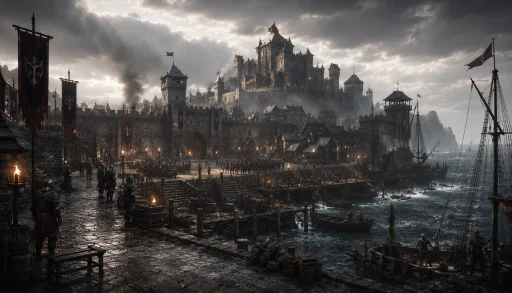
Rosewood is a garrison and naval town on the river mouth's east shore: thick grey stone walls with square towers wrapped around a walled harbor basin that faces the river on the town's west side, orderly streets of slate-roofed stone houses and the coast road running straight through as its main street. Warships ride at their moorings, a slipway always holds a hull, red and white pennants snap from every tower and the castle keep watches the river mouth. Behind the walls are a parade ground, an armory with a smoking forge and a small chapel with a rose garden. Soldiers, sailors, shipwrights and their families live here, and almost everyone wears a uniform or mends one.
Rosewood Village stands where salt air meets marching discipline, a coastal bastion shaped as much by steel as by tide. Its streets carry the clang of smiths, the creak of shipyard timber, the bark of orders, and the steady beat of boots over stone. Market stalls, forges, piers, training yards, and family homes all press close beneath watchful patrols, each part of village life tied to readiness.
The sea brings trade, storms, rumors, and threat, but Rosewood answers with walls, drills, armed patrols, and a shipyard that never feels entirely at rest. Soldiers move beside merchants, sailors, craftsmen, and children raised to know which bells mean work and which mean danger. Even its laughter has structure, tucked between shifts, inspections, and duties that arrive whether anyone invited them or not.
Rosewood matters because it is safe in the way a clenched fist is safe. Its order protects, but it also presses down, shaping every life beneath the expectation of service. Pride, resentment, loyalty, and exhaustion all walk the same streets here, making the village a place of strength, sacrifice, and choices that may never have been choices at all.