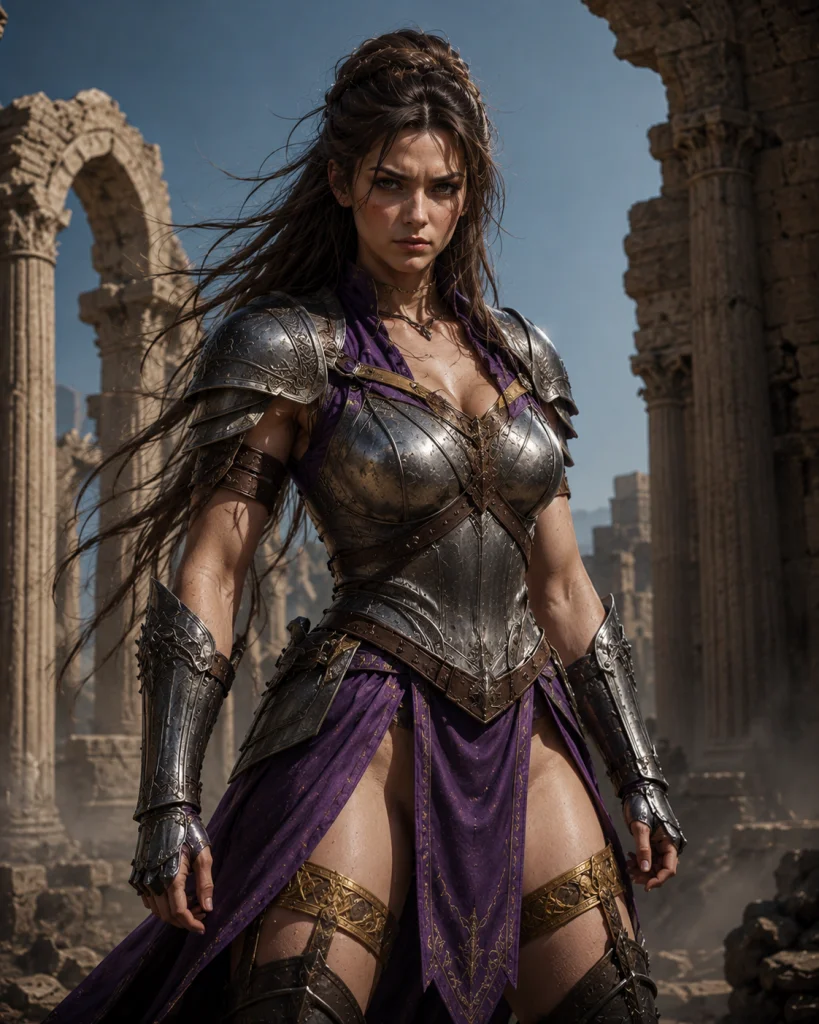
- Unwavering Strength
- Moral Complexity
- Brutal Combat
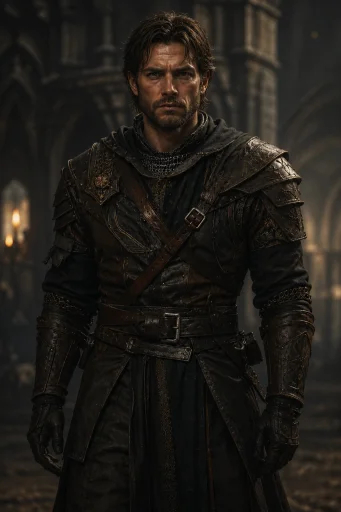
Lydia Ironheart
Alignment: Chaotic Neutral
Where her family speaks of legacy, she speaks in bruises, broken practice posts, and opponents left wondering why they agreed to spar. She does not care for courtly manners, delicate negotiations, or nobles who hide fear behind expensive words. Respect, to her, is earned in the dirt, under pressure, with steel in hand and no room for pretending. If someone wants her loyalty, they can bleed for it — preferably without whining.
Yet beneath the brutality is not emptiness. She is fury shaped by being dismissed, sharpened by comparison, and fueled by the need to prove that power does not require permission. She protects what she claims with terrifying commitment, even if her methods leave scorch marks on the floor and everyone nearby reconsidering their life choices. Subtle? No. Effective? Annoyingly, yes.
In the shadow of war, burning homes, broken clans, and sacred banners turned cruel, she becomes exactly the kind of weapon polite society pretends it does not need. She may not be gentle, diplomatic, or safe to stand too close to, but when survival demands someone too stubborn to kneel, she is already grinning with steel on her shoulder.
They came bearing light, but left only fire. What began as a crusade wrapped in faith and purpose now cuts through the land with merciless precision. Villages smolder, homes are swallowed by flame, and those who once stood proud are driven to their knees beneath gleaming steel and sacred banners. It is no longer a campaign for belief’it is an extermination.
Among the scorched ruins, a leader rises’not for glory, but because there is no one else left to stand. The clans are scattered, divided by blood feuds and forgotten oaths. Yet if they do not come together, they will be wiped out one by one. Trust is scarce, but desperation is a powerful motivator, and old enemies may yet become uneasy allies.
But war rarely draws clean lines. In the smoke and confusion, unseen forces twist the tide. Some speak of hidden hands turning blades, of secrets buried beneath the chaos, of unseen puppeteers who profit from the blood spilled on both sides. This is not just a battle for survival’it is a reckoning.
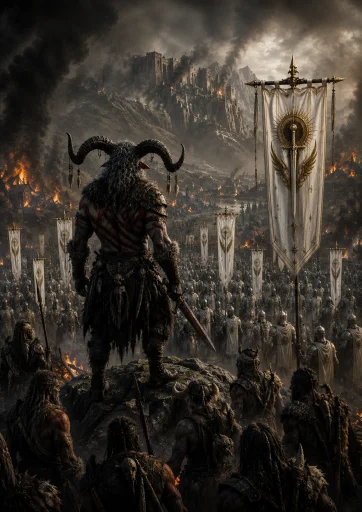
- Old Wounds, New Fires
- Victory is Never Clean
- Vengeance or Survival
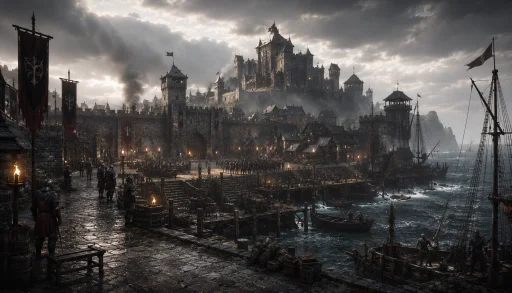
- Military Village
- Sea Bound Duty
- Fortress Culture
Rosewood Village stands where salt air meets marching discipline, a coastal bastion shaped as much by steel as by tide. Its streets carry the clang of smiths, the creak of shipyard timber, the bark of orders, and the steady beat of boots over stone. Market stalls, forges, piers, training yards, and family homes all press close beneath watchful patrols, each part of village life tied to readiness.
The sea brings trade, storms, rumors, and threat, but Rosewood answers with walls, drills, armed patrols, and a shipyard that never feels entirely at rest. Soldiers move beside merchants, sailors, craftsmen, and children raised to know which bells mean work and which mean danger. Even its laughter has structure, tucked between shifts, inspections, and duties that arrive whether anyone invited them or not.
Rosewood matters because it is safe in the way a clenched fist is safe. Its order protects, but it also presses down, shaping every life beneath the expectation of service. Pride, resentment, loyalty, and exhaustion all walk the same streets here, making the village a place of strength, sacrifice, and choices that may never have been choices at all.
The Ironheart Dynasty is among the oldest and most respected martial noble houses in the realm, renowned for unwavering discipline, battlefield honor, and absolute loyalty to crown, kingdom, and sworn oath. Their name has become synonymous with resilience, duty, and military leadership, with generations of Ironheart commanders defending fortresses, borders, and civilian populations against both mortal and supernatural threats.
The house favors pragmatic strength over political manipulation, believing stability is forged through sacrifice, discipline, and decisive action rather than deception or ambition. Though often viewed as rigid or overly traditional by rival houses, Ironheart’s reputation for integrity and reliability has earned them enduring respect even among enemies.
Ironheart strongholds are typically immense stone fortresses built in defensible terrain, emphasizing military readiness, self-sufficiency, and endurance during prolonged conflict. Their banners, armor, architecture, and heraldry heavily feature steel, black iron, silver trim, and crimson accents symbolizing sacrifice and strength through adversity.
Members of The Ironheart Dynasty are raised from an early age to value service above personal desire. Cowardice, oathbreaking, and political treachery are considered among the gravest sins within the house. Even lower-ranking retainers are expected to uphold the Ironheart code of conduct regardless of personal cost.
Though noble in reputation, House Ironheart is not naive. They understand war intimately and are fully capable of ruthless military action when necessary to protect the realm or fulfill sworn obligations. However, such actions are viewed as burdens of duty rather than opportunities for glory.
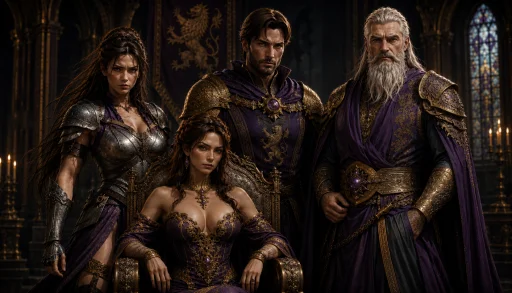
- Martial Traditionalists
- Unbreakable Oaths
- Realm Defenders
- Stubborn Survivors
- Endless Adaptation
- Ordinary Trouble
Human
Humans arrive in the world without obvious advantages, which seems rude until they start turning that lack into everybody else’s scheduling problem. They build shelters where storms insist they should not, raise banners over places that keep trying to kill them, and make tools from whatever is close enough to grab. Give them a broken road, a bad season, and one questionable plan, and somehow there is a village there by spring. Annoying? Absolutely. Effective? Tragically, yes.
Their lives burn quickly compared to longer-lived peoples, and that urgency shapes everything they touch. They chase love, power, safety, glory, revenge, comfort, and terrible ideas with the same dangerous momentum. A human court can become a battlefield with better clothing, while a frontier camp can turn into a kingdom if enough stubborn fools agree to keep hammering posts into the mud. They do not always know when to stop, which is charming right up until it becomes a siege.
What makes humans significant is not perfection, purity, or some grand destiny conveniently gift-wrapped by the heavens. It is variety under pressure. They can be farmers, soldiers, rulers, wanderers, cowards, lovers, tyrants, protectors, liars, and heroes before lunch if the day is especially rude. They are ordinary in the way flint is ordinary: dull in the hand until struck, then suddenly full of fire.