

Relics, Steel, and Stolen Things
Every weapon, robe, charm, tool, and cursed little object has a history, even when that history is mostly poor judgment. Some are forged for war, some for survival, and some clearly should have been left exactly where they were found. The right item can save a life, open a door, expose a secret, or turn a terrible plan into a survivable one. Carry wisely; pockets are small, consequences are not.
- Courtly Armor
- Silken Authority
- Elegant Threat
Power Draped Softly
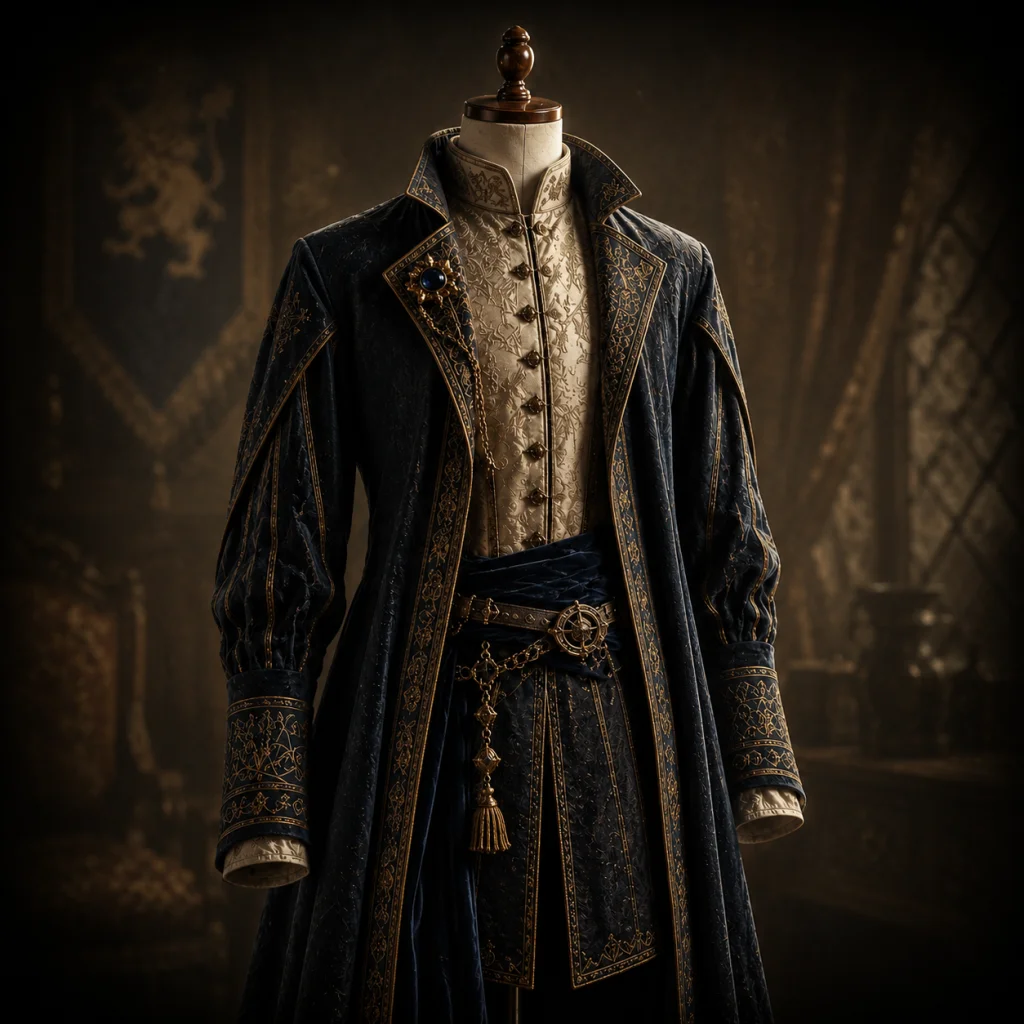
Noble robes do not merely cover the body; they announce that the wearer expects the room to behave. Cut in layered folds with reinforced seams, weighted hems, and careful inner structure, they move with enough grace to suggest comfort and enough authority to remind everyone that comfort is not the point. Fine stitching traces the cuffs and collar, subtle from a distance but smugly expensive up close.
These robes come from a world where appearance is armor and silence can be sharper than steel. They are made for court halls, formal councils, private negotiations, and any candlelit room where a smile may cost more than a dagger. Their protection is not in bulk, but in presentation: posture straightens beneath them, gestures slow, and even an insult sounds better when dressed properly.
Their significance lies in the performance they demand. A robe like this lets a ruler, heir, envoy, or ambitious schemer enter a room already halfway obeyed. It flatters without looking desperate, conceals tension beneath elegance, and leaves just enough mystery in the drape to make gossip lean closer. Dangerous? Absolutely. But tastefully, darling.
These robes come from a world where appearance is armor and silence can be sharper than steel. They are made for court halls, formal councils, private negotiations, and any candlelit room where a smile may cost more than a dagger. Their protection is not in bulk, but in presentation: posture straightens beneath them, gestures slow, and even an insult sounds better when dressed properly.
Their significance lies in the performance they demand. A robe like this lets a ruler, heir, envoy, or ambitious schemer enter a room already halfway obeyed. It flatters without looking desperate, conceals tension beneath elegance, and leaves just enough mystery in the drape to make gossip lean closer. Dangerous? Absolutely. But tastefully, darling.
- Heavy Authority
- Battle Worn
- Close Quarters
Steel With Attitude
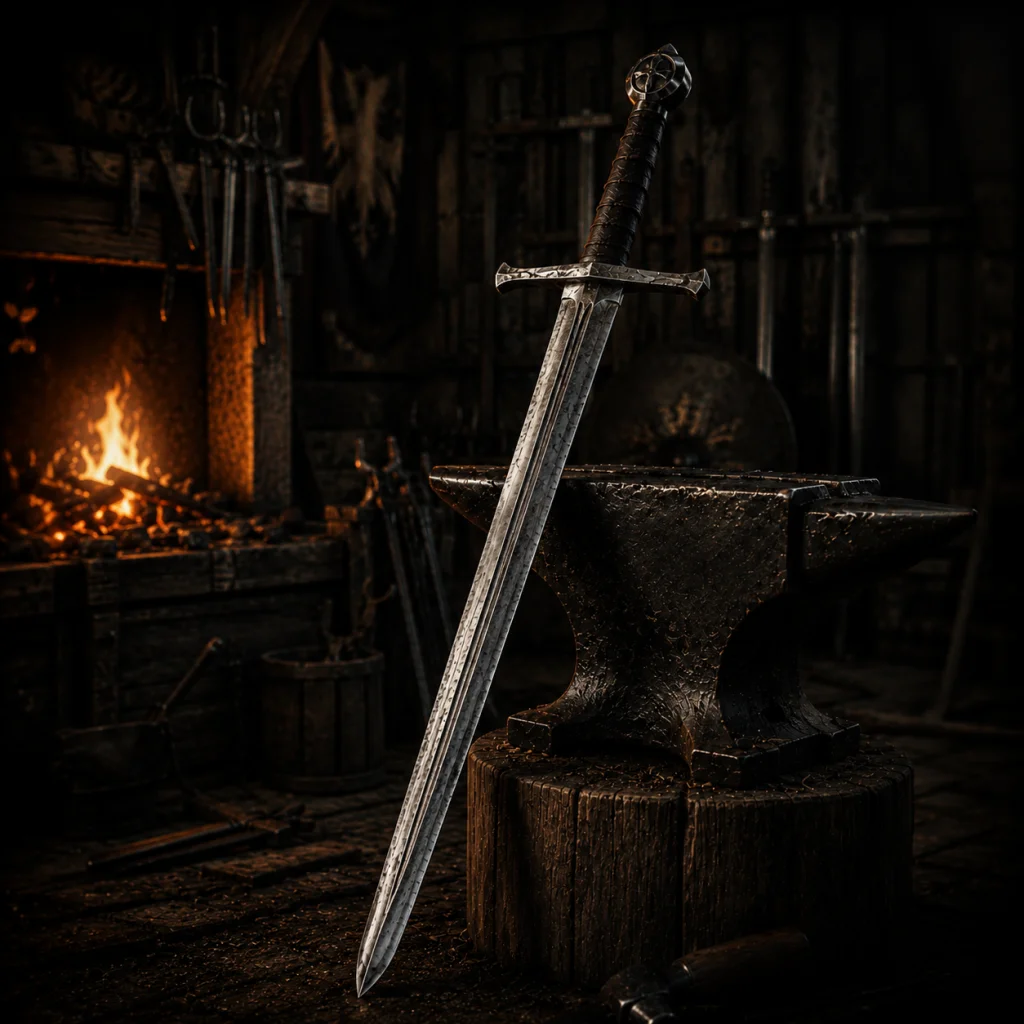
The blade carries itself with the blunt confidence of something that has ended arguments in fewer words than manners would prefer. Its edge is long, straight, and serviceable rather than ornamental, with a dark grip worn smooth by hard hands and a guard nicked from repeated use. Nothing about it begs to be admired, which somehow makes it worse; it simply waits, heavy and patient, until someone gives it a reason.
It began as a practical weapon from a disciplined martial tradition, forged for balance, reach, and authority rather than ceremony. The steel bears the marks of training yards, border skirmishes, slammed shields, and the occasional tavern boast that should have stayed seated. It is the sort of blade that teaches posture quickly and humility faster.
In its current bearer’s hands, the weapon becomes more than a sword. It is a warning, a challenge, and occasionally an answer delivered with both hands when subtlety has wandered off to embarrass itself. The grip fits close, the weight demands commitment, and anyone flirting with danger should understand that this blade is very good at flirting back.
It began as a practical weapon from a disciplined martial tradition, forged for balance, reach, and authority rather than ceremony. The steel bears the marks of training yards, border skirmishes, slammed shields, and the occasional tavern boast that should have stayed seated. It is the sort of blade that teaches posture quickly and humility faster.
In its current bearer’s hands, the weapon becomes more than a sword. It is a warning, a challenge, and occasionally an answer delivered with both hands when subtlety has wandered off to embarrass itself. The grip fits close, the weight demands commitment, and anyone flirting with danger should understand that this blade is very good at flirting back.
- Plain Cloth
- Daily Wear
- Humble Protection
Humble Cloth
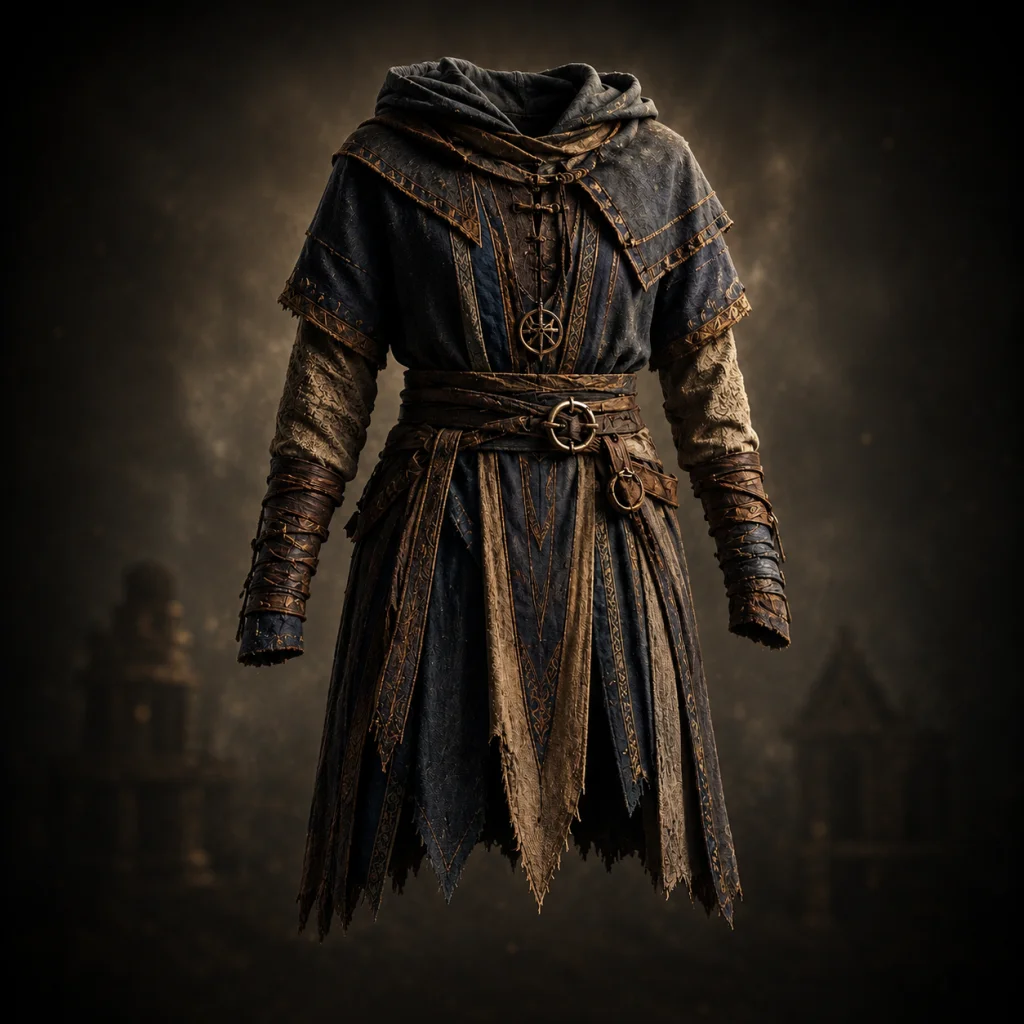
The commoner's tunic is simple cloth protection made for work before warfare. It is usually cut from plain linen or wool, stitched for movement, and shaped to survive long days of hauling, walking, mending, carrying, and occasionally being shoved into trouble by people with better armor. Its seams are practical, its fabric modest, and its beauty lies in the fact that it does exactly what it is meant to do without asking for applause.
Though called armor by generous merchants and desperate travelers, it offers little more than basic coverage against scrapes, weather, and the indignity of standing around in public with nothing respectable on. Still, a well-made tunic matters. It keeps the wearer warm enough, decent enough, and ready enough to work, flee, bargain, or get dragged into someone else’s heroic nonsense before supper.
Its significance comes from how ordinary it is. Nobles may polish steel and decorate silk, but most lives begin in cloth like this: worn at markets, fields, roadside camps, taverns, and village thresholds. A commoner's tunic carries sweat, smoke, dust, spilled ale, and the stubborn dignity of people who keep the world standing while better-dressed fools argue over who owns it.
Though called armor by generous merchants and desperate travelers, it offers little more than basic coverage against scrapes, weather, and the indignity of standing around in public with nothing respectable on. Still, a well-made tunic matters. It keeps the wearer warm enough, decent enough, and ready enough to work, flee, bargain, or get dragged into someone else’s heroic nonsense before supper.
Its significance comes from how ordinary it is. Nobles may polish steel and decorate silk, but most lives begin in cloth like this: worn at markets, fields, roadside camps, taverns, and village thresholds. A commoner's tunic carries sweat, smoke, dust, spilled ale, and the stubborn dignity of people who keep the world standing while better-dressed fools argue over who owns it.
- Flexible Rings
- Road Defense
- Steady Coverage
Rings in Motion
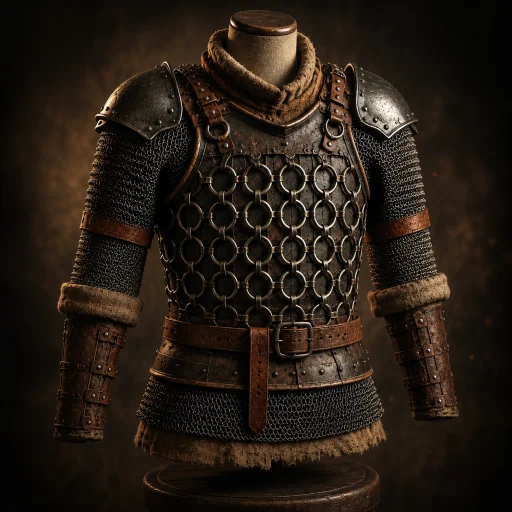
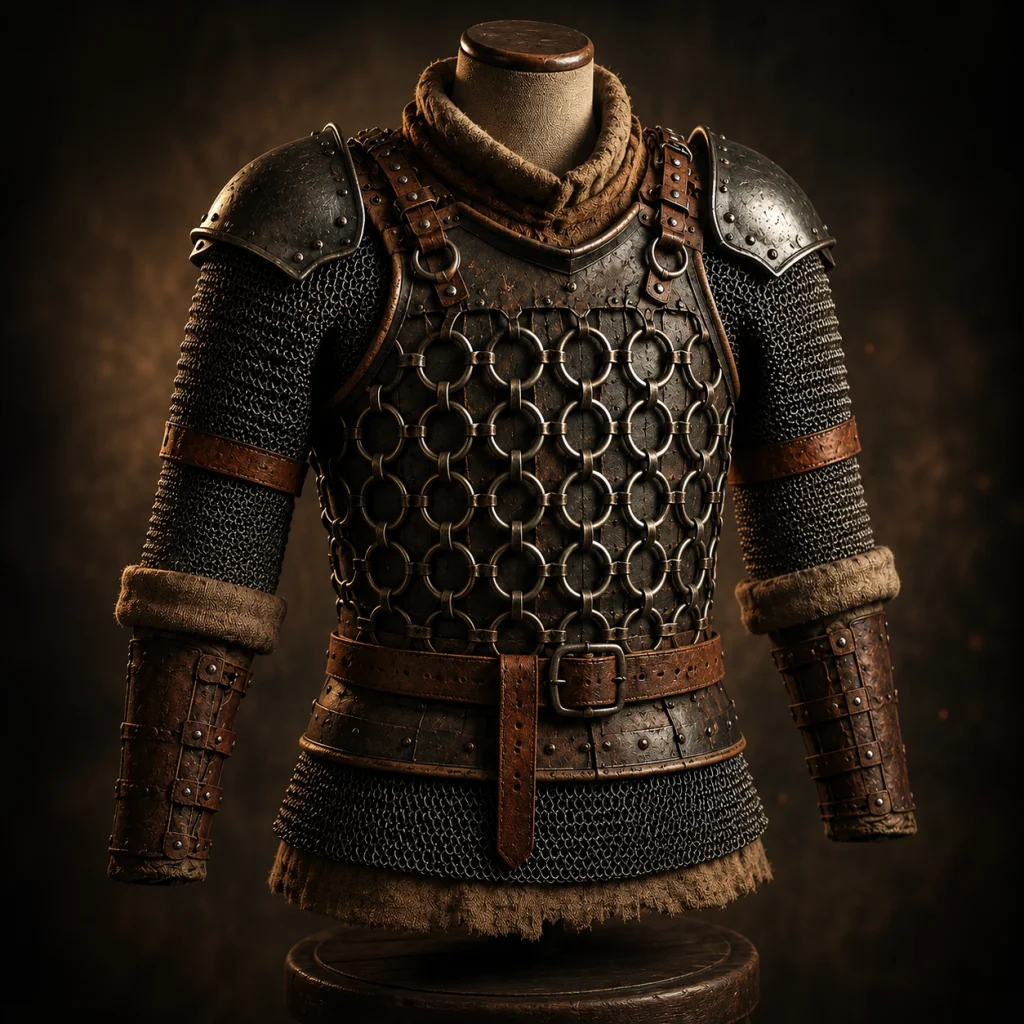
Ring mail armor is the sort of protection that looks simple until someone tests it and learns humility through bruising. Broad metal rings are sewn across a fitted backing in overlapping rows, giving the piece a rugged, practical shape that moves better than heavier protection while still carrying enough bite to discourage careless blades. It does not gleam like parade steel; it has the workmanlike confidence of something built to be worn, sweated in, cursed at, and trusted anyway.
Its design comes from hard use rather than courtly elegance. The armor favors flexibility, quick fastening, and steady coverage, making it suited to patrols, road defense, caravan work, and other situations where danger is rude enough to arrive before anyone has finished breakfast. The rings shift with a low clatter when the wearer moves, a sound somewhere between warning bell and bad idea getting dressed.
What makes it significant is its balance of movement and reassurance. It gives the wearer enough freedom to duck, turn, climb, or leave quickly if a conversation becomes stabby, while still offering a sturdy barrier between soft flesh and sharp opinions. It may not make anyone look noble, but it does make survival seem slightly less optimistic, and that is its own kind of charm.
Its design comes from hard use rather than courtly elegance. The armor favors flexibility, quick fastening, and steady coverage, making it suited to patrols, road defense, caravan work, and other situations where danger is rude enough to arrive before anyone has finished breakfast. The rings shift with a low clatter when the wearer moves, a sound somewhere between warning bell and bad idea getting dressed.
What makes it significant is its balance of movement and reassurance. It gives the wearer enough freedom to duck, turn, climb, or leave quickly if a conversation becomes stabby, while still offering a sturdy barrier between soft flesh and sharp opinions. It may not make anyone look noble, but it does make survival seem slightly less optimistic, and that is its own kind of charm.