


- Out of the Fog
- Coin in Hand, No Questions
- Past the Toll-Takers
The Fogpole Ferry
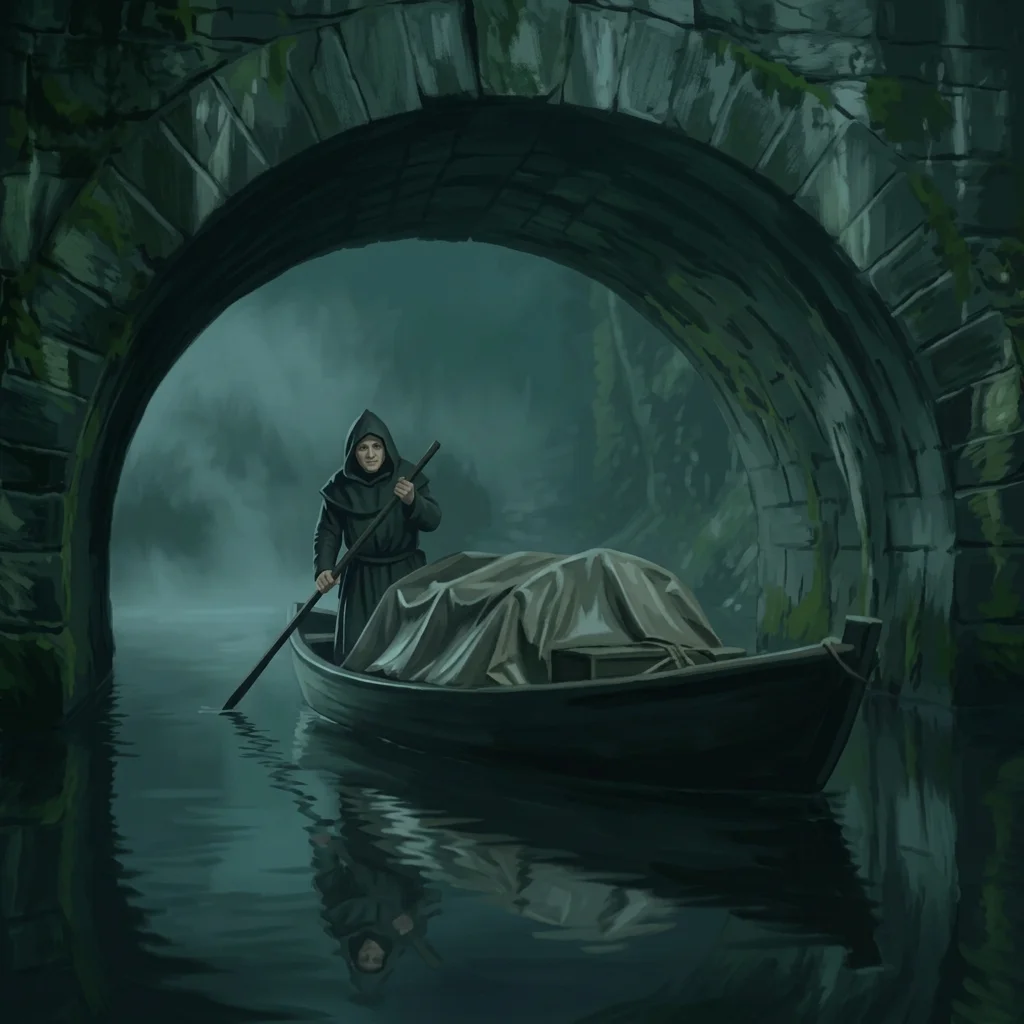
On the last stretch of forest bank before the trees close in, a mossy stone arch stands over a pool of black water that never seems to move. When the river mist lies thick on the water, a broad, flat boat under a tarpaulin slips out from beneath it, poled from the stern by an old ferryman in a deep hood. This is the Fogpole Ferry, and it is not on any harbor master's list.
It runs a short, quiet crossing between the forest bank and the narrow tip of the Three Rivers peninsula, beyond the last quay lamp and the last watch-post, where the fog hides a landing no tax clerk has ever been asked to count. What the harbor would toll comes through here untolled: casks without seals, crates without ledgers, a roll of cloth, a sack of forest herbs, and now and then a passenger who would rather not give a name at the gate. The fare is paid in coin, in hand, before the boat leaves the bank. The ferryman is cheerful about the money and firm about the quiet. Where a passenger is going, what is under the sacking and who is waiting at the other end are not asked, and passengers who ask in return get a smile and no answer. The pole never splashes and the boat never rocks.
Honest travellers use the Heronfoot Ferry north of the city, which has a bell and a ledger and asks them nothing worse than the fare. The Fogpole has neither. It carries up to eight passengers or a small load, nothing that needs a ramp, and in clear weather it does not run. The arch is only an arch then, and the water beneath it is only water.