


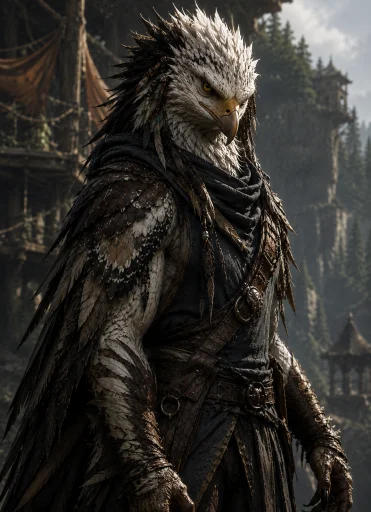

- Jungle Watchers
- Coastal Wilds
- Silent Grace
The Prideland
Those who dwell here move with patient grace, watching from shadowed branches, green hollows, and high jungle paths. They are not quick to welcome strangers, but neither are they careless enough to reveal fear. Curiosity waits behind guarded eyes, and silence often says more than speech. A soft laugh in the leaves, a footprint gone by morning, a flash of movement at the edge of sight - the jungle has manners, but not the kind that promise safety.
The Prideland is beautiful, alert, and deeply unwilling to be owned. It offers hidden trails, coastal vantage points, secret shelters, and encounters shaped by caution rather than open hostility. Those who linger may find respect, warning, or teeth behind the leaves, depending on how politely they mistake themselves for invited.
The Prideland has always had its stories about the gray-furred hunter with red eyes, and he has always enjoyed them. Lately the stories have changed. A new trail cuts through the coastal jungle toward the sea, crates move along it by night toward Coral Bay, and the trees beside it carry fresh claw marks meant to frighten the villages into staying home.
Dreadclaw did not make those marks. Someone is using his name as a scarecrow, and the smugglers who profit from it laugh about the beast they invented around their fire. For a hunter who fears being forgotten more than any blade, being turned into a cheap trick is the one insult he cannot let pass.
This is a story of borrowed legends and the price of using one. You can help him stage the hunt he wants, warn the smugglers before he finds them, or try to profit from both sides of the trail. In the Prideland the jungle watches before it decides to pounce, and tonight it has an audience.
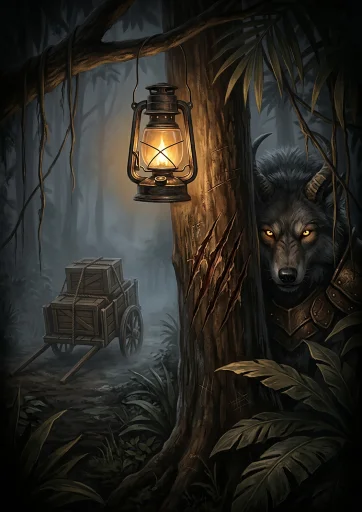
- Borrowed Legend
- Smugglers' Trail
- An Audience Required

- Forest Suspicion
- Academic Authority
- Uneasy Enemies
The old forest has always kept its own laws. Beneath towering trees and tangled undergrowth, silence is not emptiness but warning, and every path belongs to those who know how to listen. The forest guardian moves through that stillness with feline grace, watching intruders from shadow and leaf, certain that whatever comes from the academy above brings danger with it.
Up the hill, the headmistress follows a different kind of trail: records altered, arcane traces misplaced, questions answered too neatly by people with too much to hide. She does not enter the forest as a conqueror, but she does enter as someone accustomed to being obeyed. Unfortunately, the woods do not recognize titles, polished diction, or the charming little arrogance of scholars who believe every mystery wants to be catalogued.
Their conflict begins with suspicion and sharp words, but the deeper danger is not simply between them. One protects the wild from exploitation. The other hunts misuse of knowledge before it spreads beyond control. They stand closer to the same truth than either wants to admit, but pride, culture, fear, and old boundaries turn allies into enemies long before either can afford the luxury.
The archives were supposed to hold answers. Instead, altered records, missing pages, and arcane traces point beyond the academy walls and into the old forest below. For the headmistress, the matter is not superstition or rustic panic; it is evidence, and evidence does not get to hide behind leaves, claws, or a dramatic amount of purring in the dark.
The forest, however, does not welcome investigation. Beneath its towering trees, the air thickens with territorial silence, and every path seems to shift under watchful eyes. The feline guardian who stalks those shadows treats the academy as an intrusion, a threat wrapped in candlelight and polished words. To her, the woman from the hill is not a seeker of truth, but another scholar come to name, bind, and exploit what was never hers.
Their conflict is sharpened by misunderstanding. One follows documents, motive, and the misuse of dangerous knowledge. The other follows scent, instinct, and the wounds left behind when outsiders take too much. They are both hunting corruption, but pride and culture turn shared purpose into opposition before either can recognize it.
What begins as an investigation becomes a battle of perception: archive against undergrowth, rhetoric against growl, candle against claw. The headmistress must decide whether the forest’s guardian is the source of the danger, its victim, or the rudest possible ally fate could have dragged across her path.

- Archive Suspicion
- Claws Below
- Reluctant Truth

- Silent Watchers
- Guarded Kinship
- Jungle Grace
The Pride moves through the coastal jungle as if the land itself taught them where to place each step. They are not merely residents of hidden trails and watched borders; they are a people shaped by listening, restraint, and the knowledge that survival often belongs to whoever speaks last. Their purpose is simple, but never soft: protect their own, preserve their ways, and let outsiders prove whether they deserve anything more than a warning.
Their reputation depends on who is telling the story. Respectful visitors call them disciplined, graceful, and almost impossibly patient. Trespassers tend to use less flattering words, usually right before discovering that silence can have claws. The Pride does not waste energy on grand threats or theatrical displays; they prefer observation, misdirection, and sudden action once the choice has already been made.
Dealing with them means accepting that trust is not granted because someone asks nicely, smiles sweetly, or brings a shiny bargain with suggestive confidence. Every gesture is measured. Every silence has weight. Every path through their territory feels like an invitation only until it becomes clear the jungle was watching first.
Pridarii move through shadow like thought given claws. Sleek, alert, and dangerously graceful, they are rarely where an outsider last saw them and almost never where an outsider expects them next. Their eyes catch the dark with a hunter’s patience, their tails betray subtle moods, and every quiet step carries the unsettling promise that they noticed everything first.
They are built for pursuit, secrecy, and sudden decision. In dim places, their silence becomes almost unfair; padded movement, keen senses, and liquid control allow them to pass near without disturbing leaf, sand, stone, or sleeping pride. When prey behavior stirs their instincts, the world sharpens around them, turning scent, sound, and motion into a map few can escape.
Their culture balances kinship with independence. Packs provide memory, protection, teaching, and belonging, but each Pridar carries a private edge of curiosity and self-command that resists ownership. They watch before trusting, test before accepting, and vanish when crowded too closely by rules, strangers, or anyone foolish enough to mistake beauty for tameness.
What makes them compelling is that tension between elegance and danger. They can be playful, watchful, flirtatious, aloof, and lethal without changing posture. Befriending them means earning trust from something that could have left at any time, and chose instead to stay close enough for its claws to matter.
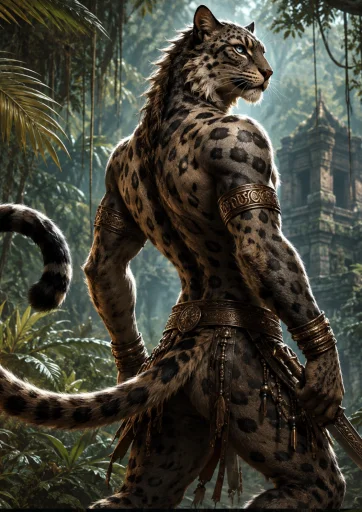
- Silent Hunters
- Liquid Grace
- Watchful Packs
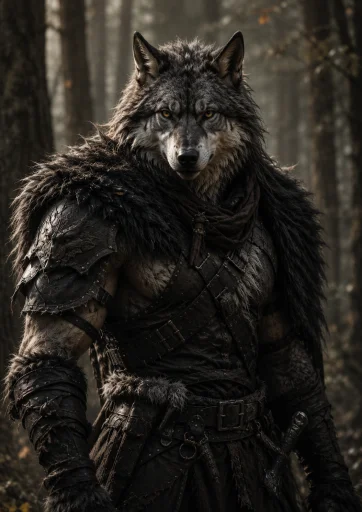
- Pack Loyalty
- Shared Senses
- Feral Honor
Wolfkin carry the wild authority of the hunt in every movement. Broad-shouldered, furred, sharp-eyed, and built for pursuit, they move on powerful digitigrade legs with a balance that makes rough ground feel like a suggestion. Their ears track every shift in the dark, their tails speak moods before words do, and their jaws remind the overly confident that some smiles come with consequences.
They are at their strongest together. A single Wolfkin is dangerous, but a pack becomes something larger than numbers: shared scent, shared instinct, shared warning, and near-wordless coordination that turns the forest into a net. What one hears, another understands. What one smells, all may answer. It is not strategy in the polite, table-planning sense; it is survival moving through many bodies with one purpose.
Their culture is shaped by loyalty, memory, endurance, and the fierce intimacy of belonging. Clans function as extended families, bound by tradition, shared danger, and the kind of trust that does not need to be spoken every five minutes to prove it still has teeth. Elders are honored not only for age, but for the stories, guidance, scars, and hard-won restraint carried beneath silvering fur.
What makes Wolfkin compelling is the balance between savagery and devotion. They can be brutal in battle, tender with kin, suspicious of outsiders, and unexpectedly charming when someone survives long enough to earn the softer side of the growl. They are not tame, not mindless, and not easily fooled. They are pack, fang, memory, and oath wrapped in fur.