

- Necromantic Sorcery
- Funeral Rituals
- Cryptic Prophecy
Grave Hag
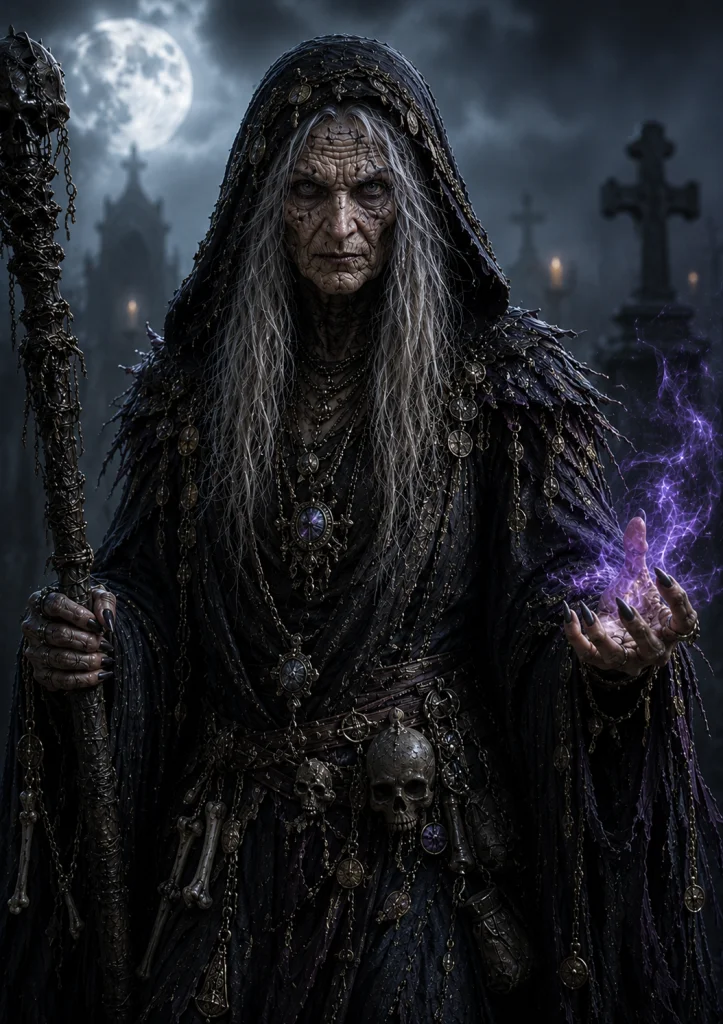
Grave Hags are what happens when death stops being an ending and becomes a household habit. They linger in places soaked with loss, draped in funeral scraps, bone charms, and relics taken from the quiet hands of the dead. Their bodies look half-buried even when standing upright, all hollow eyes, cracked skin, brittle claws, and hair like something pulled from damp earth.
Their presence changes the air before they speak. Cold gathers near them, grief rises without permission, and stray thoughts turn suspicious, sorrowful, or afraid. This dread is not always deliberate; it leaks from them like chill from an open crypt, making even brave souls feel as though someone just whispered their name from under the floorboards.
A Grave Hag’s craft is slow, patient, and intimate with endings. She may hide behind the shape of a mourner or grieving shade, passing through dim places where sadness makes everyone easier to fool. With time and stillness, she can draw spirits close, bargain with what lingers, and coax grave-blooming magic from soil that remembers too much.
What makes her dangerous is not only death magic, but manners. She knows how to sound compassionate while measuring a soul for use, how to offer closure with one hand while hiding the hook in the other. Anyone seeking her aid may leave with answers, but answers from the grave are rarely clean, and they almost never come cheap.
Their presence changes the air before they speak. Cold gathers near them, grief rises without permission, and stray thoughts turn suspicious, sorrowful, or afraid. This dread is not always deliberate; it leaks from them like chill from an open crypt, making even brave souls feel as though someone just whispered their name from under the floorboards.
A Grave Hag’s craft is slow, patient, and intimate with endings. She may hide behind the shape of a mourner or grieving shade, passing through dim places where sadness makes everyone easier to fool. With time and stillness, she can draw spirits close, bargain with what lingers, and coax grave-blooming magic from soil that remembers too much.
What makes her dangerous is not only death magic, but manners. She knows how to sound compassionate while measuring a soul for use, how to offer closure with one hand while hiding the hook in the other. Anyone seeking her aid may leave with answers, but answers from the grave are rarely clean, and they almost never come cheap.