- Coven Hierarchies
- Corruption Magic
- Emotionally Predatory
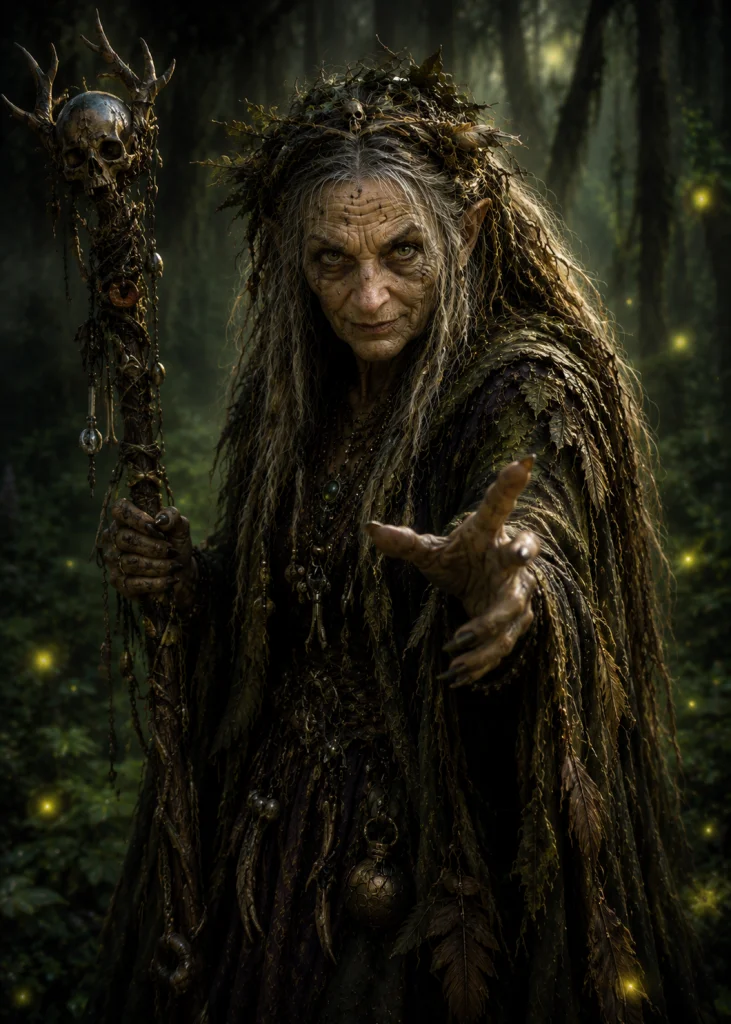
Hag
Hags are the kind of Fey that make silence feel crowded. They gather where the world has grown thin, wounded, or willing to listen too closely, turning isolation into influence and old sorrow into power. Their presence rarely arrives as simple terror; it seeps in through bad dreams, whispered bargains, missing memories, and the sudden certainty that someone has been waiting behind the door for longer than the door has existed.
Their magic is intimate in the worst way. A Hag does not need to break a wall when she can teach the house to hate its owner. Curses, glamours, spirits, symbolic objects, and emotional pressure are their favored tools, each one shaped to slip past armor and settle somewhere softer. They study fear, vanity, grief, desire, and weakness with the patience of someone selecting fruit at market, only with fewer manners and more teeth in the smile.
Hag culture values knowledge that costs something. Bargains, favors, coven obligations, hidden names, old rituals, and carefully preserved grudges pass between them like currency. Trust is rare, rivalry is common, and affection, when it exists, usually comes wrapped in hooks. A Hag may offer kindness, even comfort, but the wise ask what part of themselves is being measured for the bill.
What makes them dangerous is not only their power, but their understanding of need. They know how hunger sounds when it pretends to be ambition, how loneliness dresses itself for company, and how desperation can be kissed on the forehead before being led politely into a cage. They are not merely monsters in the dark. They are the reason the dark learned to negotiate.
Their magic is intimate in the worst way. A Hag does not need to break a wall when she can teach the house to hate its owner. Curses, glamours, spirits, symbolic objects, and emotional pressure are their favored tools, each one shaped to slip past armor and settle somewhere softer. They study fear, vanity, grief, desire, and weakness with the patience of someone selecting fruit at market, only with fewer manners and more teeth in the smile.
Hag culture values knowledge that costs something. Bargains, favors, coven obligations, hidden names, old rituals, and carefully preserved grudges pass between them like currency. Trust is rare, rivalry is common, and affection, when it exists, usually comes wrapped in hooks. A Hag may offer kindness, even comfort, but the wise ask what part of themselves is being measured for the bill.
What makes them dangerous is not only their power, but their understanding of need. They know how hunger sounds when it pretends to be ambition, how loneliness dresses itself for company, and how desperation can be kissed on the forehead before being led politely into a cage. They are not merely monsters in the dark. They are the reason the dark learned to negotiate.
- Bog Witchery
- Toxic Touch
- Mire Bargains
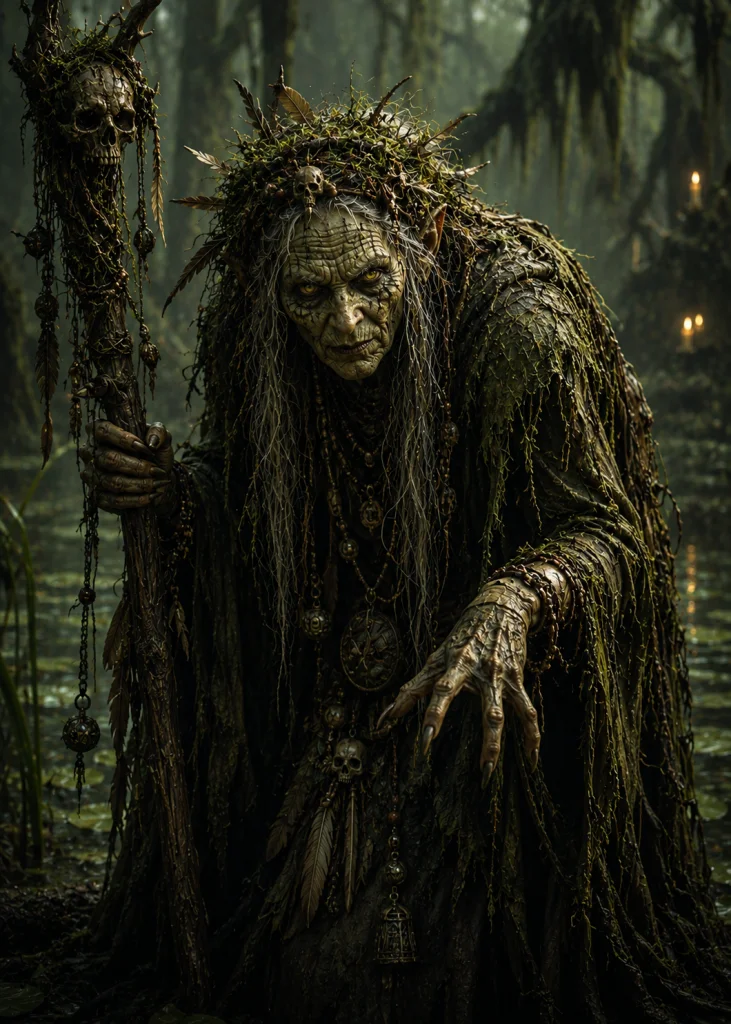
Swamp Hag
Swamp Hags are solitary, cunning, and deeply territorial, lurking in murky bogs, fetid marshes, and mist-covered rivers. They are manipulative by nature, weaving half-truths and riddles to ensnare those foolish enough to wander into their domain. While most are feared for their malicious trickery and dark magic, some act as oracles or reclusive healers, though their aid often comes at a steep price.
They thrive in seclusion, emerging only to bargain, deceive, or exact revenge. They hoard secrets, knowing that knowledge is the most potent weapon, and delight in the desperation of those who seek them out.
They thrive in seclusion, emerging only to bargain, deceive, or exact revenge. They hoard secrets, knowing that knowledge is the most potent weapon, and delight in the desperation of those who seek them out.
- Aquatic Predators
- Drowned Relics
- Siren Mimicry
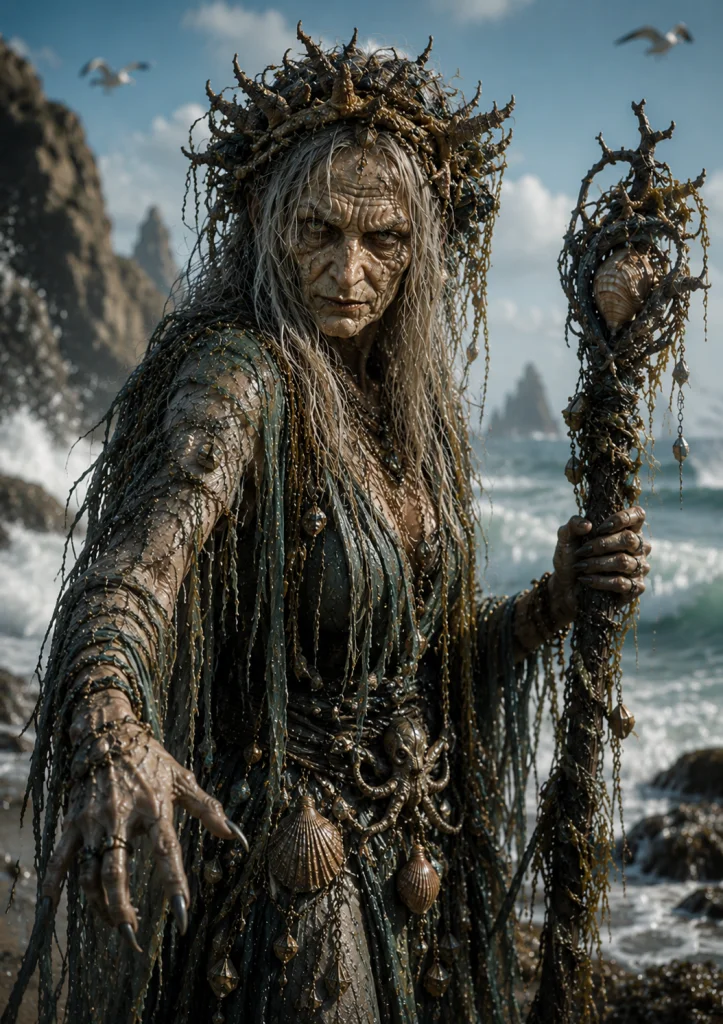
Sea Hag
Sea Hags are highly territorial creatures inhabiting reefs, sea caves, shipwrecks, isolated islands, mangrove swamps, and storm-battered coastlines. Many collect drowned relics, pearls, bones, figureheads, nautical charms, and treasures stolen from sunken vessels. Sailors frequently fear them as omens of shipwrecks, storms, disappearances, or cursed waters, though desperate coastal communities sometimes bargain with them for favorable tides, safe voyages, or protection from the sea.
- Necromantic Sorcery
- Funeral Rituals
- Cryptic Prophecy
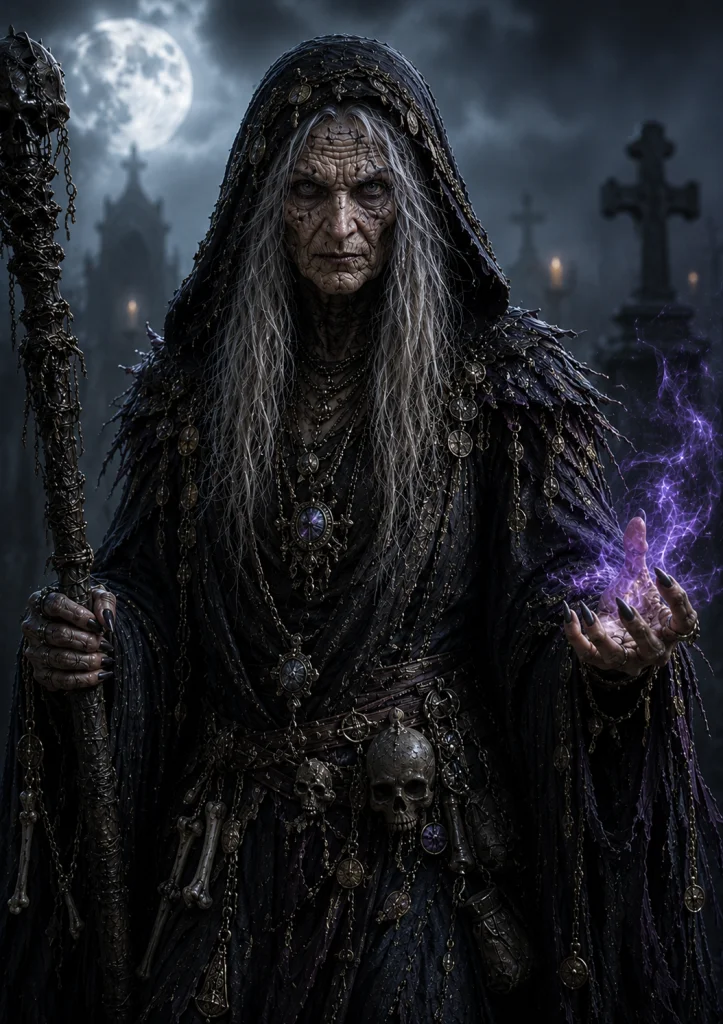
Grave Hag
Grave Hags are solitary keepers of death, frequently inhabiting mausoleums, forgotten cemeteries, plague pits, catacombs, or abandoned battlefields. They collect bones, funerary relics, preserved organs, epitaphs, and spirit-bound objects as part of their rituals and magical practices. Though feared by most societies, some are secretly consulted for ancestor rites, forbidden necromancy, spirit cleansing, or communication with the dead.