- Brutal Endurance
- Kinship Honor
- Living Strength
Orc
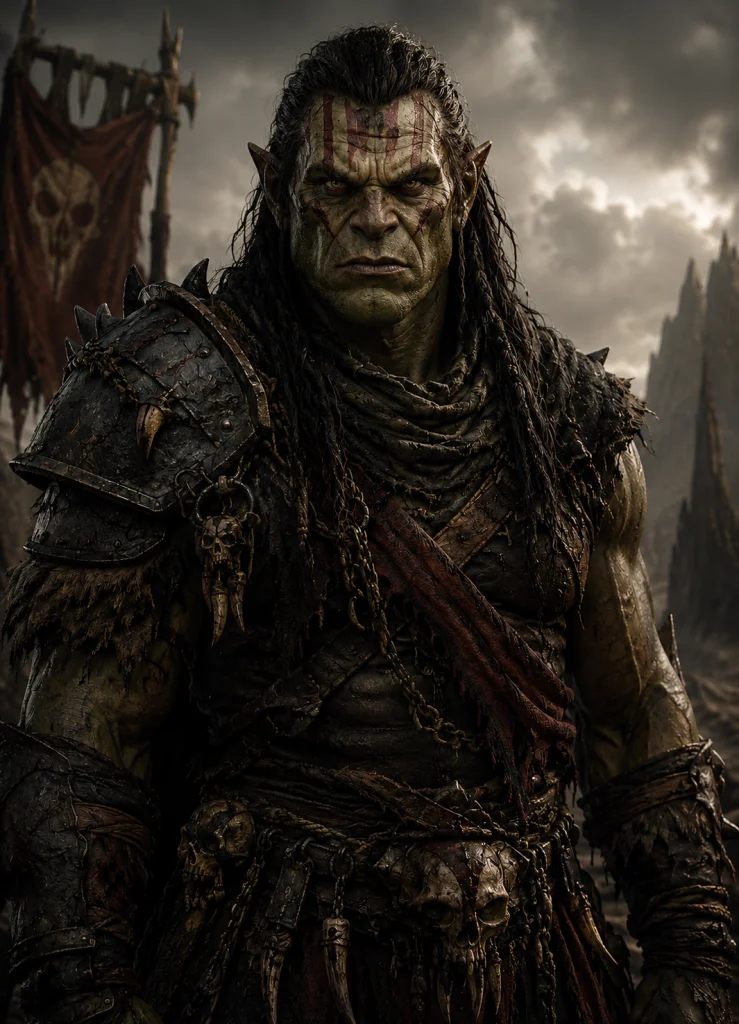
Orcs enter a room like the door should have negotiated first. Massive, scarred, and built from muscle, grit, and bad ideas survived through stubbornness, they carry a physical presence that makes weaker threats reconsider their life choices. Their tusks, heavy brows, broad hands, and faintly glowing eyes can look brutal to outsiders, but among their own, every scar and hardened line is part of a longer story.
They are not mindless raiders or walking fists, no matter how often fools say it from a very safe distance. Orc strength is practical: it builds shelters, hammers iron, drags the wounded home, hunts through storms, and stands between kin and whatever has chosen the wrong damn day. Endurance is respected as much as force, and loyalty weighs more than pretty speeches.
Their societies value proof over polish. A boast means little unless the body can back it, a promise means everything once given, and courage without wisdom is just noise with bruises. They can be fierce, blunt, and intimidating, but also deeply communal, protective, and unexpectedly patient with those who earn their trust.
An orc may laugh loud, fight hard, flirt with all the subtlety of a thrown anvil, and still notice who needs food before pride lets them ask. To stand with them is to learn that strength is not only what breaks the enemy — it is what survives long enough to carry everyone else through.
They are not mindless raiders or walking fists, no matter how often fools say it from a very safe distance. Orc strength is practical: it builds shelters, hammers iron, drags the wounded home, hunts through storms, and stands between kin and whatever has chosen the wrong damn day. Endurance is respected as much as force, and loyalty weighs more than pretty speeches.
Their societies value proof over polish. A boast means little unless the body can back it, a promise means everything once given, and courage without wisdom is just noise with bruises. They can be fierce, blunt, and intimidating, but also deeply communal, protective, and unexpectedly patient with those who earn their trust.
An orc may laugh loud, fight hard, flirt with all the subtlety of a thrown anvil, and still notice who needs food before pride lets them ask. To stand with them is to learn that strength is not only what breaks the enemy — it is what survives long enough to carry everyone else through.