

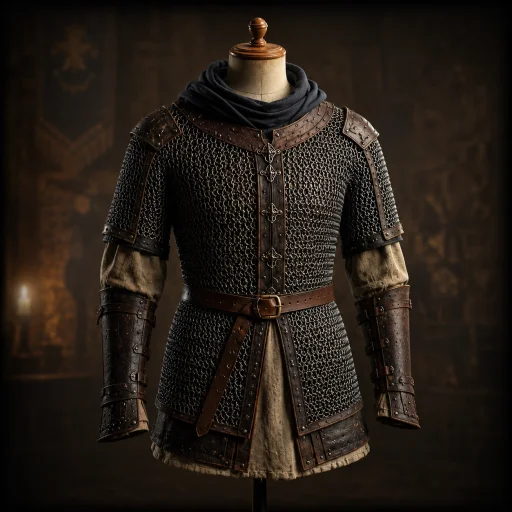

Relics, Steel, and Stolen Things
Every weapon, robe, charm, tool, and cursed little object has a history, even when that history is mostly poor judgment. Some are forged for war, some for survival, and some clearly should have been left exactly where they were found. The right item can save a life, open a door, expose a secret, or turn a terrible plan into a survivable one. Carry wisely; pockets are small, consequences are not.
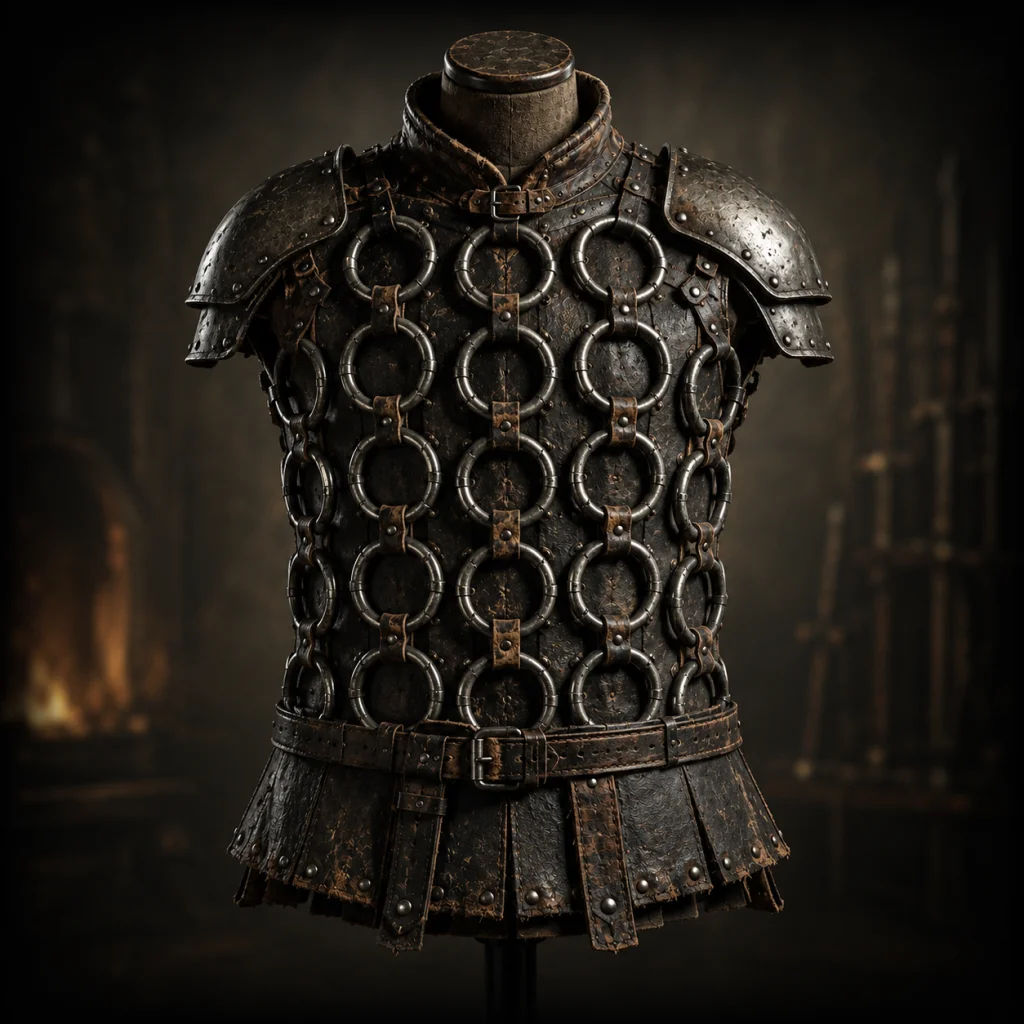
- Dented Rings
- Rough Protection
- Still Holding
Dented But Defiant
The battered ringmail armor looks like it has already survived the argument and is waiting to see who wants to be stupid next. Its surface is a rough patchwork of linked rings, worn straps, dented fastenings, and repairs that do not match because survival rarely comes with a matching set. It hangs with uneven weight, but there is purpose in the ugliness; every scuff says something sharp tried to get through and had to work for it.
This is not armor made for ceremony or clean banners. It belongs to muddy roads, desperate watches, cramped skirmishes, and the kind of close fighting where breath, sweat, and panic all get a little too intimate. The rings do not shine, and some sit flatter than they should, but the armor still offers the stubborn comfort of something that has taken hits before and refuses to act impressed.
Its significance comes from its honesty. Battered ringmail does not pretend to make anyone untouchable, gorgeous, or destined for ballads. It simply gives the wearer a better chance to stay upright when the world gets rude with blades, claws, or bad decisions. There is a certain charm in that, if one likes their protection dented, loyal, and only mildly judgmental.
This is not armor made for ceremony or clean banners. It belongs to muddy roads, desperate watches, cramped skirmishes, and the kind of close fighting where breath, sweat, and panic all get a little too intimate. The rings do not shine, and some sit flatter than they should, but the armor still offers the stubborn comfort of something that has taken hits before and refuses to act impressed.
Its significance comes from its honesty. Battered ringmail does not pretend to make anyone untouchable, gorgeous, or destined for ballads. It simply gives the wearer a better chance to stay upright when the world gets rude with blades, claws, or bad decisions. There is a certain charm in that, if one likes their protection dented, loyal, and only mildly judgmental.
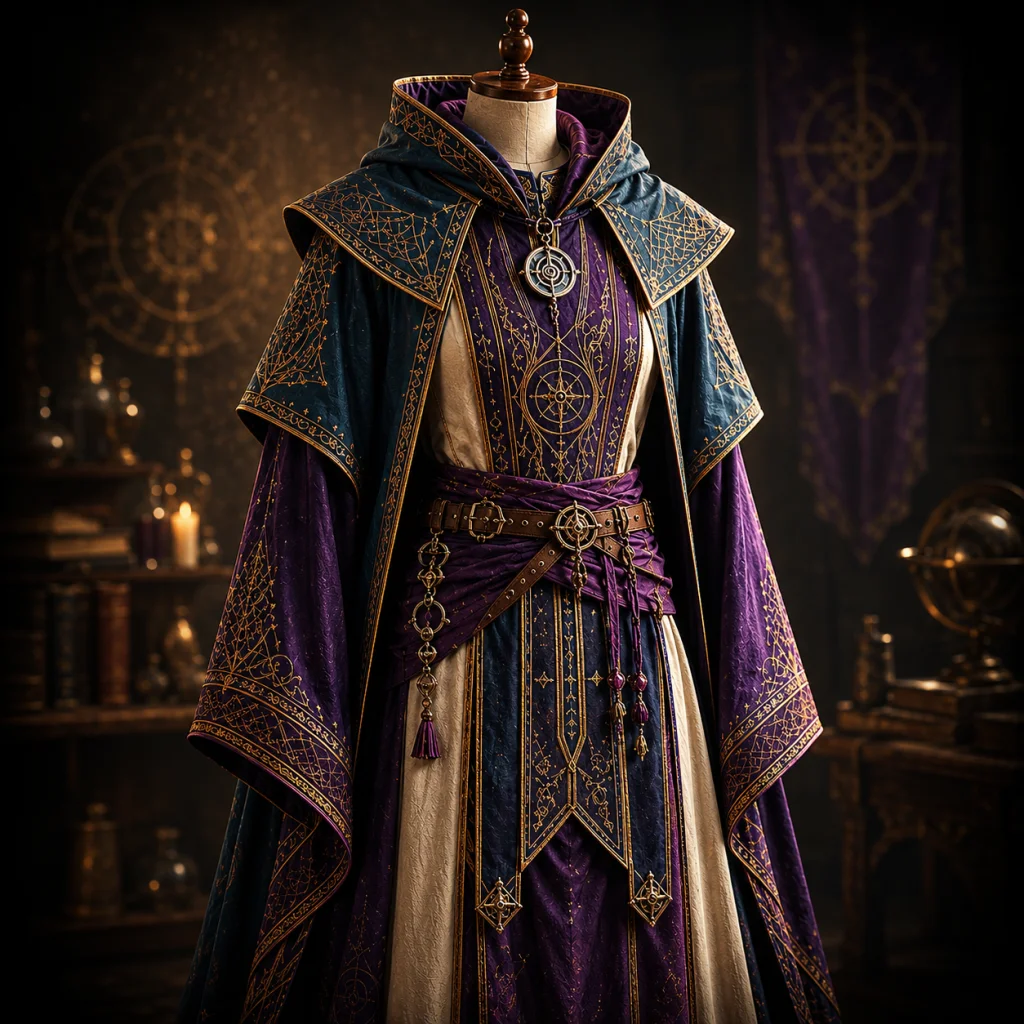
- Arcane Presence
- Ritual Grace
- Hidden Power
Dressed for Ruin
Sorcerer’s robes carry the quiet arrogance of fabric that has stood too close to dangerous knowledge and decided to look good doing it. The cut is flowing but deliberate, layered to move easily around the body while keeping the wearer wrapped in shadow, candlelight, and just enough mystery to make nearby fools lean in when they absolutely should not. Reinforced hems, shaped sleeves, and hidden inner stitching suggest the maker expected sparks, smoke, and at least one beautifully regrettable decision.
These robes are made for those who treat magic less like a miracle and more like a loaded conversation. They belong in ritual chambers, sealed studies, ruined halls, and tense rooms where everyone pretends not to notice the air bending strangely around the wearer. Their power is not loud; it is in the weight of the cloth, the restraint of the design, and the unsettling impression that the garment is listening.
What makes them significant is the balance between elegance and warning. They flatter without begging, conceal trembling hands when power becomes costly, and turn every slow gesture into a threat arriving fashionably late. They are not protection in the crude sense, but they guard something more fragile: composure, mystique, and the right to look devastating while making a terrible choice.
These robes are made for those who treat magic less like a miracle and more like a loaded conversation. They belong in ritual chambers, sealed studies, ruined halls, and tense rooms where everyone pretends not to notice the air bending strangely around the wearer. Their power is not loud; it is in the weight of the cloth, the restraint of the design, and the unsettling impression that the garment is listening.
What makes them significant is the balance between elegance and warning. They flatter without begging, conceal trembling hands when power becomes costly, and turn every slow gesture into a threat arriving fashionably late. They are not protection in the crude sense, but they guard something more fragile: composure, mystique, and the right to look devastating while making a terrible choice.
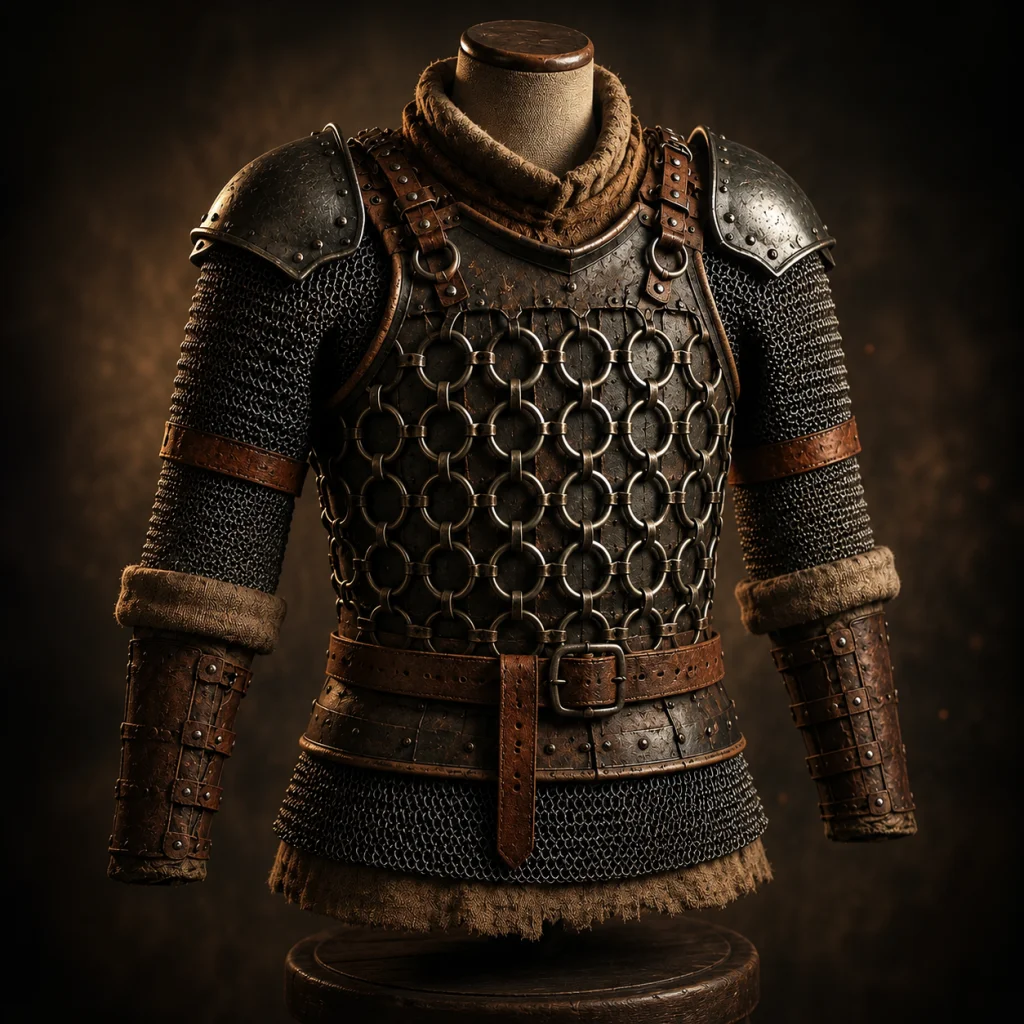
- Flexible Rings
- Road Defense
- Steady Coverage
Rings in Motion
Ring mail armor is the sort of protection that looks simple until someone tests it and learns humility through bruising. Broad metal rings are sewn across a fitted backing in overlapping rows, giving the piece a rugged, practical shape that moves better than heavier protection while still carrying enough bite to discourage careless blades. It does not gleam like parade steel; it has the workmanlike confidence of something built to be worn, sweated in, cursed at, and trusted anyway.
Its design comes from hard use rather than courtly elegance. The armor favors flexibility, quick fastening, and steady coverage, making it suited to patrols, road defense, caravan work, and other situations where danger is rude enough to arrive before anyone has finished breakfast. The rings shift with a low clatter when the wearer moves, a sound somewhere between warning bell and bad idea getting dressed.
What makes it significant is its balance of movement and reassurance. It gives the wearer enough freedom to duck, turn, climb, or leave quickly if a conversation becomes stabby, while still offering a sturdy barrier between soft flesh and sharp opinions. It may not make anyone look noble, but it does make survival seem slightly less optimistic, and that is its own kind of charm.
Its design comes from hard use rather than courtly elegance. The armor favors flexibility, quick fastening, and steady coverage, making it suited to patrols, road defense, caravan work, and other situations where danger is rude enough to arrive before anyone has finished breakfast. The rings shift with a low clatter when the wearer moves, a sound somewhere between warning bell and bad idea getting dressed.
What makes it significant is its balance of movement and reassurance. It gives the wearer enough freedom to duck, turn, climb, or leave quickly if a conversation becomes stabby, while still offering a sturdy barrier between soft flesh and sharp opinions. It may not make anyone look noble, but it does make survival seem slightly less optimistic, and that is its own kind of charm.
- Rusted Edge
- Last Resort
- Ugly Survivor
Bad Steel
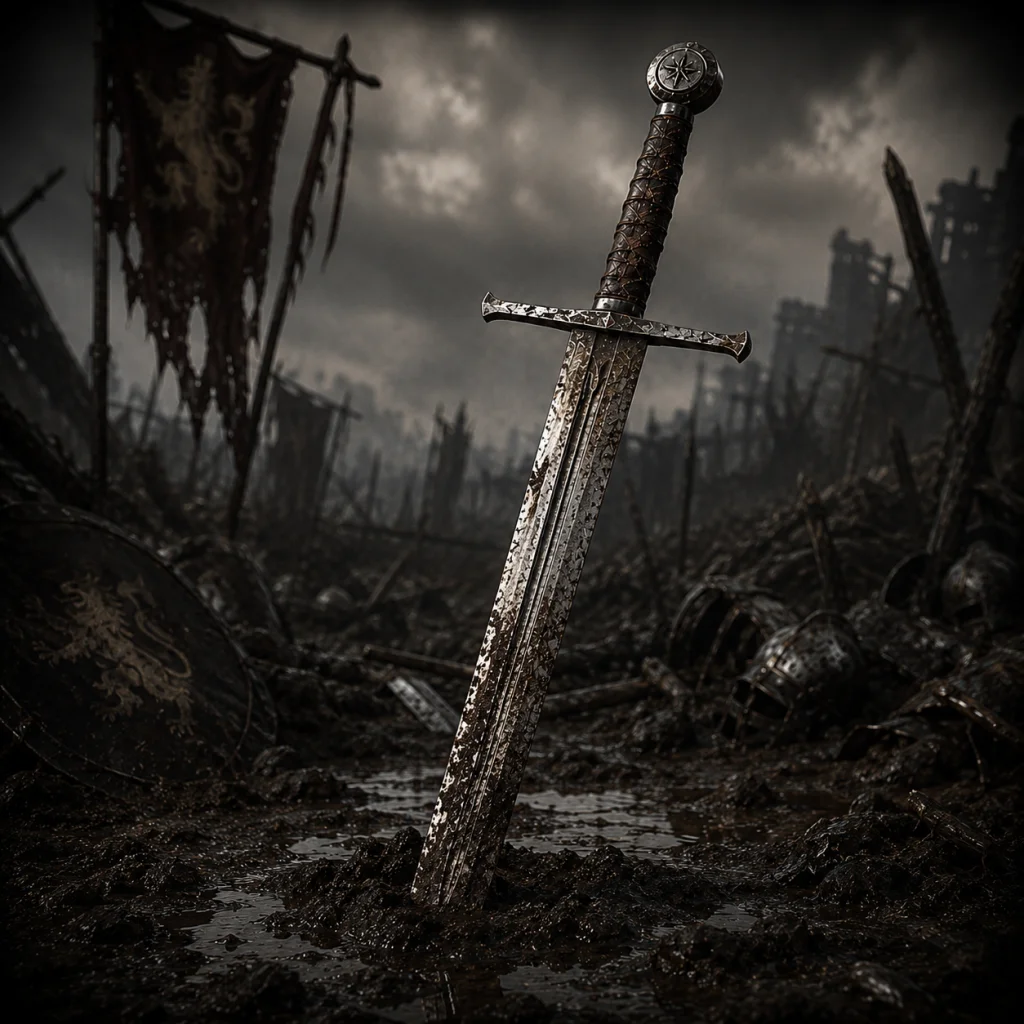
The rusted longsword looks like it has survived three wars, two bad owners, and at least one extremely disrespectful puddle. Its edge is uneven, its fuller is dark with corrosion, and the grip shows the tired polish of hands that either trusted it too much or had no better option. It does not shine, sing, or promise glory. It hangs there with the sour dignity of a weapon that knows everyone is judging it.
No one keeps a blade like this because it is beautiful. They keep it because steel, even neglected steel, still remembers its shape. Beneath the rust and chipped edge, the weapon carries enough balance to threaten, enough weight to discourage mockery, and enough history to make every stain feel like evidence. It is less a noble armament than a last resort with opinions.
Its significance lies in what it refuses to become: harmless. A polished sword may impress a court, but a rusted one tells a rougher truth. Someone carried it after better choices ran out. Someone swung it when fear got close. Someone survived with it, which is awkwardly romantic in the way only dangerous junk can be.
No one keeps a blade like this because it is beautiful. They keep it because steel, even neglected steel, still remembers its shape. Beneath the rust and chipped edge, the weapon carries enough balance to threaten, enough weight to discourage mockery, and enough history to make every stain feel like evidence. It is less a noble armament than a last resort with opinions.
Its significance lies in what it refuses to become: harmless. A polished sword may impress a court, but a rusted one tells a rougher truth. Someone carried it after better choices ran out. Someone swung it when fear got close. Someone survived with it, which is awkwardly romantic in the way only dangerous junk can be.