
- Reluctant Warden
- Conduit Keeper
- Dry Sarcasm
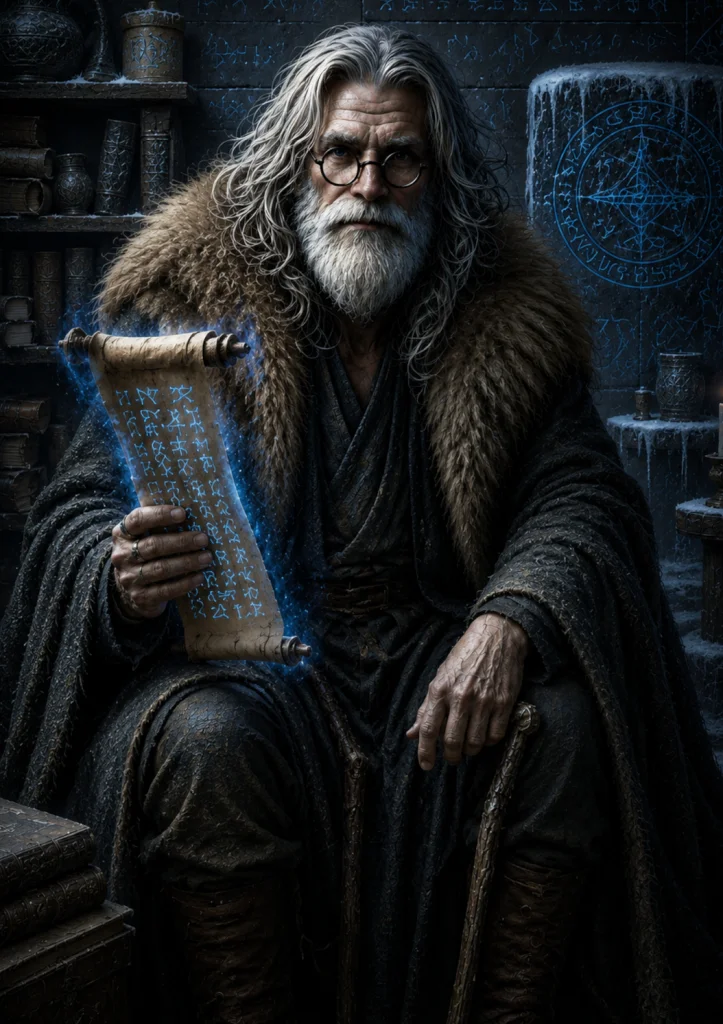
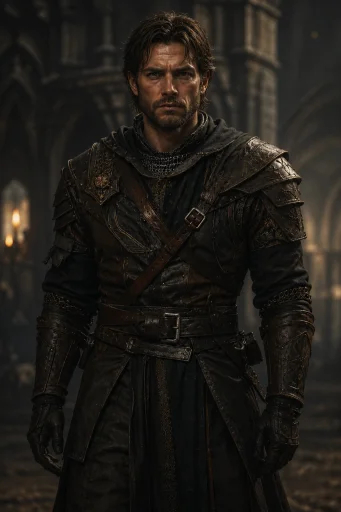
Sir Craigford "The Warden of Timony"
Alignment: Neutral Good
His strength is not the kind sung about in taverns. It is quieter, meaner, and far less decorative: the strength to keep working when sleep has become theoretical, to correct one more failing rune, to ignore praise, panic, and visitors in equal measure. He does not like company, but he will accept help if the alternative is watching ancient stone tear itself open.
His only reliable companion is a massive, unruly dog who causes half his problems, detects the other half, and somehow remains impossible to replace. Together, they haunt the frozen corridors like a warning no one bothered to write down. If the conduit fails, the realm may not understand what happened until magic itself forgets how to move.
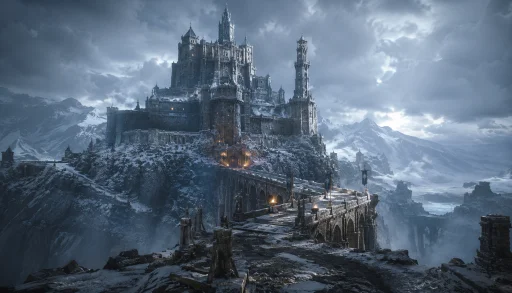
High in the frozen north, where the wind bites and the sun lingers only in memory, Timony Keep looms like a jagged crown upon the cliffs. Its stone towers pierce the clouds, ringed in frost and humming with unseen power. No road leads cleanly to its gates-only paths carved by memory or madness. Yet still, those with the gift, the hunger, or the debt find their way.
Within its halls, magic thrums through the walls like a heartbeat. Runes shift when unobserved. Candles burn without flame. It is said the Keep holds the Great Conduit-an ancient mechanism, perhaps alive, through which all magic flows into the realm. How it functions, none can say. It simply is-because he keeps it so.
Some claim the warden of Timony does not sleep. Others whisper that the title outlives the man, wearing each guardian down until blood, name, and memory blur into duty. Whether myth or warning, one truth remains: so long as he endures, magic remains. And should that change, the world will forget how to breathe.
- Frozen Citadel
- Living Conduit
- Silent Warden
- Stubborn Survivors
- Endless Adaptation
- Ordinary Trouble
Human
Humans arrive in the world without obvious advantages, which seems rude until they start turning that lack into everybody else’s scheduling problem. They build shelters where storms insist they should not, raise banners over places that keep trying to kill them, and make tools from whatever is close enough to grab. Give them a broken road, a bad season, and one questionable plan, and somehow there is a village there by spring. Annoying? Absolutely. Effective? Tragically, yes.
Their lives burn quickly compared to longer-lived peoples, and that urgency shapes everything they touch. They chase love, power, safety, glory, revenge, comfort, and terrible ideas with the same dangerous momentum. A human court can become a battlefield with better clothing, while a frontier camp can turn into a kingdom if enough stubborn fools agree to keep hammering posts into the mud. They do not always know when to stop, which is charming right up until it becomes a siege.
What makes humans significant is not perfection, purity, or some grand destiny conveniently gift-wrapped by the heavens. It is variety under pressure. They can be farmers, soldiers, rulers, wanderers, cowards, lovers, tyrants, protectors, liars, and heroes before lunch if the day is especially rude. They are ordinary in the way flint is ordinary: dull in the hand until struck, then suddenly full of fire.