


- Lethal Precision
- Possessive Loyalty
- Masked Vulnerability
Luna Soldori
Alignment: Chaotic Neutral
Her reputation is built from daring, sarcasm, and a talent for making trouble look intentional. She moves like a shadow with an attitude problem, slipping through markets and festivals while others are too charmed, flustered, or enchanted to notice the missing purse until she is already gone. She is not the cleanest thief in the city, but she is stubborn, quick, and annoyingly hard to catch.
Beneath the bite is a loyalty fierce enough to become dangerous. Her sister is the soft center of her world, the one person she protects without bargaining first. Every theft, trick, and reckless gamble is shaped by the same buried fear: that she must always be useful, always be sharper, always be necessary, or risk being left behind.
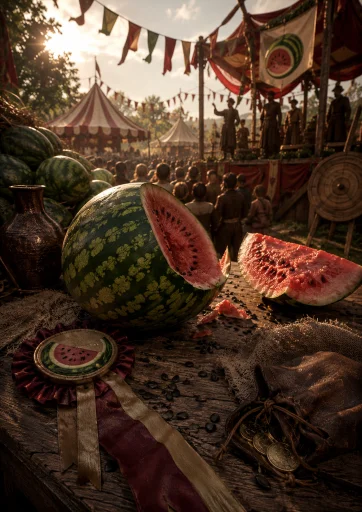
The festival should be all ripe fruit, loud cheers, sticky fingers, and harmless bragging - until the reigning seed-spitting champion steps up and the contest starts feeling rigged in ways nobody wants to say out loud. You arrive as wagers rise, smiles sharpen, and one suspicious melon threatens to turn a ridiculous tradition into a very real problem. Keep your eyes on the crowd, your hands on your coin, and maybe stand a few feet back from the champion's mouth, sweetie.
- Festival Trouble
- Seed Champion
- Sticky Schemes
- Mossy Riverside Charm
- Reformed Smuggler Den
- Warm Stew Always
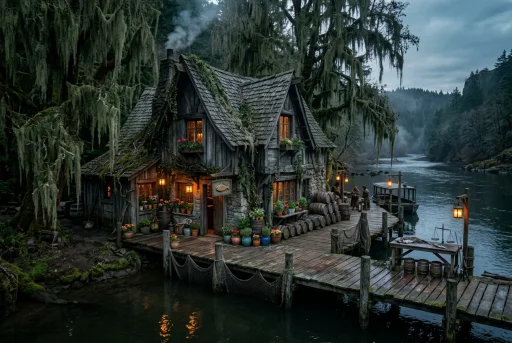
The River's Bounty squats at the water's edge in Three Rivers like a contented heron, all steep shingled roofs, crooked chimneys and timber gone silver with age. Spanish moss hangs from the great trees around it in long green curtains, brushing the roof and trailing over the dock, so that arriving feels like being gently welcomed by a damp, very old relative. Lanterns glow by the door and out on the pilings, and their light shivers across the dark water.
Inside, the air is warm with stew, woodsmoke and baking bread. Beams sag in a friendly way, a ring of silt called the high mark climbs the walls as a reminder of floods survived, and the fish on the sign wears a smile that changes depending on how much mead you have had. Out on the planked dock, nets are slung between posts, barrels wait in tidy rows and a worktable sees plenty of honest fish cleaning. It is a spot for travelers, ferry hands and townsfolk who want a meal that will not run out before they are fed.
People care about this place because it is changing. Once a smugglers' haunt, it is now run by a barkeep with a woman's touch and a firm hand: fresh flowers on the tables, a ladle always within reach and a look that can stop a brawl or start a flirtation, depending on her mood. Old habits linger in the shadows beneath the dock, and every patron has a secret or two. That makes it a fine place to hear rumors, strike a bargain or simply be fed and fussed over.
House Soldori is one of the most influential noble dynasties within Three Rivers, renowned for elegance, wealth, refinement, and political sophistication. Beneath their cultivated image of grace and stability lies a deeply manipulative power structure built upon emotional control, hidden truths, dependency, and carefully maintained illusion. Publicly, the house presents itself as cultured benefactors and protectors of civilized order. Privately, loyalty is cultivated through obligation, fear, affection, and psychological domination.
The Soldori estate is infamous for lavish gatherings, immaculate presentation, and quiet political influence extending far beyond its walls. Reputation is treated as sacred currency within the house, often valued above honesty, morality, or even blood itself. Family members are expected to embody perfection in public while suppressing personal weakness, dissent, or scandal at all costs.
House Soldori specializes not in open warfare, but in social leverage, manipulation, secrets, patronage, and emotional control. Their influence spreads through whispered agreements, financial dependency, strategic marriages, blackmail, and carefully engineered loyalty networks. Even acts of kindness from the house often carry invisible strings attached.
Though many within the house genuinely care for one another in their own distorted way, love within House Soldori is frequently inseparable from possession, expectation, and control.

- Velvet Aristocracy
- Wealth Incarnate
- Political Secrets

- Rising Crime Syndicate
- Dockside Operators
- Waterway Network
The Blackwake Union — known throughout Three Rivers simply as Blackwake — is a rising criminal syndicate controlling much of the city’s hidden water-based trade and smuggling activity. While larger organizations like the Ashen Accord dominate overland routes and established black markets, Blackwake built its power through mastery of the rivers themselves: hidden canals, flooded tunnels, forgotten docks, marsh inlets, sewer outlets, and nighttime river traffic invisible to ordinary authorities.
Born from rivermen, smugglers, dock laborers, ferrymen, and abandoned undercity districts, Blackwake developed into a fiercely territorial organization deeply tied to the waterways surrounding Three Rivers. The rivers are not merely trade routes to them — they are identity, livelihood, protection, and power. Their members navigate currents, tides, flood channels, and hidden passages with unmatched skill, allowing them to move contraband, people, information, and stolen goods through routes larger syndicates struggle to control.
Unlike the polished professionalism of the Ashen Accord, Blackwake maintains a rougher, more localized culture built around loyalty, survival, and shared hardship. Many poorer river districts quietly tolerate or even support the syndicate due to the protection, coin, and opportunity it provides where the city government has failed.
Blackwake’s influence remains mostly regional for now, but tensions with the Ashen Accord continue to escalate as the Union tightens its grip on the waterways feeding Three Rivers. Increasingly, the Accord controls the roads? while Blackwake controls what flows beneath them.
The Ashen Accord is a sprawling criminal syndicate operating across the realm through hidden trade routes, secret networks, bribery, smuggling, extortion, and organized underground commerce. Unlike chaotic street gangs or localized crime families, the Accord functions as a highly coordinated shadow economy connecting thieves, corrupt officials, assassins, fences, black market traders, mercenaries, and illegal magical practitioners beneath the surface of civilized society.
The organization thrives in instability, conflict, corruption, and desperation, embedding itself within cities, ports, border towns, noble courts, and trade caravans alike. Their influence extends far beyond simple contraband dealing, encompassing illegal magical artifacts, forbidden substances, information brokering, slave trafficking, political blackmail, underground fighting rings, and covert assassination contracts.
Though feared throughout the realm, the Ashen Accord maintains a surprisingly structured internal system governed by profit, leverage, secrecy, and negotiated balance rather than outright chaos. Betrayal within the organization is punished brutally, while competence and usefulness are rewarded regardless of origin, species, or social standing.
The Accord rarely seeks open control over territory, preferring instead to quietly infiltrate existing systems until entire economies, officials, or criminal operations become dependent upon them. Many rulers publicly denounce the Ashen Accord while privately relying on its networks for information, deniable operations, or illicit trade.
To most citizens, the Accord exists somewhere between rumor and nightmare — unseen until someone suddenly owes them something.
- Stubborn Survivors
- Endless Adaptation
- Ordinary Trouble
Human
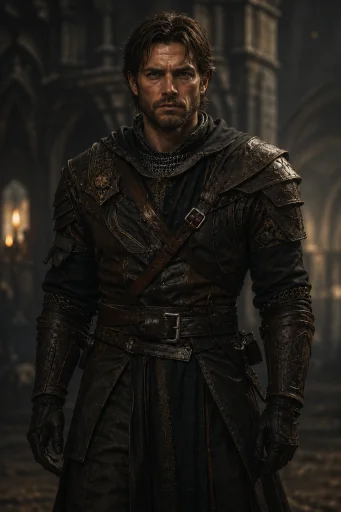
Humans arrive in the world without obvious advantages, which seems rude until they start turning that lack into everybody else’s scheduling problem. They build shelters where storms insist they should not, raise banners over places that keep trying to kill them, and make tools from whatever is close enough to grab. Give them a broken road, a bad season, and one questionable plan, and somehow there is a village there by spring. Annoying? Absolutely. Effective? Tragically, yes.
Their lives burn quickly compared to longer-lived peoples, and that urgency shapes everything they touch. They chase love, power, safety, glory, revenge, comfort, and terrible ideas with the same dangerous momentum. A human court can become a battlefield with better clothing, while a frontier camp can turn into a kingdom if enough stubborn fools agree to keep hammering posts into the mud. They do not always know when to stop, which is charming right up until it becomes a siege.
What makes humans significant is not perfection, purity, or some grand destiny conveniently gift-wrapped by the heavens. It is variety under pressure. They can be farmers, soldiers, rulers, wanderers, cowards, lovers, tyrants, protectors, liars, and heroes before lunch if the day is especially rude. They are ordinary in the way flint is ordinary: dull in the hand until struck, then suddenly full of fire.