



- Corrupt Aristocracy
- Manufactured Family
- Predatory Influence
Lord Augustus Soldori
Alignment: Lawful Evil
His public image is all generosity, refinement, and paternal warmth, but every kindness arrives with a clasp hidden somewhere beneath the velvet. He collects loyalty like jewelry, displays affection like wealth, and treats desperation as a resource to be weighed, priced, and purchased. Around him, charity becomes leverage, admiration becomes currency, and even family feels less like blood than a beautifully arranged possession.
The danger he presents is not the sword at the door, but the invitation to sit down. He flatters before he traps, comforts before he owns, and never raises his voice when implication will do. By the time his victims understand the shape of the bargain, they are often already dressed in his colors, smiling for his guests, and calling the cage a home.
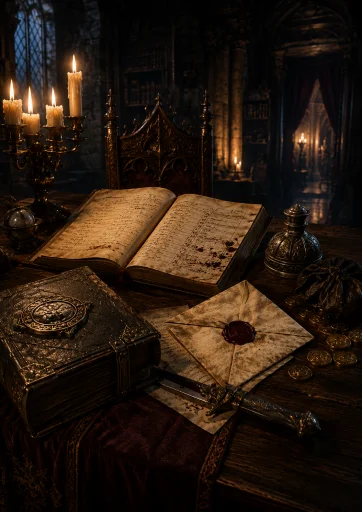
A college headmaster stands at the crossroads of scholarship, power, and crime, wearing respectability like a well-tailored robe over a blade. By day, he guides minds, guards secrets, and speaks in measured wisdom. Beneath that polished authority, he directs an underground network built on favors, debts, disappearances, and the careful belief that ugly work can serve beautiful ends.
The central conflict begins with a tithe that no ledger records. Someone must pay, someone must stay silent, and someone must decide whether justice is still justice when it arrives through blackmail, coercion, and a very polite threat. The headmaster does not demand cruelty for pleasure; worse, he makes cruelty sound reasonable.
This is a moral trial disguised as an errand. Each step tempts another compromise: protect the innocent by frightening the guilty, preserve the school by feeding the syndicate, save a life by ruining another. The path never asks whether one can do good, only how much bad one is willing to carry while calling it necessary.
The Silent Tithe is a dark academic conspiracy about power, guilt, and the seductive comfort of useful sin. It offers no clean halo, no easy villain, and no promise that the hands doing the saving will remain clean enough to admire.
- Moral Debt
- Quiet Crimes
- Useful Sin
- River Wealth
- Whispered Deals
- Hidden Power
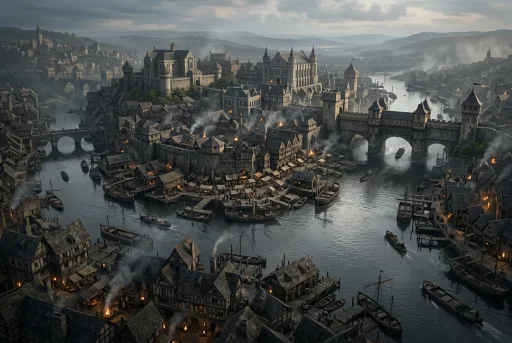
Three Rivers is a great walled city on a long peninsula where three waterways meet: thousands of stone and half-timbered houses under grey slate and terracotta tile, a grid of streets and squares, and round-towered walls along both banks. Arched stone bridges carry the city across to suburbs on the forest bank and the farmland bank, and quays crowded with barges and small ships line both rivers out to a harbor at the western point. A castle keep, a cathedral spire and a copper-green guild hall roof rise above it all. Merchants, lenders, guards, bargemen and every sort of artisan live here.
Where three waterways meet, wealth gathers fast and learns to wear perfume. Barges crowd the docks, bridges knit the districts together, and market streets ring with the calls of merchants, artisans, lenders, guards, and charming liars with excellent posture. The air carries river mist, roasted grain, ink, wax seals, damp stone, expensive spice, and the faint metallic scent of coin changing hands too often to stay clean.
Prosperity gives the city its shine, but influence gives it teeth. Grand halls rise above busy streets, their polished doors opening for those with the right name, right purse, or right secret tucked safely behind the smile. Beneath the public bargains and respectable ledgers, quieter deals move through backrooms, side alleys, and candlelit rooms where silence is not free — just very professionally priced.
This is a place where opportunity feels close enough to touch and dangerous enough to bite back. A strange little mystery can vanish into the trade flow before supper, a glowing oddity can become someone’s investment, and every rumor has at least three buyers before it reaches the river. Fortune lives here, but she flirts like a thief and leaves fingerprints on the throat.
House Soldori is one of the most influential noble dynasties within Three Rivers, renowned for elegance, wealth, refinement, and political sophistication. Beneath their cultivated image of grace and stability lies a deeply manipulative power structure built upon emotional control, hidden truths, dependency, and carefully maintained illusion. Publicly, the house presents itself as cultured benefactors and protectors of civilized order. Privately, loyalty is cultivated through obligation, fear, affection, and psychological domination.
The Soldori estate is infamous for lavish gatherings, immaculate presentation, and quiet political influence extending far beyond its walls. Reputation is treated as sacred currency within the house, often valued above honesty, morality, or even blood itself. Family members are expected to embody perfection in public while suppressing personal weakness, dissent, or scandal at all costs.
House Soldori specializes not in open warfare, but in social leverage, manipulation, secrets, patronage, and emotional control. Their influence spreads through whispered agreements, financial dependency, strategic marriages, blackmail, and carefully engineered loyalty networks. Even acts of kindness from the house often carry invisible strings attached.
Though many within the house genuinely care for one another in their own distorted way, love within House Soldori is frequently inseparable from possession, expectation, and control.

- Velvet Aristocracy
- Wealth Incarnate
- Political Secrets

- Rising Crime Syndicate
- Dockside Operators
- Waterway Network
The Blackwake Union — known throughout Three Rivers simply as Blackwake — is a rising criminal syndicate controlling much of the city’s hidden water-based trade and smuggling activity. While larger organizations like the Ashen Accord dominate overland routes and established black markets, Blackwake built its power through mastery of the rivers themselves: hidden canals, flooded tunnels, forgotten docks, marsh inlets, sewer outlets, and nighttime river traffic invisible to ordinary authorities.
Born from rivermen, smugglers, dock laborers, ferrymen, and abandoned undercity districts, Blackwake developed into a fiercely territorial organization deeply tied to the waterways surrounding Three Rivers. The rivers are not merely trade routes to them — they are identity, livelihood, protection, and power. Their members navigate currents, tides, flood channels, and hidden passages with unmatched skill, allowing them to move contraband, people, information, and stolen goods through routes larger syndicates struggle to control.
Unlike the polished professionalism of the Ashen Accord, Blackwake maintains a rougher, more localized culture built around loyalty, survival, and shared hardship. Many poorer river districts quietly tolerate or even support the syndicate due to the protection, coin, and opportunity it provides where the city government has failed.
Blackwake’s influence remains mostly regional for now, but tensions with the Ashen Accord continue to escalate as the Union tightens its grip on the waterways feeding Three Rivers. Increasingly, the Accord controls the roads? while Blackwake controls what flows beneath them.
The Ashen Accord is a sprawling criminal syndicate operating across the realm through hidden trade routes, secret networks, bribery, smuggling, extortion, and organized underground commerce. Unlike chaotic street gangs or localized crime families, the Accord functions as a highly coordinated shadow economy connecting thieves, corrupt officials, assassins, fences, black market traders, mercenaries, and illegal magical practitioners beneath the surface of civilized society.
The organization thrives in instability, conflict, corruption, and desperation, embedding itself within cities, ports, border towns, noble courts, and trade caravans alike. Their influence extends far beyond simple contraband dealing, encompassing illegal magical artifacts, forbidden substances, information brokering, slave trafficking, political blackmail, underground fighting rings, and covert assassination contracts.
Though feared throughout the realm, the Ashen Accord maintains a surprisingly structured internal system governed by profit, leverage, secrecy, and negotiated balance rather than outright chaos. Betrayal within the organization is punished brutally, while competence and usefulness are rewarded regardless of origin, species, or social standing.
The Accord rarely seeks open control over territory, preferring instead to quietly infiltrate existing systems until entire economies, officials, or criminal operations become dependent upon them. Many rulers publicly denounce the Ashen Accord while privately relying on its networks for information, deniable operations, or illicit trade.
To most citizens, the Accord exists somewhere between rumor and nightmare — unseen until someone suddenly owes them something.
- Stubborn Survivors
- Endless Adaptation
- Ordinary Trouble
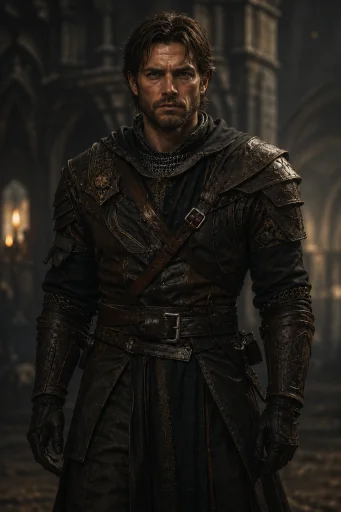
Human
Humans arrive in the world without obvious advantages, which seems rude until they start turning that lack into everybody else’s scheduling problem. They build shelters where storms insist they should not, raise banners over places that keep trying to kill them, and make tools from whatever is close enough to grab. Give them a broken road, a bad season, and one questionable plan, and somehow there is a village there by spring. Annoying? Absolutely. Effective? Tragically, yes.
Their lives burn quickly compared to longer-lived peoples, and that urgency shapes everything they touch. They chase love, power, safety, glory, revenge, comfort, and terrible ideas with the same dangerous momentum. A human court can become a battlefield with better clothing, while a frontier camp can turn into a kingdom if enough stubborn fools agree to keep hammering posts into the mud. They do not always know when to stop, which is charming right up until it becomes a siege.
What makes humans significant is not perfection, purity, or some grand destiny conveniently gift-wrapped by the heavens. It is variety under pressure. They can be farmers, soldiers, rulers, wanderers, cowards, lovers, tyrants, protectors, liars, and heroes before lunch if the day is especially rude. They are ordinary in the way flint is ordinary: dull in the hand until struck, then suddenly full of fire.