


- Molten Landscapes
- Ancient Fire Magic
- Awakening Power
The Cinderscar
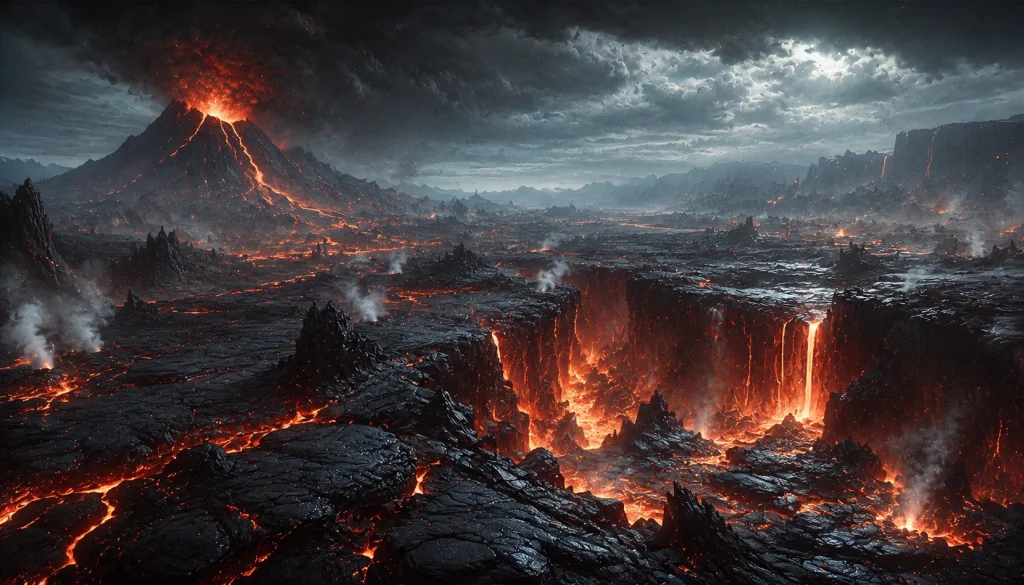
The Cinderscar was born from fire, pressure, and a violence deep enough to reshape the land. Eruptions split the ground, raised obsidian cliffs, and left craters where earth had burst open instead of staying properly buried. What cooled became jagged stone; what did not cool became warning.
Over time, the region drew attention from those who believed power could be claimed if they only stood close enough to it. Some came to study the old heat, some to fear it, and some to imagine themselves strong enough to bend it. The land answered all of them the same way: with tremors, ash, and the occasional reminder that molten rock does not negotiate.
Now the Cinderscar remains unstable, alluring, and dangerous in equal measure. Its fire magic still gathers beneath cracked terrain, its craters still breathe, and its ancient heat feels less like a remnant than a promise. The past has not died here. It has merely been buried under ash, waiting for the next fool with brave boots and bad instincts.
Over time, the region drew attention from those who believed power could be claimed if they only stood close enough to it. Some came to study the old heat, some to fear it, and some to imagine themselves strong enough to bend it. The land answered all of them the same way: with tremors, ash, and the occasional reminder that molten rock does not negotiate.
Now the Cinderscar remains unstable, alluring, and dangerous in equal measure. Its fire magic still gathers beneath cracked terrain, its craters still breathe, and its ancient heat feels less like a remnant than a promise. The past has not died here. It has merely been buried under ash, waiting for the next fool with brave boots and bad instincts.
- Salt Worn Secrets
- Guarded Docks
- Forest Shadows
Ashmoor
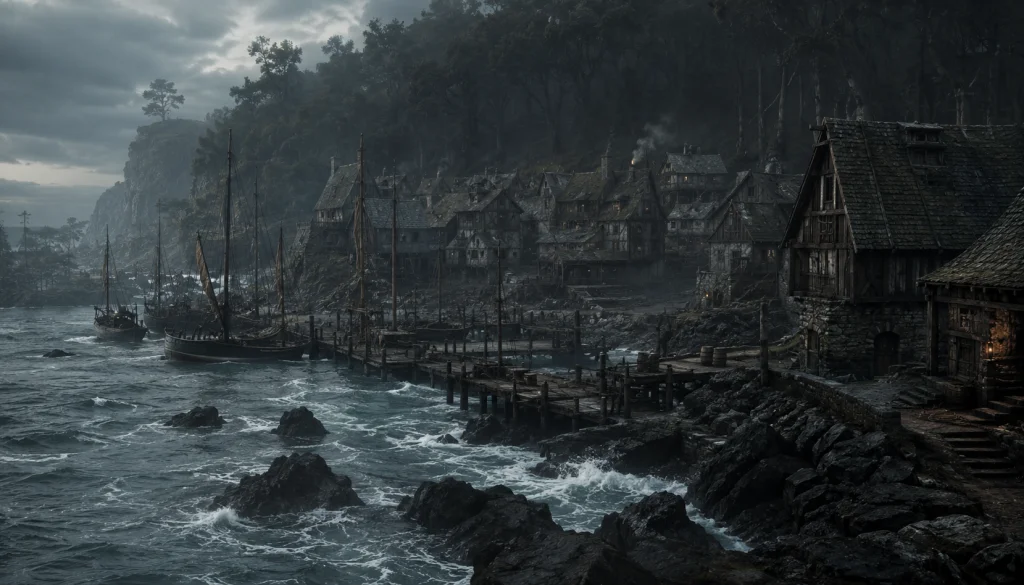
Ashmoor began as a hard little shoreline settlement built by people who needed the sea more than they trusted it. The first docks were rough, the homes low, and the work constant: fishing, hauling, repairing, trading, and surviving whatever the waves decided to break next. Its people learned early that storms were not the only danger carried in from open water.
As trade grew, so did caution. Ships brought goods, rumors, debts, and strangers who did not always explain themselves cleanly. The town adapted by becoming quiet, watchful, and difficult to impress. Questions were kept few, favors remembered long, and trust became something earned slowly, usually after being tested sideways.
Now Ashmoor remains a place of guarded docks, shuttered glances, and business conducted beneath the sound of surf. Its residents keep their heads low and their loyalties close, while the forest behind them waits like another border no one fully controls. The town does not chase strangers away at first. It simply lets them feel how heavy the air can become.
As trade grew, so did caution. Ships brought goods, rumors, debts, and strangers who did not always explain themselves cleanly. The town adapted by becoming quiet, watchful, and difficult to impress. Questions were kept few, favors remembered long, and trust became something earned slowly, usually after being tested sideways.
Now Ashmoor remains a place of guarded docks, shuttered glances, and business conducted beneath the sound of surf. Its residents keep their heads low and their loyalties close, while the forest behind them waits like another border no one fully controls. The town does not chase strangers away at first. It simply lets them feel how heavy the air can become.
- Molten Rupture
- Ashen Wound
- Burning Ground
The Scar
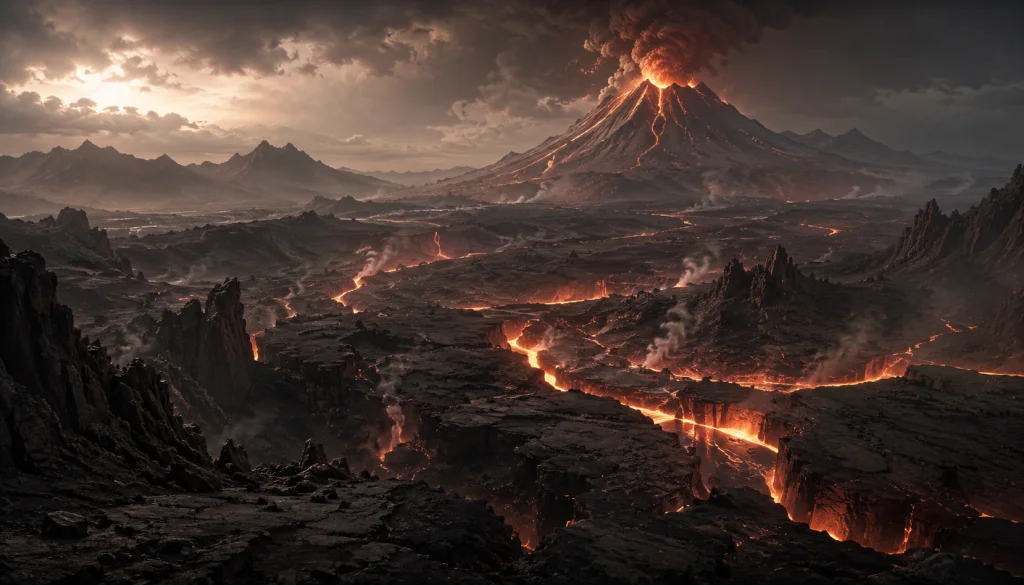
The Scar was born when the land tore under volcanic pressure and molten fire pushed through the surface. Stone buckled, old ground collapsed, and rivers of lava carved a raw path across the surrounding waste. When the first flows cooled, they left behind black ridges, sharp plates, and glowing fractures that never fully settled.
In the years that followed, the area became a warning more than a landmark. Travelers skirted its edges, scavengers tested its crust, and only the desperate or dangerously confident tried to cross its hotter reaches. The nearby volcano kept feeding the rupture with tremors, ashfall, and fresh veins of fire, ensuring the wound never closed cleanly.
Now The Scar remains unstable, hostile, and alive with heat. Its surface hardens and breaks in cycles, hiding molten pockets beneath stone that looks solid until it is not. Whatever dwells there does so under constant threat, shaped by fire, isolation, and the brutal lesson that the ground itself cannot be trusted.
In the years that followed, the area became a warning more than a landmark. Travelers skirted its edges, scavengers tested its crust, and only the desperate or dangerously confident tried to cross its hotter reaches. The nearby volcano kept feeding the rupture with tremors, ashfall, and fresh veins of fire, ensuring the wound never closed cleanly.
Now The Scar remains unstable, hostile, and alive with heat. Its surface hardens and breaks in cycles, hiding molten pockets beneath stone that looks solid until it is not. Whatever dwells there does so under constant threat, shaped by fire, isolation, and the brutal lesson that the ground itself cannot be trusted.
- Gothic Ruin
- Ashen Graveyards
- Volcanic Shadow
Emberfall
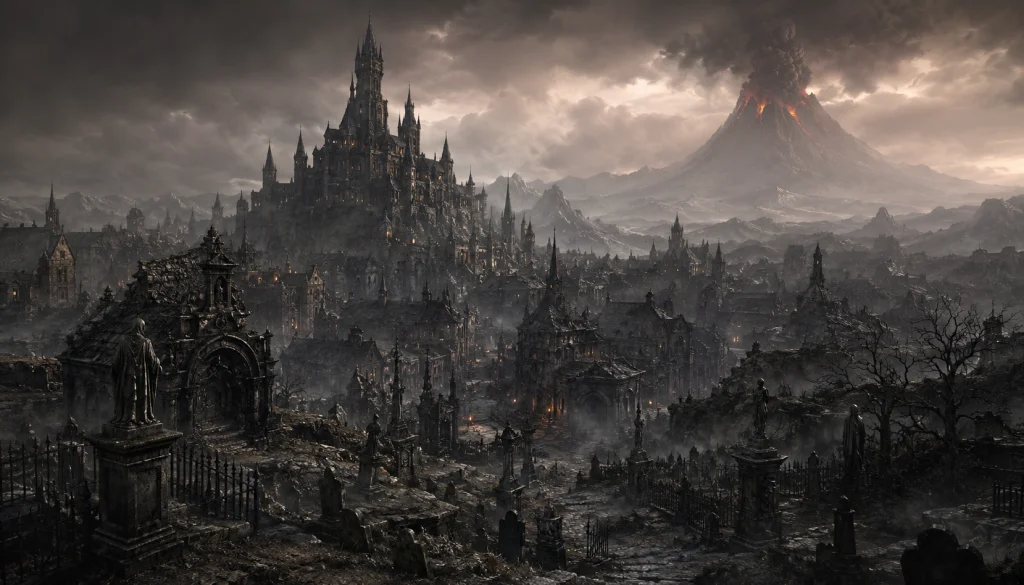
Emberfall was built before the ash claimed the land, when homes still had gardens, roads still held market noise, and the castle stood as a sign of power rather than endurance alone. The nearby volcano changed everything slowly at first, laying dust over roofs, fields, trees, and graves until the living learned that every season carried the same gray weather.
As ashfall deepened, plants withered, orchards failed, and the city’s outer homes began to rot beneath neglect and choking dust. Graveyards spread as families marked their losses in stone, iron, and silence. The castle remained, towering over the decline with old authority, even as the streets beneath it grew colder and the houses emptied one by one.
Now Emberfall persists as a city of dead roots, ruined homes, and noble shadows. Its people endure beneath the volcano’s glow, surrounded by reminders of what the ash has taken and what power still refuses to surrender. The city does not feel alive in the ordinary sense; it feels inherited, haunted, and watched by every grave that has not yet crumbled.
As ashfall deepened, plants withered, orchards failed, and the city’s outer homes began to rot beneath neglect and choking dust. Graveyards spread as families marked their losses in stone, iron, and silence. The castle remained, towering over the decline with old authority, even as the streets beneath it grew colder and the houses emptied one by one.
Now Emberfall persists as a city of dead roots, ruined homes, and noble shadows. Its people endure beneath the volcano’s glow, surrounded by reminders of what the ash has taken and what power still refuses to surrender. The city does not feel alive in the ordinary sense; it feels inherited, haunted, and watched by every grave that has not yet crumbled.