



- Brute Force
- Thick Skinned
- Primal Instinct
Ogre
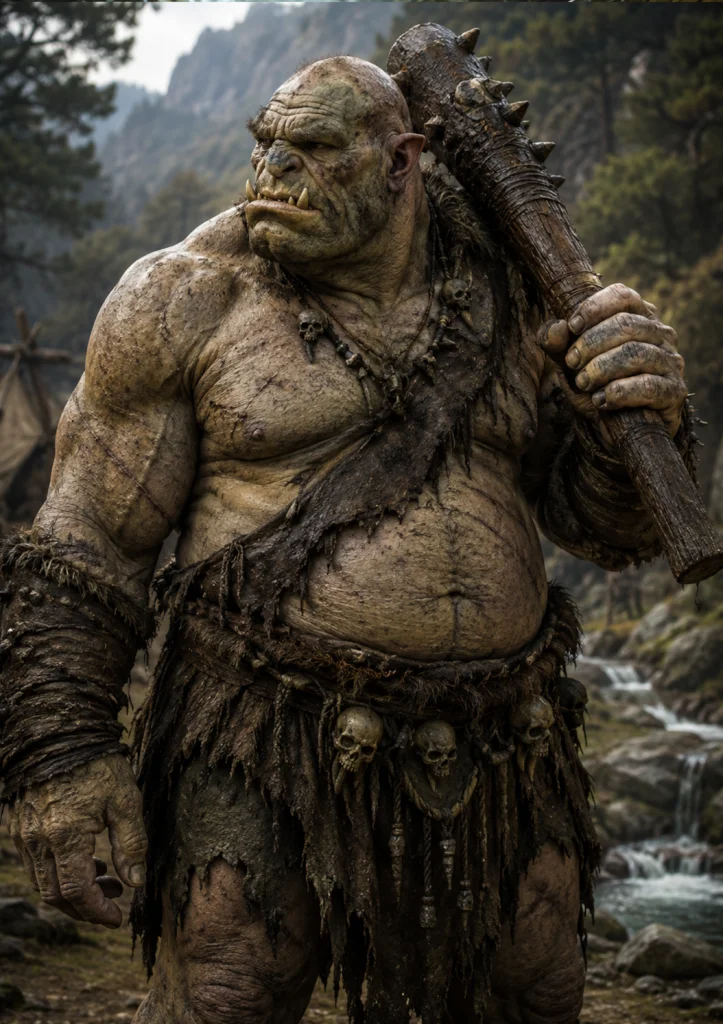
Ogres are the sound of bad news learning to walk upright. Towering, thick-skinned, and carved from hunger, muscle, and old violence, they do not need elegance to dominate a room — only shoulders wide enough to make the walls look nervous. Blades glance shallow, arrows fail to impress, and most threats become much quieter once an ogre starts moving.
They are not subtle creatures, but mistaking that for helpless stupidity is a short road to becoming floor d’cor. Ogres feel danger before they understand it, reacting to wrongness with a growl, a turned head, or sudden violence that arrives before thought has fully bothered to dress itself. Their instincts are blunt, messy, and often more useful than a clever speech made too late.
Their clans and dens follow strength because strength is simple, visible, and difficult to argue with when it is holding a tree trunk like a club. The largest lead, the toughest endure, and the weak survive by staying useful, loyal, hidden, or very lucky. Among them, patience is rare, hierarchy is immediate, and courtship probably involves fewer flowers than structural damage.
To outsiders, ogres are monsters of brute force and appetite. To those who study them longer than common sense recommends, they are living siege engines shaped by survival: durable, territorial, impulsive, and guided by a primal certainty that something is coming before everyone else hears the first crack in the dark.
They are not subtle creatures, but mistaking that for helpless stupidity is a short road to becoming floor d’cor. Ogres feel danger before they understand it, reacting to wrongness with a growl, a turned head, or sudden violence that arrives before thought has fully bothered to dress itself. Their instincts are blunt, messy, and often more useful than a clever speech made too late.
Their clans and dens follow strength because strength is simple, visible, and difficult to argue with when it is holding a tree trunk like a club. The largest lead, the toughest endure, and the weak survive by staying useful, loyal, hidden, or very lucky. Among them, patience is rare, hierarchy is immediate, and courtship probably involves fewer flowers than structural damage.
To outsiders, ogres are monsters of brute force and appetite. To those who study them longer than common sense recommends, they are living siege engines shaped by survival: durable, territorial, impulsive, and guided by a primal certainty that something is coming before everyone else hears the first crack in the dark.