- Instinct-Driven
- Natural Weaponry
- Enhanced Senses
Beastkin
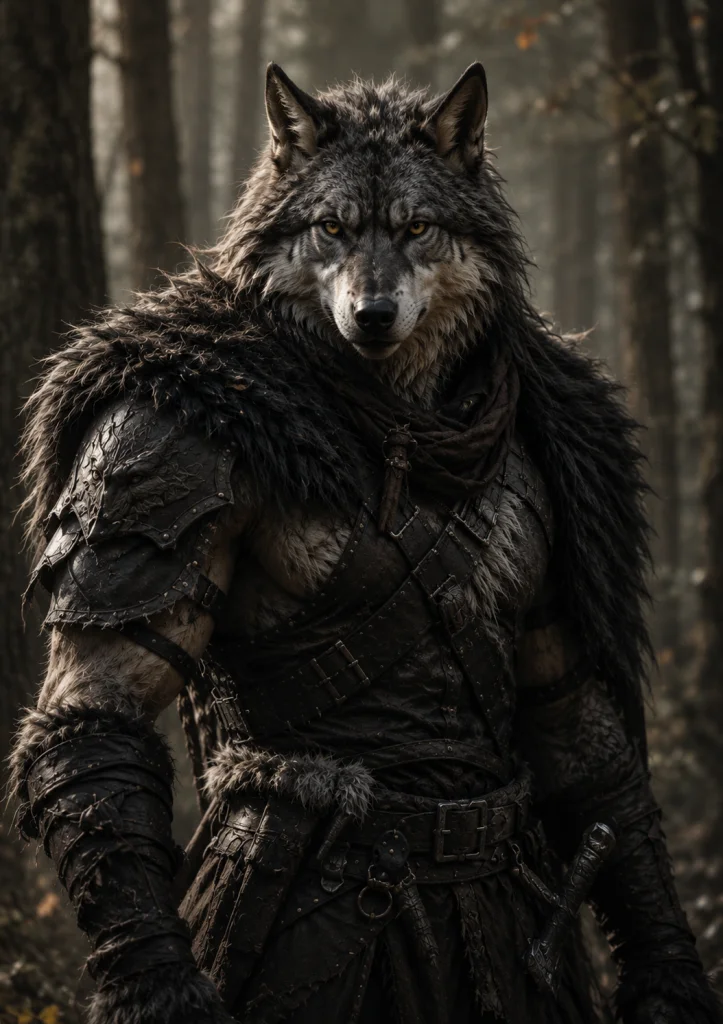
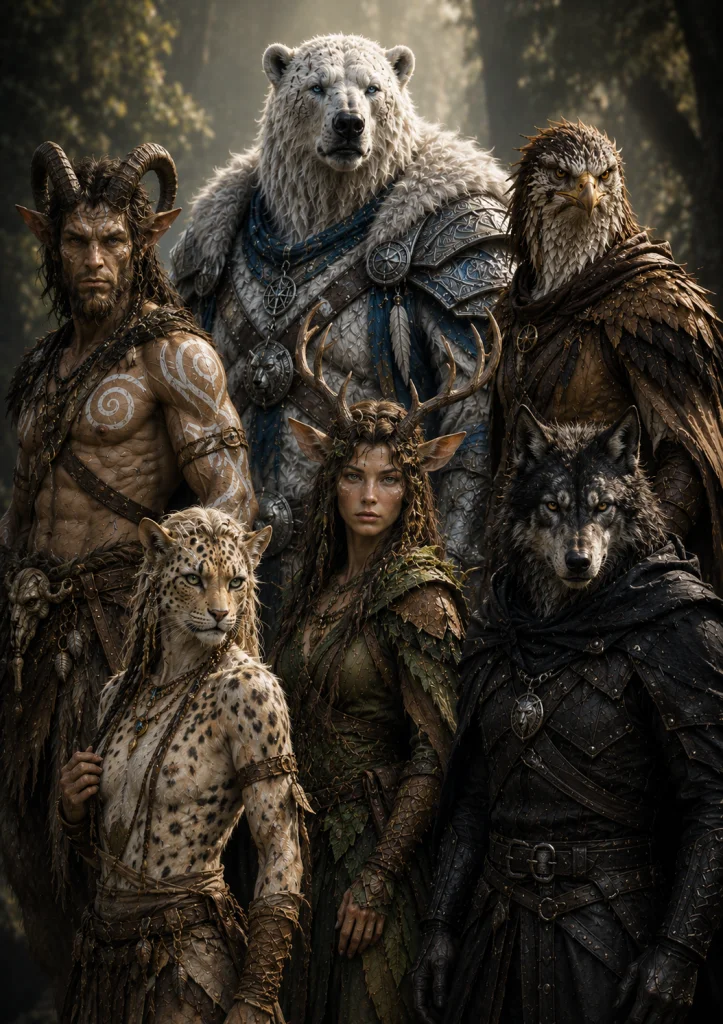
They came from many lines, not one, shaped by ancestry, environment, hunger, migration, and the long pressure of survival. Some learned to endure bitter cold, some to read open sky, some to climb, stalk, guard, glide, scent, or run before danger found its voice. Their bodies carried those lessons forward, turning inherited instinct into culture, craft, and pride.
Their early societies grew around kinship because survival rarely belonged to the lone and careless. Packs, herds, flocks, clans, dens, and other bonded groups formed around protection, food, territory, memory, and shared response. A lifted ear, shifted stance, warning scent, or change in breathing could say what words arrived too slowly to save.
Outsiders often misunderstood them, confusing instinct with simplicity and natural weaponry with savagery. That mistake cost many fools dearly. Their cultures developed rituals, adornments, oral histories, spiritual customs, hunting laws, craft traditions, and leadership systems as varied and sophisticated as any other people, though shaped by different bodies and harsher lessons.
Now they remain a vast and diverse collection of peoples bound less by sameness than by inheritance. They carry ancestral pride in marks, scars, horns, feathers, fur, claws, songs, and stories. Some are peaceful, some fierce, some philosophical, some brutal, and many are charming enough to make danger look like a very bad idea worth flirting with.
Their early societies grew around kinship because survival rarely belonged to the lone and careless. Packs, herds, flocks, clans, dens, and other bonded groups formed around protection, food, territory, memory, and shared response. A lifted ear, shifted stance, warning scent, or change in breathing could say what words arrived too slowly to save.
Outsiders often misunderstood them, confusing instinct with simplicity and natural weaponry with savagery. That mistake cost many fools dearly. Their cultures developed rituals, adornments, oral histories, spiritual customs, hunting laws, craft traditions, and leadership systems as varied and sophisticated as any other people, though shaped by different bodies and harsher lessons.
Now they remain a vast and diverse collection of peoples bound less by sameness than by inheritance. They carry ancestral pride in marks, scars, horns, feathers, fur, claws, songs, and stories. Some are peaceful, some fierce, some philosophical, some brutal, and many are charming enough to make danger look like a very bad idea worth flirting with.
- Glacial Strength
- Winter Endurance
- Icebound Honor
Frostmaw
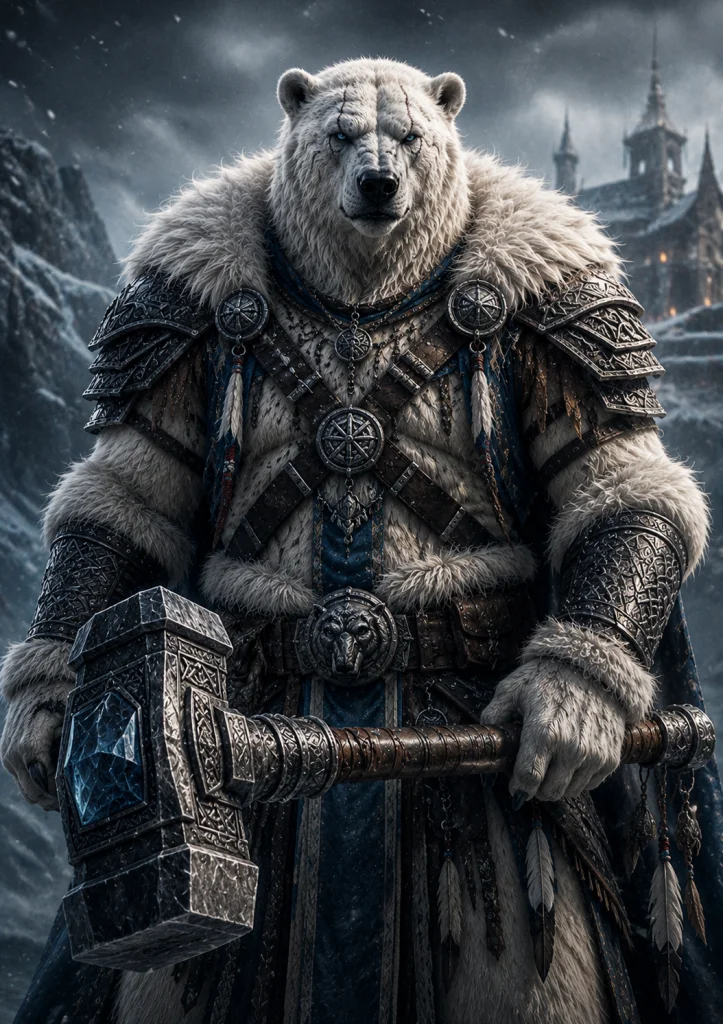
They were shaped by a world that rewarded endurance before elegance. Their earliest generations learned to build, hunt, guard, and remember beneath skies where warmth was rare and weakness could become a funeral before sunset. Cold did not break them; it became the condition through which their strength, patience, and communal bonds were tested.
Their settlements grew from necessity into craft. Ice became wall, hall, shelter, monument, and memory, worked by hands strong enough to split frozen stone yet careful enough to shape beauty from it. Kinship mattered because isolation killed, and wisdom mattered because strength without judgment only made larger mistakes.
As their elders aged, they became more than survivors. They carried generations of weather, conflict, craft, and law in their memories, marked by fur that paled toward translucence and voices that seemed to echo with old storms. Younger Frostmaw learned that power was not merely the ability to crush, but the restraint to know when not to.
Now they remain proud, resilient, and difficult to move in body or conviction. Most carry the cold only as nature, but a rare few learn to command it with intention, earning both respect and caution. Their history is written in endurance: in ice shaped by hand, in kin protected through storms, and in the quiet understanding that winter does not need to boast.
Their settlements grew from necessity into craft. Ice became wall, hall, shelter, monument, and memory, worked by hands strong enough to split frozen stone yet careful enough to shape beauty from it. Kinship mattered because isolation killed, and wisdom mattered because strength without judgment only made larger mistakes.
As their elders aged, they became more than survivors. They carried generations of weather, conflict, craft, and law in their memories, marked by fur that paled toward translucence and voices that seemed to echo with old storms. Younger Frostmaw learned that power was not merely the ability to crush, but the restraint to know when not to.
Now they remain proud, resilient, and difficult to move in body or conviction. Most carry the cold only as nature, but a rare few learn to command it with intention, earning both respect and caution. Their history is written in endurance: in ice shaped by hand, in kin protected through storms, and in the quiet understanding that winter does not need to boast.
- Graceful Endurance
- Antlered Nobility
- Seasonal Clans
Cervitaur
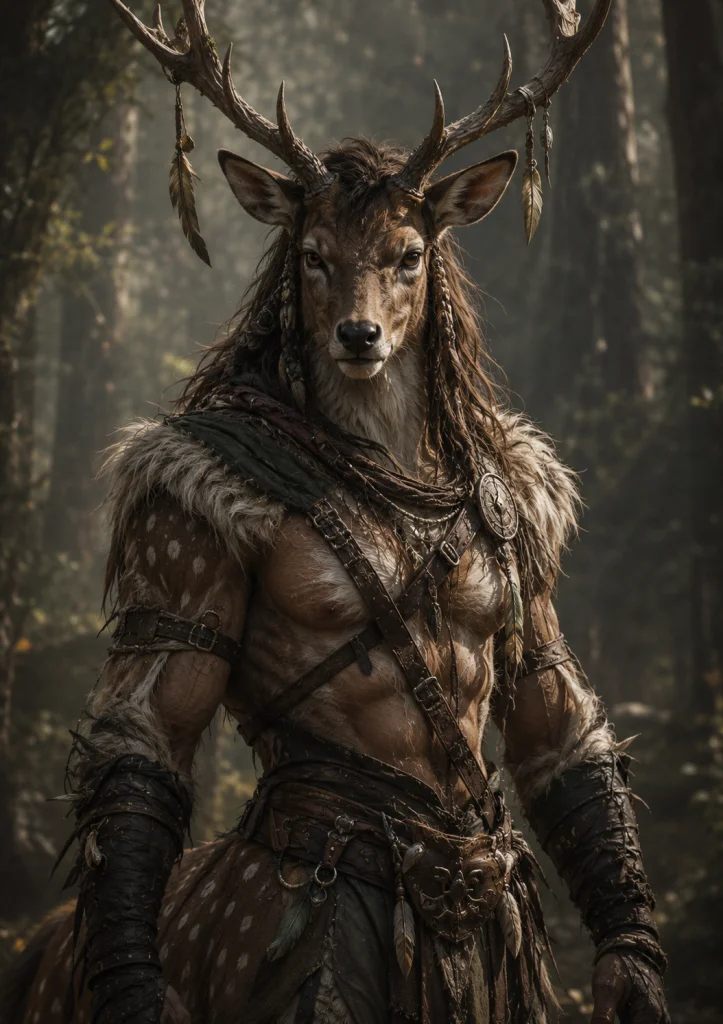
They grew from long traditions of movement, endurance, and close attention to the living world. Their earliest clans learned to follow the seasons rather than fight them, traveling where food, shelter, medicine, and safety could be found without stripping the land bare. Their bodies carried them across harsh ground and long distances, while their senses taught them to notice danger before it became visible.
Over generations, antlers became more than ornament. Branching patterns marked age, lineage, experience, and the visible history of a life endured. Elders carried silvered fur and deepened antlers as signs of memory, not frailty, and their guidance shaped when clans moved, where they rested, which paths were sacred, and which warnings were not to be ignored.
Though peaceful by preference, they were never defenseless. Their clans learned that harmony sometimes required a lowered head, gathered momentum, and the kind of impact that ended arguments quickly. Those who threatened their territory, kin, or seasonal routes discovered that grace and violence can share the same body quite comfortably.
Now they remain nomadic guardians of old rhythms, carrying herbal craft, hunting skill, clan memory, and quiet dignity from one season to the next. They avoid needless conflict, but they do not surrender what they are sworn to protect. Their history lives in hoof-worn paths, whispered warnings, antler-shadowed ceremonies, and the patient belief that survival is strongest when it moves with the world rather than against it.
Over generations, antlers became more than ornament. Branching patterns marked age, lineage, experience, and the visible history of a life endured. Elders carried silvered fur and deepened antlers as signs of memory, not frailty, and their guidance shaped when clans moved, where they rested, which paths were sacred, and which warnings were not to be ignored.
Though peaceful by preference, they were never defenseless. Their clans learned that harmony sometimes required a lowered head, gathered momentum, and the kind of impact that ended arguments quickly. Those who threatened their territory, kin, or seasonal routes discovered that grace and violence can share the same body quite comfortably.
Now they remain nomadic guardians of old rhythms, carrying herbal craft, hunting skill, clan memory, and quiet dignity from one season to the next. They avoid needless conflict, but they do not surrender what they are sworn to protect. Their history lives in hoof-worn paths, whispered warnings, antler-shadowed ceremonies, and the patient belief that survival is strongest when it moves with the world rather than against it.
- Silent Gliders
- Perfect Memory
- Secret Keepers
Aerynthian
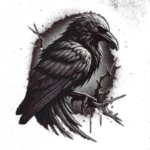
They emerged from bloodlines shaped by height, distance, and the discipline of watching. Their earliest communities learned to survive by seeing trouble while it was still far away, remembering every approach, every oath, every betrayal, and every voice that carried meaning beneath its words. Memory became protection long before it became currency.
Over time, they built lives around unreachable places and careful separation. Their gliding skill made cliffs, towers, ridges, and high perches feel like roads, while their silence allowed them to cross distance without announcing intent. They carried messages, observed conflicts, preserved debts, and learned that information could be sharper than any talon.
Their near-perfect recall shaped their customs as deeply as their wings shaped their movement. Oaths became sacred because they could not be conveniently forgotten. Lies became dangerous because they could be repeated back exactly. Elders grew increasingly remote, burdened by centuries of remembered voices, faces, griefs, and unfinished promises.
Now they remain watchers, messengers, spies, and keepers of inconvenient truth. They are respected when useful, distrusted when quiet, and rarely underestimated twice. Their history lives in silence, altitude, and memory: what was seen, what was owed, and what was never truly forgotten.
Over time, they built lives around unreachable places and careful separation. Their gliding skill made cliffs, towers, ridges, and high perches feel like roads, while their silence allowed them to cross distance without announcing intent. They carried messages, observed conflicts, preserved debts, and learned that information could be sharper than any talon.
Their near-perfect recall shaped their customs as deeply as their wings shaped their movement. Oaths became sacred because they could not be conveniently forgotten. Lies became dangerous because they could be repeated back exactly. Elders grew increasingly remote, burdened by centuries of remembered voices, faces, griefs, and unfinished promises.
Now they remain watchers, messengers, spies, and keepers of inconvenient truth. They are respected when useful, distrusted when quiet, and rarely underestimated twice. Their history lives in silence, altitude, and memory: what was seen, what was owed, and what was never truly forgotten.