

- Common Folk
- Hard Won Survival
- Village Backbone
Unblooded
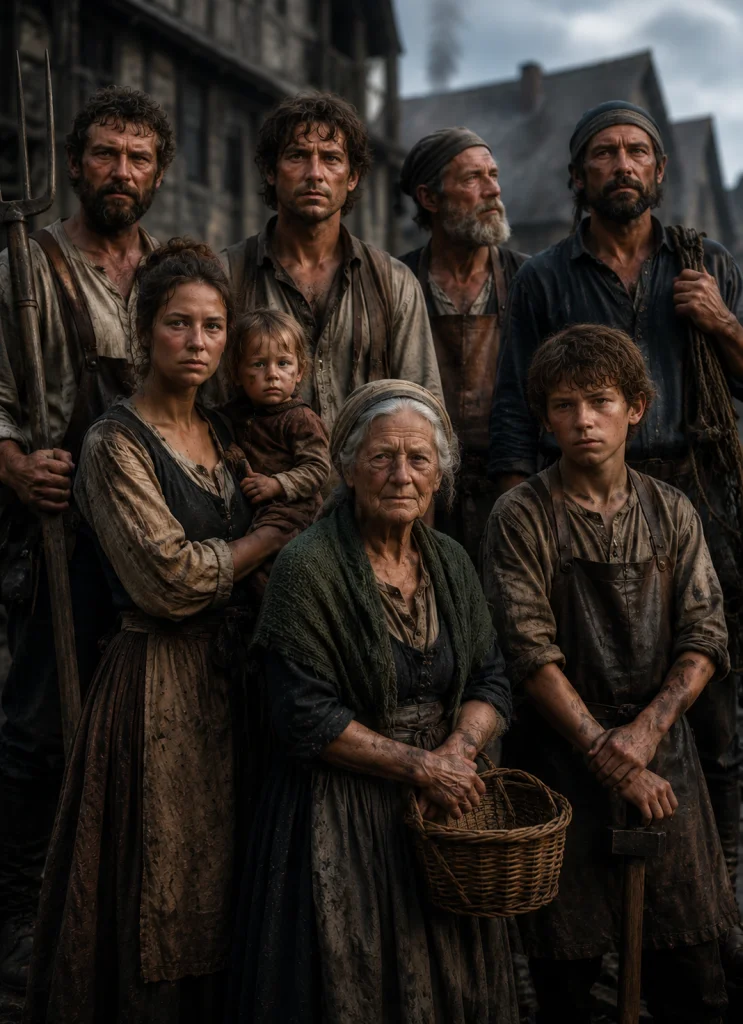
They were born into the oldest burden of human society: work that had to be done whether anyone remembered their names or not. Their lives were shaped by soil, weather, hunger, taxes, tools, trade, and the demands of those with more power. They built no grand legends for themselves, but every road, field, hearth, wall, loaf, wagon, and worn pair of boots depended on hands like theirs.
For generations, they survived by staying practical. Families shared labor when harvests were thin, neighbors traded favors when coin failed, and stories passed from mouth to mouth carried lessons no formal scholar bothered to record. Festivals, markets, and taverns gave them moments of warmth between long stretches of duty, letting them laugh, flirt, argue, and forget for a few hours that tomorrow would expect just as much as yesterday.
They were often overlooked by nobles, soldiers, and chroniclers, treated as background to greater deeds. Yet when war came, they fed armies. When winter came, they preserved stores. When rulers changed, they repaired fences, buried the dead, taught children, and kept civilization from falling apart one stubborn task at a time.
Now they remain the quiet strength beneath human kingdoms and settlements. They may lack noble blood, famous titles, or supernatural gifts, but they carry the habits that keep people alive: endurance, cooperation, suspicion of nonsense, and the deeply human ability to complain while doing the impossible anyway.
For generations, they survived by staying practical. Families shared labor when harvests were thin, neighbors traded favors when coin failed, and stories passed from mouth to mouth carried lessons no formal scholar bothered to record. Festivals, markets, and taverns gave them moments of warmth between long stretches of duty, letting them laugh, flirt, argue, and forget for a few hours that tomorrow would expect just as much as yesterday.
They were often overlooked by nobles, soldiers, and chroniclers, treated as background to greater deeds. Yet when war came, they fed armies. When winter came, they preserved stores. When rulers changed, they repaired fences, buried the dead, taught children, and kept civilization from falling apart one stubborn task at a time.
Now they remain the quiet strength beneath human kingdoms and settlements. They may lack noble blood, famous titles, or supernatural gifts, but they carry the habits that keep people alive: endurance, cooperation, suspicion of nonsense, and the deeply human ability to complain while doing the impossible anyway.