


Bloodlines, Beasts, and Other Bad Ideas
The world is crowded with mortals, monsters, and everything inconveniently between. Humans, elves, goblins, beastkin, hags, cursed things, winged folk, and stranger denizens all carry their own instincts, traditions, grudges, and ways of surviving trouble. Some are feared for claws and teeth. Others are dangerous because they know how to smile. Look past rumor, beauty, horns, fur, shadow, and scales before deciding what is truly monstrous.
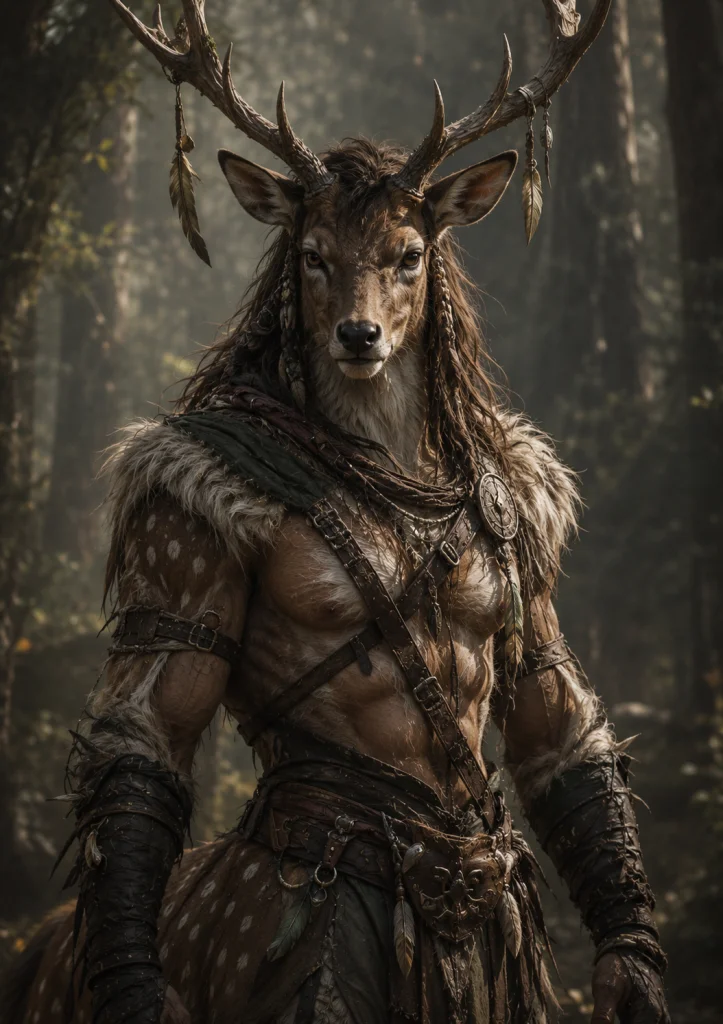
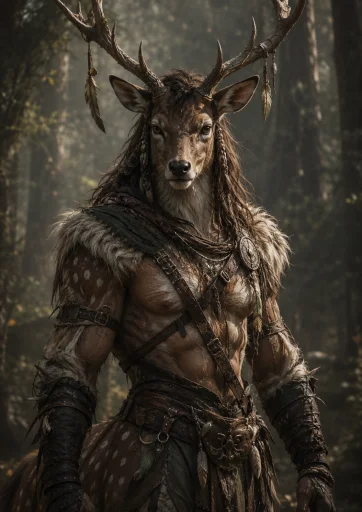
- Graceful Endurance
- Antlered Nobility
- Seasonal Clans
Gentle until the antlers come down.
They grew from long traditions of movement, endurance, and close attention to the living world. Their earliest clans learned to follow the seasons rather than fight them, traveling where food, shelter, medicine, and safety could be found without stripping the land bare. Their bodies carried them across harsh ground and long distances, while their senses taught them to notice danger before it became visible.
Over generations, antlers became more than ornament. Branching patterns marked age, lineage, experience, and the visible history of a life endured. Elders carried silvered fur and deepened antlers as signs of memory, not frailty, and their guidance shaped when clans moved, where they rested, which paths were sacred, and which warnings were not to be ignored.
Though peaceful by preference, they were never defenseless. Their clans learned that harmony sometimes required a lowered head, gathered momentum, and the kind of impact that ended arguments quickly. Those who threatened their territory, kin, or seasonal routes discovered that grace and violence can share the same body quite comfortably.
Now they remain nomadic guardians of old rhythms, carrying herbal craft, hunting skill, clan memory, and quiet dignity from one season to the next. They avoid needless conflict, but they do not surrender what they are sworn to protect. Their history lives in hoof-worn paths, whispered warnings, antler-shadowed ceremonies, and the patient belief that survival is strongest when it moves with the world rather than against it.
Over generations, antlers became more than ornament. Branching patterns marked age, lineage, experience, and the visible history of a life endured. Elders carried silvered fur and deepened antlers as signs of memory, not frailty, and their guidance shaped when clans moved, where they rested, which paths were sacred, and which warnings were not to be ignored.
Though peaceful by preference, they were never defenseless. Their clans learned that harmony sometimes required a lowered head, gathered momentum, and the kind of impact that ended arguments quickly. Those who threatened their territory, kin, or seasonal routes discovered that grace and violence can share the same body quite comfortably.
Now they remain nomadic guardians of old rhythms, carrying herbal craft, hunting skill, clan memory, and quiet dignity from one season to the next. They avoid needless conflict, but they do not surrender what they are sworn to protect. Their history lives in hoof-worn paths, whispered warnings, antler-shadowed ceremonies, and the patient belief that survival is strongest when it moves with the world rather than against it.

- Spirit-Bound Objects
- Cursed Animation
- Emotionally Reactive
It only looks harmless when no one is watching.
They began as objects before they became something worse. A toy, tool, portrait, mirror, charm, weapon, doll, or household relic was bound through grief, rage, fear, obsession, or deliberate ritual until spirit and vessel could no longer be separated cleanly. What remained was not alive in the ordinary sense, but it remembered enough of life to imitate it badly.
Many were left behind when their makers, owners, or victims vanished. They waited in locked rooms, attics, cellars, abandoned homes, sealed vaults, and cursed places where dust grew thick enough to feel like burial. Some slept for decades or centuries without thought, while others listened the whole time, learning the shapes of loneliness until attachment became hunger.
Over time, isolation changed them. Their voices grew sweeter, flatter, sharper, or more broken, depending on what the curse fed upon. Some became protective in ways that smothered. Others became cruel, possessive, needy, or frighteningly patient. Attention could strengthen them, fear could wake them, and damage to their vessel could turn stillness into fury.
Now they persist wherever a binding remains unbroken. They may seem pitiful, charming, useful, or even adorable, but their affection rarely understands boundaries. To be noticed by one is risky. To be loved by one is worse.
Many were left behind when their makers, owners, or victims vanished. They waited in locked rooms, attics, cellars, abandoned homes, sealed vaults, and cursed places where dust grew thick enough to feel like burial. Some slept for decades or centuries without thought, while others listened the whole time, learning the shapes of loneliness until attachment became hunger.
Over time, isolation changed them. Their voices grew sweeter, flatter, sharper, or more broken, depending on what the curse fed upon. Some became protective in ways that smothered. Others became cruel, possessive, needy, or frighteningly patient. Attention could strengthen them, fear could wake them, and damage to their vessel could turn stillness into fury.
Now they persist wherever a binding remains unbroken. They may seem pitiful, charming, useful, or even adorable, but their affection rarely understands boundaries. To be noticed by one is risky. To be loved by one is worse.

- Wild Charm
- Hoofed Agility
- Mischief Wise
Half laughter, half warning, all trouble.
Satyrs rose from places where soft footing failed and survival favored balance, nerve, and quick senses. Their earliest communities learned to read the world through sound, scent, stone, and weather, trusting the twitch of an ear or the change in another’s breathing as much as spoken warning. Those instincts shaped them into people who noticed danger before it arrived and opportunity before it had the manners to introduce itself.
Their culture grew around movement, music, and memory. Stories carried lessons, songs carried insults, and revelry became more than indulgence; it became a way to keep fear from becoming ruler. Young Satyrs were taught that laughter could hide a knife, a dance could test courage, and a sweet voice could open more doors than brute force, though brute force remained useful when doors got smug.
Over generations, outsiders learned to underestimate them in predictable ways. Some saw only mischief, flirtation, and wild appetite. Others feared their persuasive presence and mistook instinctive charisma for enchantment. Satyrs endured both mistakes, often with a grin, because being misunderstood is much easier when the other person has already looked away from the hoof about to trip them.
In the present, they remain creatures of freedom, sharp wit, and dangerous joy. They thrive where the world is uneven, where rules fray, and where survival rewards those who can laugh, listen, run, charm, and strike before hesitation grows roots.
Their culture grew around movement, music, and memory. Stories carried lessons, songs carried insults, and revelry became more than indulgence; it became a way to keep fear from becoming ruler. Young Satyrs were taught that laughter could hide a knife, a dance could test courage, and a sweet voice could open more doors than brute force, though brute force remained useful when doors got smug.
Over generations, outsiders learned to underestimate them in predictable ways. Some saw only mischief, flirtation, and wild appetite. Others feared their persuasive presence and mistook instinctive charisma for enchantment. Satyrs endured both mistakes, often with a grin, because being misunderstood is much easier when the other person has already looked away from the hoof about to trip them.
In the present, they remain creatures of freedom, sharp wit, and dangerous joy. They thrive where the world is uneven, where rules fray, and where survival rewards those who can laugh, listen, run, charm, and strike before hesitation grows roots.
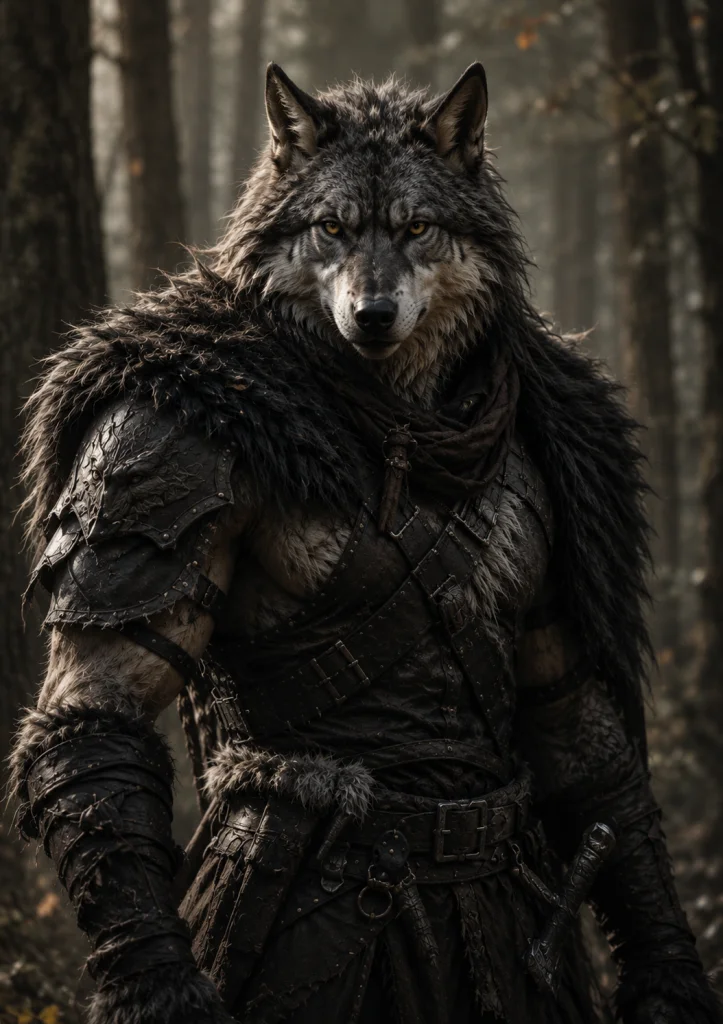
- Pack Loyalty
- Shared Senses
- Feral Honor
Loyalty has claws, and they are very sharp.
They rose from bloodlines shaped by pursuit, endurance, and the necessity of trusting more than sight. Their earliest clans survived by listening together, hunting together, and reading the world through scent, posture, breath, and silence. Lone strength mattered, but shared awareness mattered more, and those who ignored the pack rarely lasted long enough to become a lesson twice.
Their societies formed around kinship before territory. A clan was shelter, warning system, hunting force, memory keeper, and judgment circle all at once. Young Wolfkin learned to move with others, to speak through ear, tail, scent, and stance, and to understand that loyalty was not softness. It was discipline with blood under its nails.
As generations passed, elders became living anchors of tradition. Their graying fur marked years of hunts, battles, migrations, mistakes, and stories carried forward so the young did not have to bleed for every truth personally. Strength was respected, but reckless violence without purpose was treated as wasteful, embarrassing, and frankly bad manners.
Now they remain fierce, social, and difficult to divide. Their wounds mend quickly, their senses cut through darkness, and their packs respond to threat with frightening unity. Outsiders may see only fang and fur, but those who know better understand the deeper truth: Wolfkin survive because they belong to one another.
Their societies formed around kinship before territory. A clan was shelter, warning system, hunting force, memory keeper, and judgment circle all at once. Young Wolfkin learned to move with others, to speak through ear, tail, scent, and stance, and to understand that loyalty was not softness. It was discipline with blood under its nails.
As generations passed, elders became living anchors of tradition. Their graying fur marked years of hunts, battles, migrations, mistakes, and stories carried forward so the young did not have to bleed for every truth personally. Strength was respected, but reckless violence without purpose was treated as wasteful, embarrassing, and frankly bad manners.
Now they remain fierce, social, and difficult to divide. Their wounds mend quickly, their senses cut through darkness, and their packs respond to threat with frightening unity. Outsiders may see only fang and fur, but those who know better understand the deeper truth: Wolfkin survive because they belong to one another.