
Step Into the Story
Every tale begins with a choice, but stories rarely stay obedient once consequences arrive. A stolen child, a burning village, a cursed relic, a noble lie, or one reckless promise can pull entire lives into motion before anyone realizes the road has vanished behind them. These stories shift through loyalty, betrayal, discovery, survival, and the messy business of becoming someone new. The ending matters, sure, but the middle is where people break, change, and leave scars worth remembering.
- Ashen Guilt
- Sibling Secrets
- Forbidden Fire
Ashes Where Answers Should Be
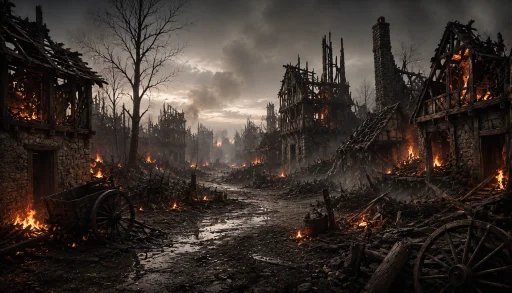
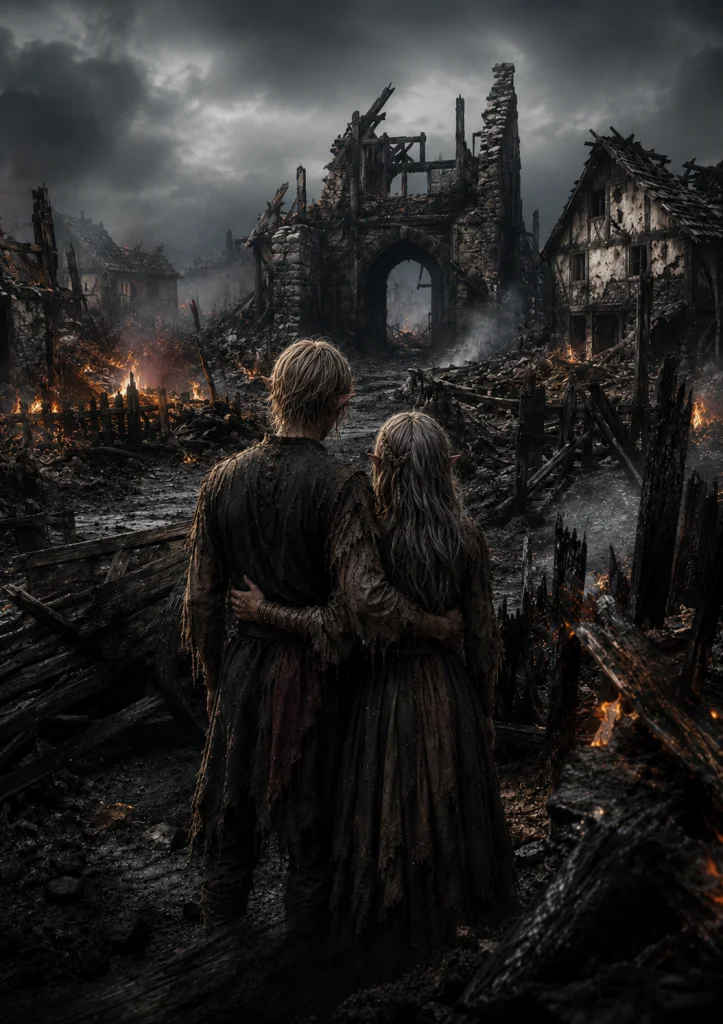
The fire has ended, but the village has not gone quiet in any merciful way. Blackened walls lean over streets that once held laughter, labor, argument, and ordinary hunger, while ash clings to every threshold like a witness refusing to leave. In the ruins, two siblings move through the remains of home, bound together by blood, secrecy, and the terrible suspicion that the first spark belonged to them.
Their bond is the center of the story’s wound. What happened between them was not simple, not safe, and not something either can confess without tearing open the last fragile thing they still share. In a moment of reckless passion, power answered feeling too strongly, and an entire village paid the price.
Now they must search what is left for meaning before grief hardens into accusation. Every scorched beam, every familiar doorway, and every silence between them presses the same question closer: was the fire an accident, a curse, a punishment, or the truth of what they were becoming?
The First Casualty is a story of ruin after heat, of forbidden closeness turned catastrophic, and of guilt that refuses to stay buried. The danger is not only what they destroyed, but what they might still be willing to protect from the ashes.
Their bond is the center of the story’s wound. What happened between them was not simple, not safe, and not something either can confess without tearing open the last fragile thing they still share. In a moment of reckless passion, power answered feeling too strongly, and an entire village paid the price.
Now they must search what is left for meaning before grief hardens into accusation. Every scorched beam, every familiar doorway, and every silence between them presses the same question closer: was the fire an accident, a curse, a punishment, or the truth of what they were becoming?
The First Casualty is a story of ruin after heat, of forbidden closeness turned catastrophic, and of guilt that refuses to stay buried. The danger is not only what they destroyed, but what they might still be willing to protect from the ashes.
- Silken Intrigue
- Hidden Power
- Polite Betrayal
Silk Over Steel
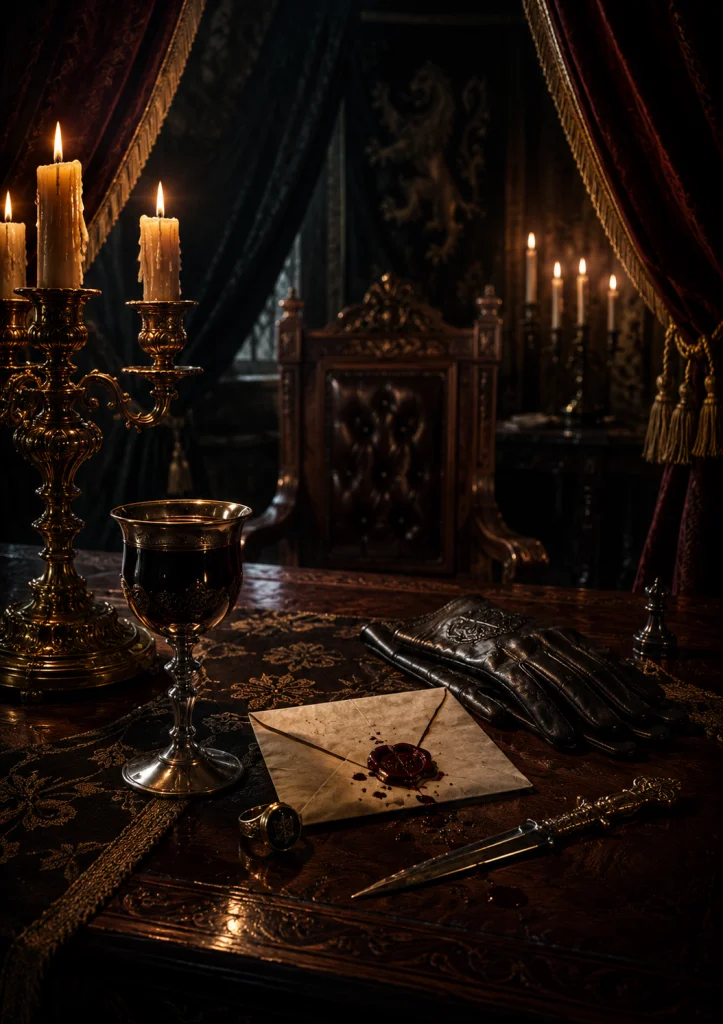
Behind every polished hall and disciplined household, there are rooms where power moves more quietly than steel. The protagonist has spent years perfecting the role expected of her: gracious host, loyal spouse, silent ornament, careful listener. But beneath the silk, ceremony, and flawless composure, she has built a private web of secrets strong enough to hold a house together — or strangle it, if handled poorly.
When whispers begin circling too close to the family she protects, restraint becomes a weapon and every conversation turns dangerous. A compliment may conceal a warning, a pause may carry a threat, and a misplaced confidence may become the thread that unravels an enemy’s entire design. In this game, open command belongs to others; influence belongs to whoever understands what people are desperate to hide.
The stakes are not merely political. Her children’s futures, her household’s stability, and her own carefully guarded secrets all sit beneath the same tightening veil. To survive, she must maneuver through suspicion, pride, and betrayal without appearing to move at all. It is delicate work, the sort best done with clean gloves and a smile sharp enough to make even powerful men check for blood.
Veils of Iron is a story of hidden leverage, noble restraint, and power claimed from the spaces where others assume obedience lives. The protagonist does not need a throne to rule a room. She only needs patience, timing, and the right secret placed in the right ear.
When whispers begin circling too close to the family she protects, restraint becomes a weapon and every conversation turns dangerous. A compliment may conceal a warning, a pause may carry a threat, and a misplaced confidence may become the thread that unravels an enemy’s entire design. In this game, open command belongs to others; influence belongs to whoever understands what people are desperate to hide.
The stakes are not merely political. Her children’s futures, her household’s stability, and her own carefully guarded secrets all sit beneath the same tightening veil. To survive, she must maneuver through suspicion, pride, and betrayal without appearing to move at all. It is delicate work, the sort best done with clean gloves and a smile sharp enough to make even powerful men check for blood.
Veils of Iron is a story of hidden leverage, noble restraint, and power claimed from the spaces where others assume obedience lives. The protagonist does not need a throne to rule a room. She only needs patience, timing, and the right secret placed in the right ear.
- Wrong Crate
- Tiny Syndicate
- Bigger Teeth
Small Crimes Bite Hard
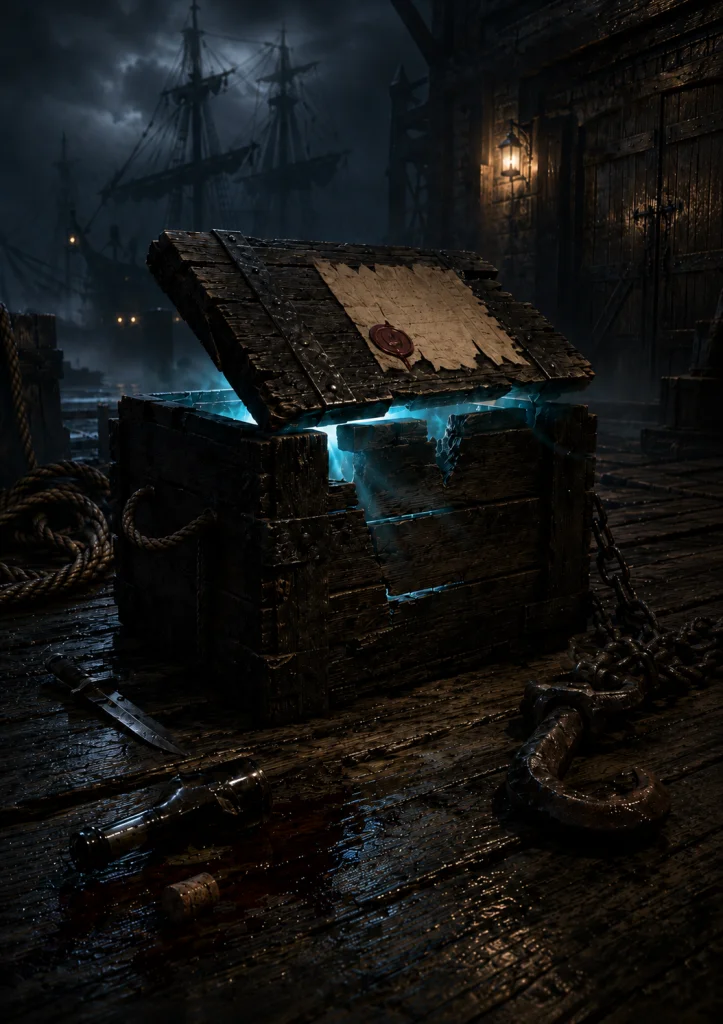
A low-level smuggling outfit is trying to become dangerous one stolen shipment at a time. They lack polish, money, discipline, and most forms of common sense, but they have nerve, dirty luck, and enough desperation to make smarter criminals nervous.
When a crate is taken by mistake, the crew finds itself holding cargo meant for a far larger faction. What should have been a quiet dockside job turns into a scramble through alleys, taverns, rooftops, and backroom deals, with every hidden hand in the harbor reaching for the same prize.
At the center of the chaos is a wiry goblin nuisance who should have been too small to matter. His riddles, giggles, and brandy-soaked instincts make him impossible to trust, but his talent for noticing patterns may be the only reason the crew survives long enough to become something worse.
When a crate is taken by mistake, the crew finds itself holding cargo meant for a far larger faction. What should have been a quiet dockside job turns into a scramble through alleys, taverns, rooftops, and backroom deals, with every hidden hand in the harbor reaching for the same prize.
At the center of the chaos is a wiry goblin nuisance who should have been too small to matter. His riddles, giggles, and brandy-soaked instincts make him impossible to trust, but his talent for noticing patterns may be the only reason the crew survives long enough to become something worse.
- Military Debate
- Steel Diplomacy
- Fragile Peace
Steel or Silence
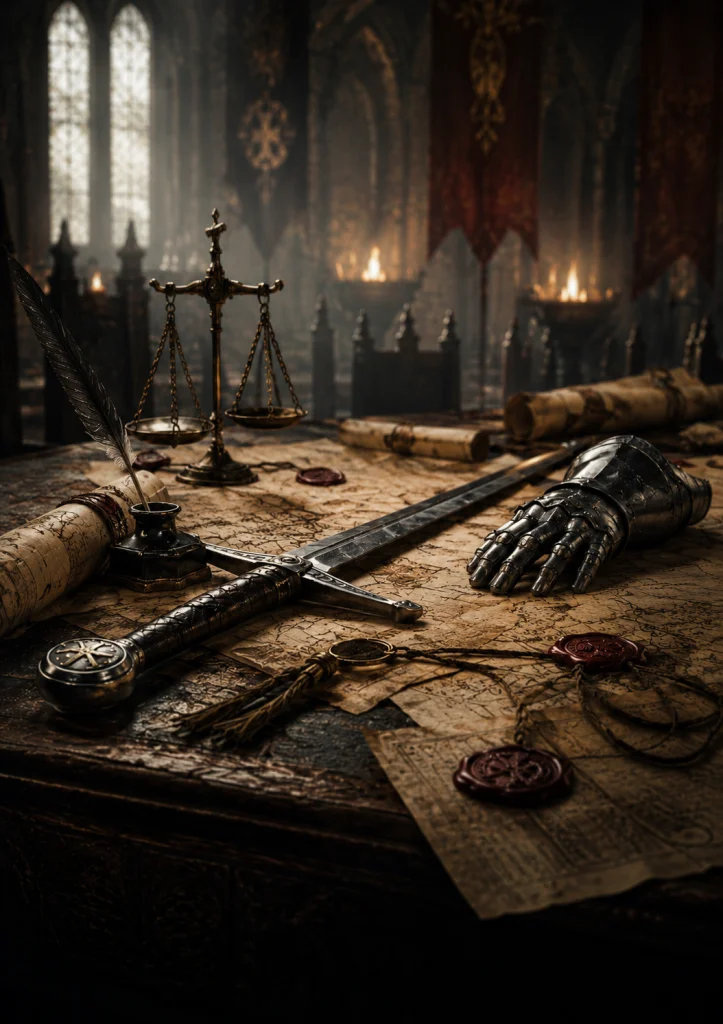
A hall built for command becomes a battlefield without blades, where every word carries the weight of marching orders. The protagonist stands at the center of a growing dispute between those who believe peace is bought through discipline and those who argue that force should be the last door opened, not the first one kicked in. No blood has been spilled yet, but the room already smells like war waiting for permission.
The debate is not about courtesy. It is about survival, authority, and the dangerous question of what protects a realm best: an open hand, a drawn sword, or the threat of one held just low enough to be polite. Voices rise, alliances strain, and every argument tests the line between wisdom and weakness. Even a soft answer can cut if placed correctly, and even the sharpest command can fail if no one follows it.
For the protagonist, compromise is not instinctive. Duty has always been clearer than persuasion, and military certainty offers comfort where politics offers fog. Yet the room demands more than old answers. To win the debate, he must prove that strength can guard the realm without becoming the very threat it claims to oppose.
The debate is not about courtesy. It is about survival, authority, and the dangerous question of what protects a realm best: an open hand, a drawn sword, or the threat of one held just low enough to be polite. Voices rise, alliances strain, and every argument tests the line between wisdom and weakness. Even a soft answer can cut if placed correctly, and even the sharpest command can fail if no one follows it.
For the protagonist, compromise is not instinctive. Duty has always been clearer than persuasion, and military certainty offers comfort where politics offers fog. Yet the room demands more than old answers. To win the debate, he must prove that strength can guard the realm without becoming the very threat it claims to oppose.