
- Fractured Faith
- Disciplined Guilt
- Lightbound Doubt
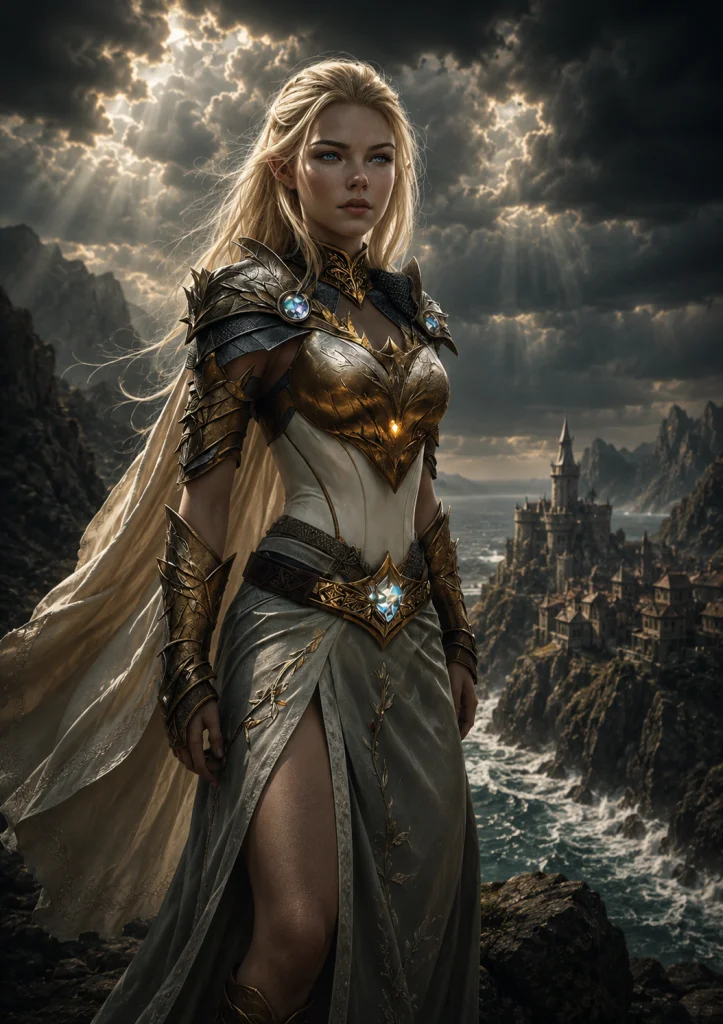
Justicar Serelith Dawnstrike
Alignment: Lawful Good
In the aftermath of a burned village, her faith no longer holds its shape. She follows orders with the precision of a trained soldier, yet every command cuts deeper than the last. Civilians flinch when she passes. Ruins remember her colors. The blessings spoken over the dead sound thinner each time.
She is not cruel by nature, and that may be what makes her dangerous. A blade with doubt still cuts, especially when held by someone trained to mistake hesitation for weakness. One truth could break her loyalty, harden it, or turn her into something neither side is ready to face.
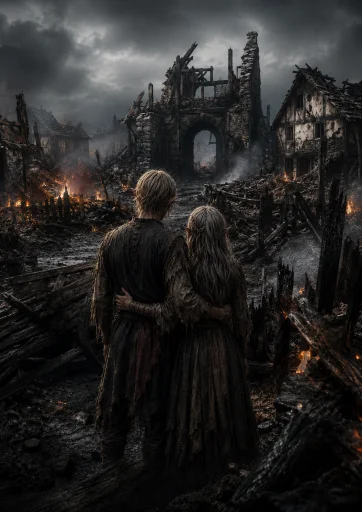
The fire has ended, but the village has not gone quiet in any merciful way. Blackened walls lean over streets that once held laughter, labor, argument, and ordinary hunger, while ash clings to every threshold like a witness refusing to leave. In the ruins, two siblings move through the remains of home, bound together by blood, secrecy, and the terrible suspicion that the first spark belonged to them.
Their bond is the center of the story’s wound. What happened between them was not simple, not safe, and not something either can confess without tearing open the last fragile thing they still share. In a moment of reckless passion, power answered feeling too strongly, and an entire village paid the price.
Now they must search what is left for meaning before grief hardens into accusation. Every scorched beam, every familiar doorway, and every silence between them presses the same question closer: was the fire an accident, a curse, a punishment, or the truth of what they were becoming?
The First Casualty is a story of ruin after heat, of forbidden closeness turned catastrophic, and of guilt that refuses to stay buried. The danger is not only what they destroyed, but what they might still be willing to protect from the ashes.
- Ashen Guilt
- Sibling Secrets
- Forbidden Fire
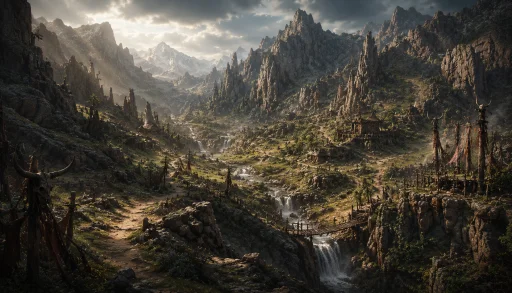
- Jagged Foothills
- Satyr Resilience
- Stonebound Trials
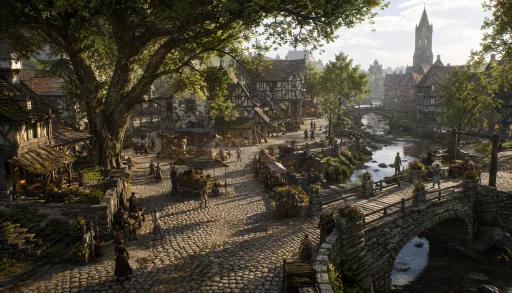
Grimcrag Valley cuts through the Western Front in hard angles of stone, dust, and sunburned earth. Jagged foothills rise like broken teeth, ravines split the ground without warning, and narrow trails cling to slopes that seem personally offended by careless footing. Wind moves constantly through the valley, scraping grit across rock and carrying low whistles that sound almost like voices if exhaustion has already started making bad choices.
To outsiders, the valley looks barren, cruel, and nearly empty. To those raised among its crags, it is a proving ground with a memory sharper than steel. Every ledge, dry wash, hidden pass, and wind-blasted rise teaches endurance, balance, suspicion, and pride. Nothing here is soft, but softness was never the bargain.
Grimcrag matters because it turns survival into identity. It is where strength is tested by terrain before enemies ever draw close, where old grudges can echo across stone, and where belonging must be earned one harsh step at a time. The valley does not welcome weakness, but it respects those stubborn enough to keep climbing anyway.
The Army of Light is a powerful religious military order devoted to the eradication of darkness, corruption, forbidden magic, and supernatural threats throughout the realm. Structured as both a faith and a standing army, the organization operates with unwavering discipline, militant doctrine, and absolute belief in the sanctity of their divine mission. To its followers, the Army represents salvation, order, and protection against the growing horrors lurking within the world. To its enemies, it is an unstoppable force of zealotry, judgment, and holy warfare.
The Army of Light is uniquely defined by its exclusive use of Gilded Magic — a newly emerged and poorly understood magical force believed to channel radiant power, purification, and divine authority. Though devastatingly effective against shadow entities, undead, curses, and corruption, the long-term consequences of prolonged Gilded Magic exposure remain largely unknown. Rumors persist of emotional instability, physical transformation, fanaticism, memory deterioration, or spiritual alteration among veteran users, though the order publicly dismisses such concerns as heresy or enemy propaganda.
Its soldiers and clergy are highly disciplined, often clad in radiant armor adorned with gold trim, sun iconography, white cloth, ceremonial markings, and sacred scripture. The organization values obedience, purity, sacrifice, and unwavering faith above individuality. Many members sincerely believe they are the final barrier preventing the realm from falling entirely into darkness.
Though publicly celebrated across many regions, the Army’s methods have become increasingly controversial. Entire villages have been purged under suspicion of corruption, magical practitioners imprisoned without trial, and supernatural species persecuted regardless of individual innocence. Supporters claim such actions are necessary sacrifices for the greater good. Critics warn the Army of Light may itself be becoming something dangerous.
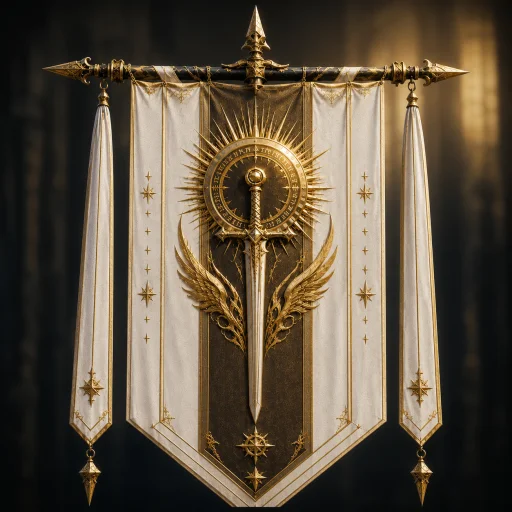
- Religious Military Order
- Wield Gilded Magic
- Fanatical Purifiers
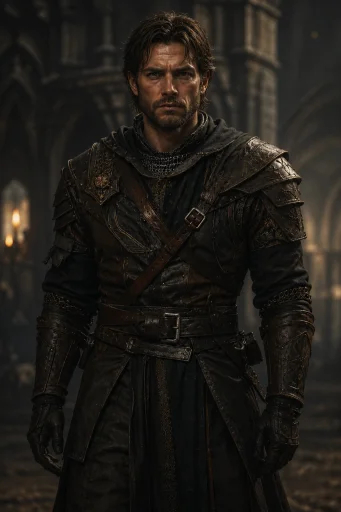
- Stubborn Survivors
- Endless Adaptation
- Ordinary Trouble
Human
Humans arrive in the world without obvious advantages, which seems rude until they start turning that lack into everybody else’s scheduling problem. They build shelters where storms insist they should not, raise banners over places that keep trying to kill them, and make tools from whatever is close enough to grab. Give them a broken road, a bad season, and one questionable plan, and somehow there is a village there by spring. Annoying? Absolutely. Effective? Tragically, yes.
Their lives burn quickly compared to longer-lived peoples, and that urgency shapes everything they touch. They chase love, power, safety, glory, revenge, comfort, and terrible ideas with the same dangerous momentum. A human court can become a battlefield with better clothing, while a frontier camp can turn into a kingdom if enough stubborn fools agree to keep hammering posts into the mud. They do not always know when to stop, which is charming right up until it becomes a siege.
What makes humans significant is not perfection, purity, or some grand destiny conveniently gift-wrapped by the heavens. It is variety under pressure. They can be farmers, soldiers, rulers, wanderers, cowards, lovers, tyrants, protectors, liars, and heroes before lunch if the day is especially rude. They are ordinary in the way flint is ordinary: dull in the hand until struck, then suddenly full of fire.