
- Obsessive Assassin
- Skinbound Hunger
- Cold Pursuit
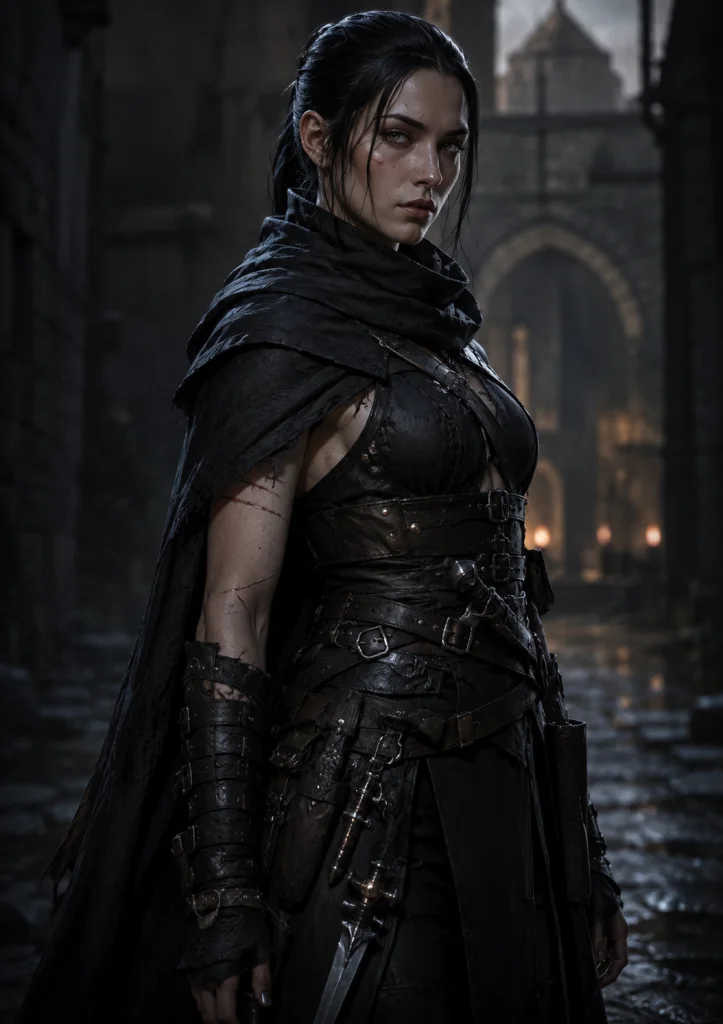
Mika Fangura
Alignment: True Neutral
To her, shapeshifting is not disguise. It is perfection. A skin-binder's full-body transformation promises the final tool an assassin could crave: the ability to become anyone, pass any threshold, slip any net, and leave no face behind for memory to hold. She does not envy that power. She believes it belongs in disciplined hands, and hers are the only hands she trusts.
Her pursuit has made her colder, sharper, and far less interested in the old boundaries between contract and obsession. She will threaten, bargain, seduce a secret loose if needed, or carve a path through anyone who thinks desire is the same as weakness. Those who stand between her and transformation do not become enemies. They become delays.
She is dangerous because she is not reckless. Every step is measured, every question has a blade behind it, and every mercy is temporary. The closer she gets to the secret of skin-binding, the less certain anyone can be that the person standing beside them is still who they seem.
A professional assassin has reached the edge of what training, discipline, and human flesh can offer. She can stalk, threaten, vanish, and kill, but every contract reminds her of the same flaw: one body leaves traces, one face can be remembered, and one identity can be trapped.
The secret of skin-binding promises the final refinement of her craft. Full-body transformation would let her become the disguise instead of wearing one, pass guarded thresholds without suspicion, and leave no true face behind for witnesses to fear or describe. To her, this is not corruption. It is advancement.
A Better Face for Murder follows her descent through contracts, stolen lore, dangerous bargains, and forbidden techniques as each chapter brings her closer to transformation. The horror is not only what she does to others, but what she becomes willing to remove from herself.
This is a dark, predatory transformation quest about ambition without mercy and identity treated as a tool. The closer she gets to becoming anyone, the less certain it becomes that anyone remains beneath the skin.

- Skinbound Ambition
- Identity Horror
- Predatory Descent
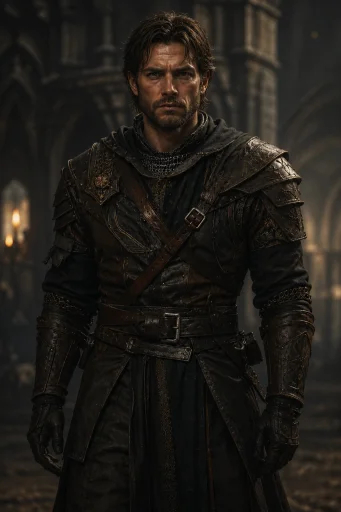
- Stubborn Survivors
- Endless Adaptation
- Ordinary Trouble
Human
Humans arrive in the world without obvious advantages, which seems rude until they start turning that lack into everybody else’s scheduling problem. They build shelters where storms insist they should not, raise banners over places that keep trying to kill them, and make tools from whatever is close enough to grab. Give them a broken road, a bad season, and one questionable plan, and somehow there is a village there by spring. Annoying? Absolutely. Effective? Tragically, yes.
Their lives burn quickly compared to longer-lived peoples, and that urgency shapes everything they touch. They chase love, power, safety, glory, revenge, comfort, and terrible ideas with the same dangerous momentum. A human court can become a battlefield with better clothing, while a frontier camp can turn into a kingdom if enough stubborn fools agree to keep hammering posts into the mud. They do not always know when to stop, which is charming right up until it becomes a siege.
What makes humans significant is not perfection, purity, or some grand destiny conveniently gift-wrapped by the heavens. It is variety under pressure. They can be farmers, soldiers, rulers, wanderers, cowards, lovers, tyrants, protectors, liars, and heroes before lunch if the day is especially rude. They are ordinary in the way flint is ordinary: dull in the hand until struck, then suddenly full of fire.