


Not heroic just surprisingly necessary.

Though called armor by generous merchants and desperate travelers, it offers little more than basic coverage against scrapes, weather, and the indignity...

Curiosity killed nothing yet. The cat is working on it.

The forest, however, does not welcome investigation. Beneath its towering trees, the air thickens with territorial silence, and every path seems to shift...

Come rich leave quicker or leave lighter.

This is a pirate town first and a city only when it needs to look respectable. Smugglers, privateers, cutthroats, gamblers, informants, and charmers all...

30 Characters
26 Races
23 Tales
11 Alliances
10 Treasures
The Western Front
  • Barren Cliffs
  • Lost Relics
  • Hidden Dangers

The Western Front

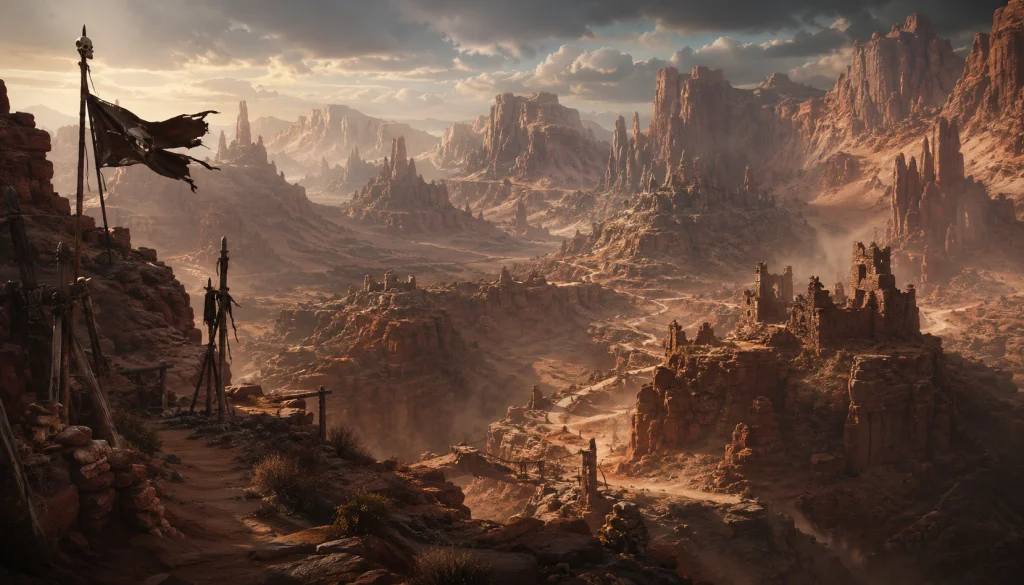
The Western Front was shaped by endurance before anyone tried to claim it. Wind, heat, and old violence carved its cliffs and valleys into a maze of exposed trails, hidden passes, and stone chambers where echoes linger too long. Those who crossed it learned quickly that beauty did not mean mercy, and distance could kill as surely as steel.

Over time, the region became useful to those who preferred life beyond official reach. Outlaws hid among the canyons, raiders learned the plateaus, and wanderers followed rumors of relics, carvings, and buried remnants of conflicts no living witness could explain. The land swallowed evidence as easily as bodies, leaving behind fragments for the desperate or foolish to chase.

Now the Western Front remains a proving ground for anyone bold enough to enter it. Its dangers are not limited to weather or blade; old markings still wait on stone, and the valleys hold silences that feel less empty than patient. Travelers come seeking freedom, fortune, or answers, but the region gives nothing without cost.

The fire left but the guilt stayed.
  • Burned Remnants
  • Silent Roads
  • Ashen Secrets

Silvershire

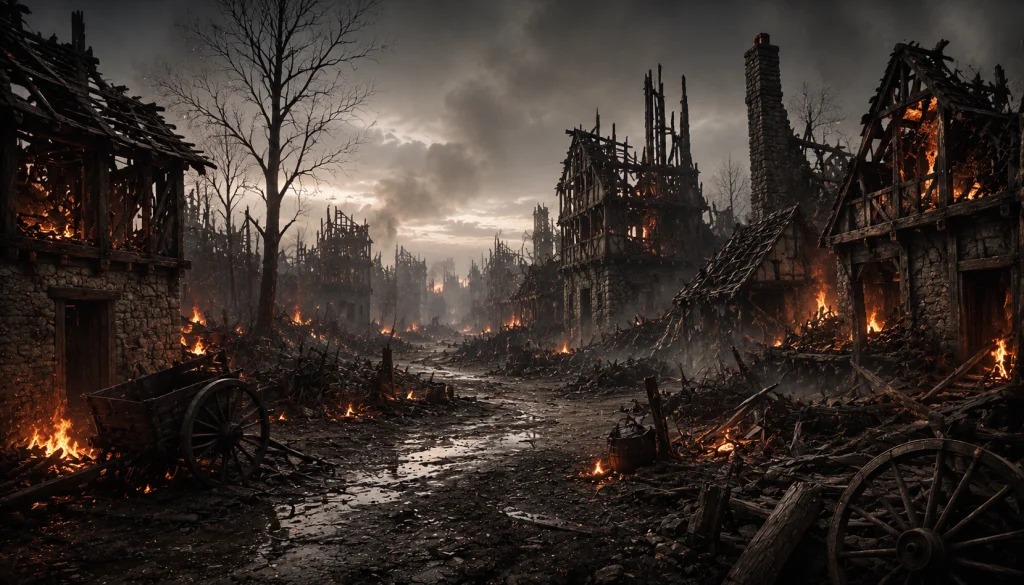
Silvershire once stood as a living village of homes, roads, hearths, and familiar daily noise. Its people built their lives around work, family, trade, and the small routines that make a place feel permanent. Doors opened each morning, fires were lit for meals, and belongings gathered in corners because everyone expected to return for them.

Then ruin came quickly enough to leave ordinary life unfinished. Cottages burned, roads filled with hurried tracks, and belongings were abandoned where fear overtook habit. Whatever force struck the village did not remain, but it left behind a silence too complete to feel natural.

Now Silvershire exists as a warning written in ash. Some ties to the place remain unbroken, carried by those born there, those who lived there, and those who survived long enough to remember what was lost. The dead do not speak, but the ruins still hold their shape, and every scorched threshold asks who lit the fire and who benefited from the dark.

Righteous banners still cast ugly shadows.
  • Holy War Machine
  • Heavy Military
  • Spoils and Silence

The War Camp

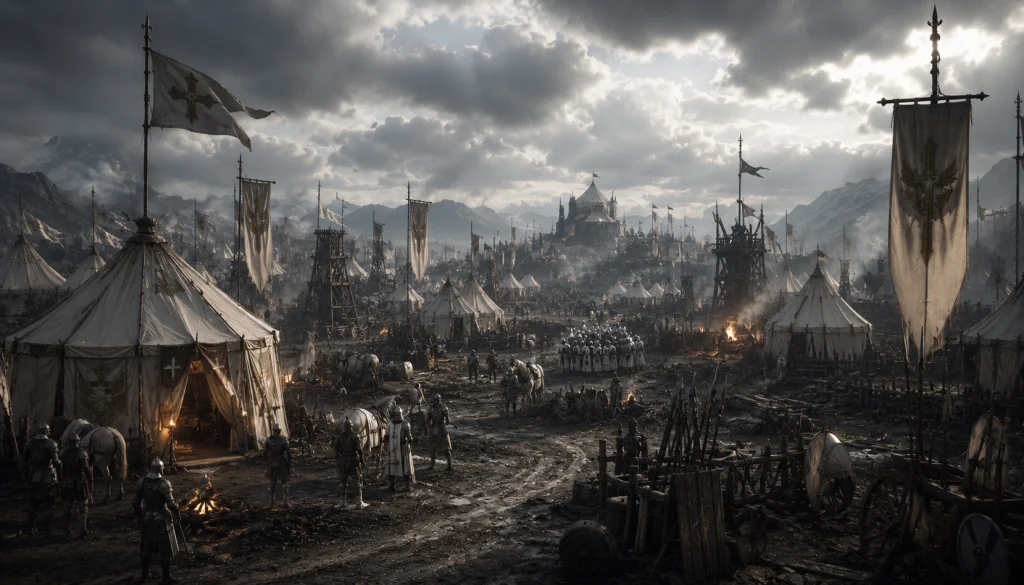
The War Camp began as a temporary military position, raised where strategy demanded readiness and the next march could not wait for stone walls. Tents, supply lines, watch posts, and command spaces were arranged with strict purpose, each part serving movement, discipline, and control. What was meant to be temporary grew heavier with every victory, loss, and order passed beneath its banners.

Over time, the camp became more than shelter for soldiers. It became a symbol of force in motion: weapons repaired before mourning ended, armor polished beside spoils of conquest, and plans made while smoke still clung to the ground. Those who served there learned to measure morality through orders, and hesitation became something drilled out before it could become disobedience.

Now the War Camp stands as a disciplined storm waiting to be released. Its leaders command from within guarded tents, its soldiers sharpen steel without looking back, and its fires burn through the night like eyes that refuse to close. The camp does not grieve what it consumes. It prepares.

Come for trade leave with either coin or consequences.
  • Bright Market Life
  • River Trade
  • Hidden Bargains

Stonebridge Village

Stonebridge Village grew around trade before it grew into importance. Its bridge, streets, and market squares gave travelers a reason to stop, exchange goods, repair wagons, hire hands, and carry stories onward. What began as a practical crossing became a dependable place to buy, sell, rest, and argue over prices with theatrical offense.

As commerce expanded, so did the town’s sense of order. Merchants learned that prosperity required rules, even if some of those rules were spoken only in back rooms and enforced with a meaningful stare. Craftsmen, traders, travelers, and local families built a rhythm around market days, river movement, and the constant arrival of goods from elsewhere.

Now Stonebridge stands as a bright, busy settlement where wealth changes hands in plain sight and influence moves more quietly beneath it. Its streets welcome opportunity, but not disruption. Those who respect the bargain may thrive; those who threaten the flow of trade quickly discover that cheerful towns can still have sharp elbows.

Bring water wit and a believable last word.