- Gilded Cruelty
- Sanctified Ego
- Velvet Threats
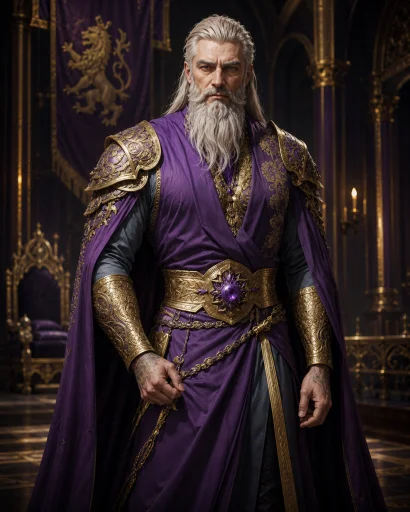
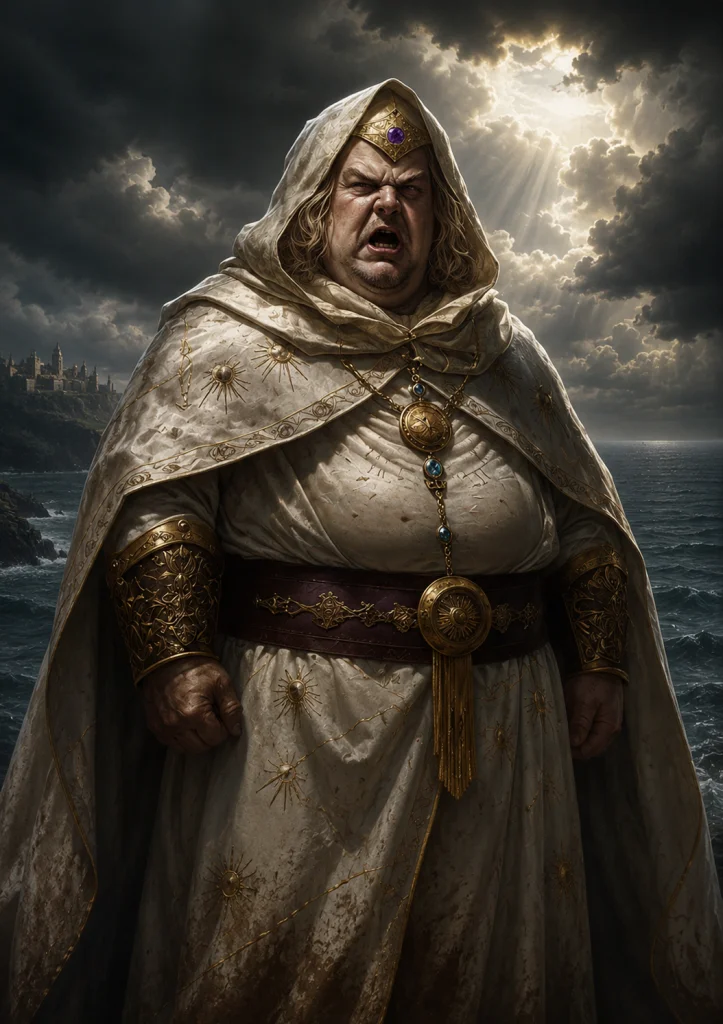
High Inquisitor Benedict Solgrave
Alignment: Lawful Evil
At the war camp, he carries authority like a jeweled weapon. He speaks of order, obedience, and divine purpose, but his true devotion is to control. Alliances become traps, negotiations become performances, and anyone who resists him is treated less like an opponent than an inconvenience awaiting correction.
His danger lies not in strength, but in permission. He knows which rules can be bent, which titles frighten the obedient, and which holy phrases make cruelty sound necessary. Beneath the gilded robes and theatrical sneers is a man terrified of becoming irrelevant, and that fear makes him vicious.
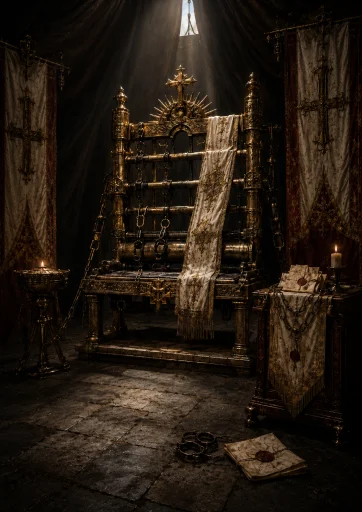
The war camp has many tents, but everyone learns which one not to enter after sunset. Its lamps burn too cleanly, its guards stand too still, and its prayers are spoken with the careful rhythm of procedure. Inside, judgment is dressed in ivory, gold, and legal language until cruelty can pass for sacred duty.
The inquisitor claims to seek confession, correction, and peace through order. What he truly wants is surrender: of secrets, pride, loyalty, and the last private thought a frightened soul still owns. His title gives him permission to ask questions no decent person would frame, and his authority turns refusal into guilt.
The Gilded Rack is a story of horror beneath ceremony, where torture is not shown as spectacle but felt through silence, implication, and the machinery of fear. The danger is not only what happens in the chamber, but how easily witnesses convince themselves it is lawful because someone important called it necessary.
As accusations sharpen and alliances tremble, the chamber becomes more than a place of punishment. It becomes a test of who will speak, who will look away, and who will decide that mercy without a voice is just another instrument on the wall.
- Holy Cruelty
- Gilded Horror
- Forced Confession
- Holy War Machine
- Heavy Military
- Spoils and Silence
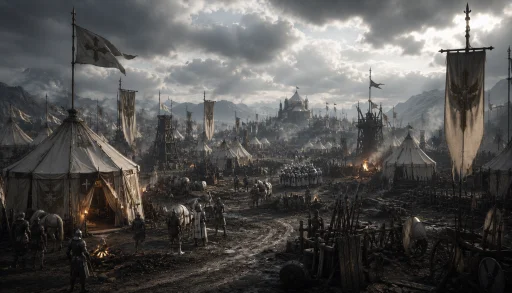
The War Camp sprawls across scorched ground in ordered rows of canvas, timber, steel, and watchfires. Banners snap in the wind above ranks of soldiers, supply wagons, weapon racks, command tents, and training yards where drills continue long after sunset. The air smells of smoke, oiled leather, hot iron, horse sweat, and old blood scrubbed poorly from places everyone pretends not to notice.
This is not a camp built for rest. It is a moving engine of discipline, faith, conquest, and command, where every hammer strike, shouted order, sharpened blade, and polished breastplate feeds the next march. Soldiers move with practiced obedience, armorers work beneath low flames, scouts come and go through guarded paths, and officers speak in clipped voices over maps marked by decisions that will ruin lives far from the firelight.
The War Camp matters because it shows the cost beneath holy certainty. To some, it is protection given structure; to others, it is violence dressed in clean banners and righteous language. Spoils lie tucked beneath canvas, prisoners are watched from shadowed edges, and every road leading away from the camp feels like a question no one is permitted to ask aloud.
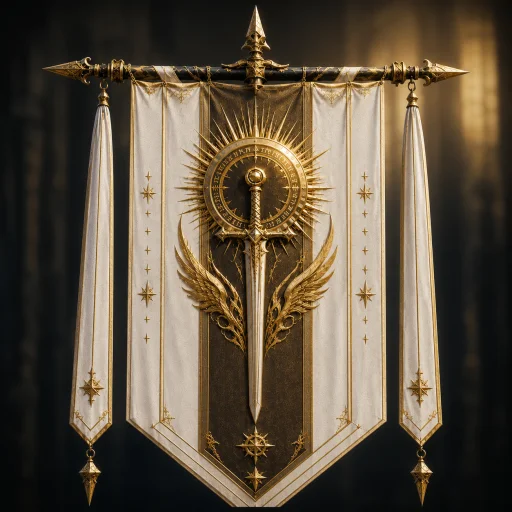
The Army of Light is a powerful religious military order devoted to the eradication of darkness, corruption, forbidden magic, and supernatural threats throughout the realm. Structured as both a faith and a standing army, the organization operates with unwavering discipline, militant doctrine, and absolute belief in the sanctity of their divine mission. To its followers, the Army represents salvation, order, and protection against the growing horrors lurking within the world. To its enemies, it is an unstoppable force of zealotry, judgment, and holy warfare.
The Army of Light is uniquely defined by its exclusive use of Gilded Magic — a newly emerged and poorly understood magical force believed to channel radiant power, purification, and divine authority. Though devastatingly effective against shadow entities, undead, curses, and corruption, the long-term consequences of prolonged Gilded Magic exposure remain largely unknown. Rumors persist of emotional instability, physical transformation, fanaticism, memory deterioration, or spiritual alteration among veteran users, though the order publicly dismisses such concerns as heresy or enemy propaganda.
Its soldiers and clergy are highly disciplined, often clad in radiant armor adorned with gold trim, sun iconography, white cloth, ceremonial markings, and sacred scripture. The organization values obedience, purity, sacrifice, and unwavering faith above individuality. Many members sincerely believe they are the final barrier preventing the realm from falling entirely into darkness.
Though publicly celebrated across many regions, the Army’s methods have become increasingly controversial. Entire villages have been purged under suspicion of corruption, magical practitioners imprisoned without trial, and supernatural species persecuted regardless of individual innocence. Supporters claim such actions are necessary sacrifices for the greater good. Critics warn the Army of Light may itself be becoming something dangerous.
- Religious Military Order
- Wield Gilded Magic
- Fanatical Purifiers
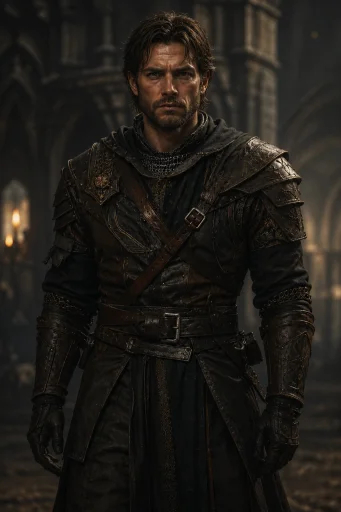
- Stubborn Survivors
- Endless Adaptation
- Ordinary Trouble
Human
Humans arrive in the world without obvious advantages, which seems rude until they start turning that lack into everybody else’s scheduling problem. They build shelters where storms insist they should not, raise banners over places that keep trying to kill them, and make tools from whatever is close enough to grab. Give them a broken road, a bad season, and one questionable plan, and somehow there is a village there by spring. Annoying? Absolutely. Effective? Tragically, yes.
Their lives burn quickly compared to longer-lived peoples, and that urgency shapes everything they touch. They chase love, power, safety, glory, revenge, comfort, and terrible ideas with the same dangerous momentum. A human court can become a battlefield with better clothing, while a frontier camp can turn into a kingdom if enough stubborn fools agree to keep hammering posts into the mud. They do not always know when to stop, which is charming right up until it becomes a siege.
What makes humans significant is not perfection, purity, or some grand destiny conveniently gift-wrapped by the heavens. It is variety under pressure. They can be farmers, soldiers, rulers, wanderers, cowards, lovers, tyrants, protectors, liars, and heroes before lunch if the day is especially rude. They are ordinary in the way flint is ordinary: dull in the hand until struck, then suddenly full of fire.