


- First Snow, Last Grudge
- Hold the Line
- The Fort Nobody Built
The Drift War
The recruits always lose, because they are recruits. This year Master-at-Arms Daelen Virell asked to command them, and he intends to drill them into the first winning recruit company the camp has ever seen.
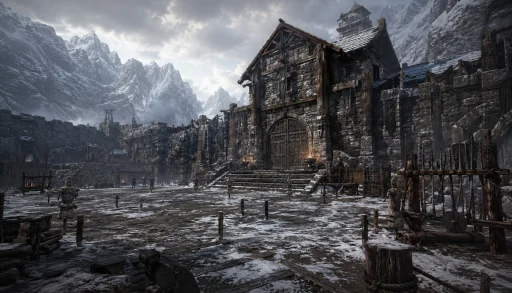
Then the sentries start seeing things. Each dawn there is a fort on the ridge beyond the palisade that nobody built, and in front of it stand ranks of snow soldiers, a step closer to the gate every morning. Daelen does not believe in haunted snow. He believes in drills, and in an enemy he has not identified yet. You can help him turn a company of beginners into a fighting line, keep watch on the ridge, and find out who is raising the other army before it marches.
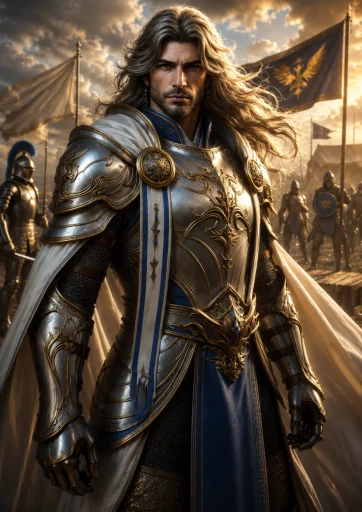
He is the kind of soldier who makes a room stand straighter without raising his voice. In the Army of Light, discipline is often wrapped in ceremony, blessing, and gold, but he prefers the cleaner language of steel, formation, and consequence. He calls weakness what it is, calls waste what it costs, and has little patience for officers who confuse cruelty with command.
At the war camp, his rank places him close enough to politics to understand their shape and far enough from comfort to despise them. He knows when to hold his tongue, when to speak like a blade through silk, and when a negotiation is only a battlefield pretending to have chairs. That skill makes him useful to those above him, even when his honesty makes them grind their teeth.
In The Gilded Rack, he stands as an antagonist not because he enjoys suffering, but because he believes order survives through hard decisions and harder people. The chamber’s polished cruelty disgusts him more than he admits, yet he remains bound to command, duty, and the ugly necessity of keeping the army intact. His conflict is not softness against strength, but discipline against corruption wearing the same uniform.
- Blunt Commander
- Hard Mercy
- Political Disgust
- Holy War Machine
- Heavy Military
- Spoils and Silence
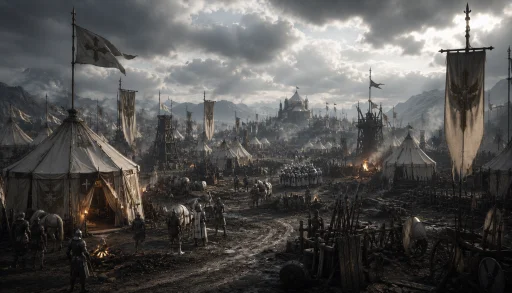
The War Camp is a huge army encampment on dry golden grassland, inside a timber palisade and ditch with gate towers: orderly rows of canvas tents along muddy lanes, plain banners and pennants, horse lines and corrals, wagons and supply stacks, and siege engines parked in a yard of their own. The commander's pavilion stands at the center under tall banners, beside a timber shrine-chapel and a drill field of battered practice dummies, and a sutler's striped tent serves as the tavern. Soldiers, armorers, scouts and camp followers live here, and the wind always smells of smoke.
The War Camp sprawls across scorched ground in ordered rows of canvas, timber, steel, and watchfires. Banners snap in the wind above ranks of soldiers, supply wagons, weapon racks, command tents, and training yards where drills continue long after sunset. The air smells of smoke, oiled leather, hot iron, horse sweat, and old blood scrubbed poorly from places everyone pretends not to notice.
This is not a camp built for rest. It is a moving engine of discipline, faith, conquest, and command, where every hammer strike, shouted order, sharpened blade, and polished breastplate feeds the next march. Soldiers move with practiced obedience, armorers work beneath low flames, scouts come and go through guarded paths, and officers speak in clipped voices over maps marked by decisions that will ruin lives far from the firelight.
The War Camp matters because it shows the cost beneath holy certainty. To some, it is protection given structure; to others, it is violence dressed in clean banners and righteous language. Spoils lie tucked beneath canvas, prisoners are watched from shadowed edges, and every road leading away from the camp feels like a question no one is permitted to ask aloud.