



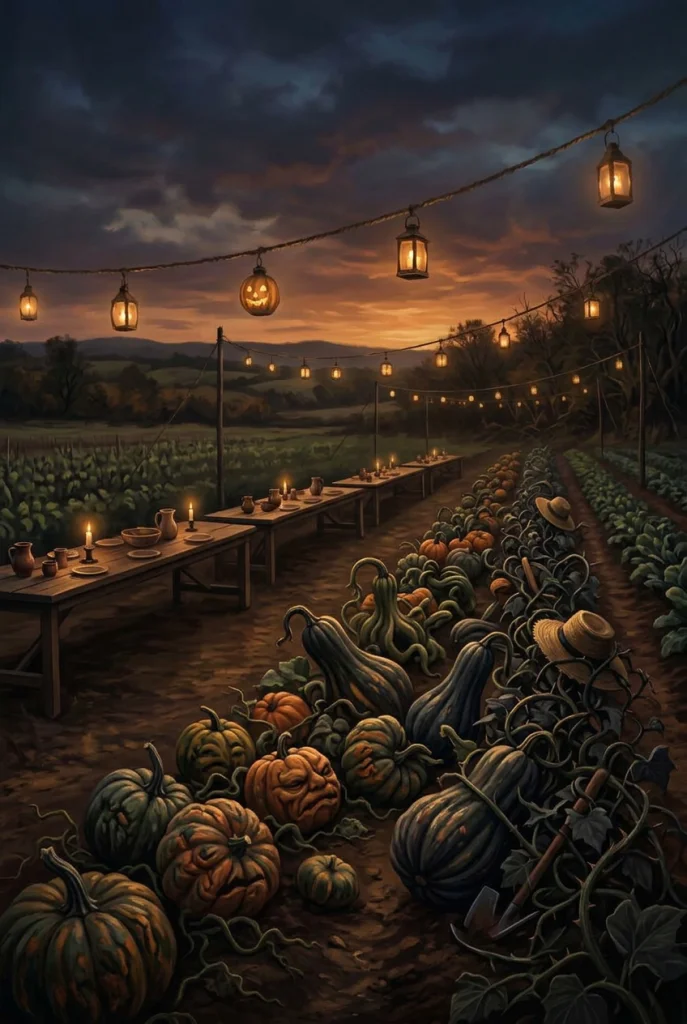
- One Row Left Standing
- It Grew Wrong
- Supper in the Open Field
The Last Row
This year the honor of planting the valley's Last Row went to a young farmer, who used their best prize seeds and every bit of care they had. The row came up beautiful. Then it came up strange. Pumpkins roll off when no one is watching, the squash refuse to be picked, and the vines are creeping toward the supper field.
Last Row Night is three days away, and the hungry are already arriving. You can help the farmer gather a harvest that does not want to be gathered, find out what got into their seeds, and make sure the valley still has its supper.
He is the reigning champion of a contest most outsiders laugh at until they see him step to the line. In the Fertile Fields, where harvest pride runs deep and grudges grow almost as well as crops, his skill with watermelon seeds has become local legend. It is ridiculous, yes. It is also precise, competitive, weirdly intense, and somehow the kind of thing people will argue about for years beside market stalls and supper tables.
He comes across as harmless at first: bright-eyed, red-haired, farm-strong, carrying the warmth of tilled soil and sunny lanes with him. He smiles too easily, trusts too quickly, and blushes like a man who can lift a full basket but cannot survive a compliment. Then the contest begins, and all that softness narrows into focus.
His gift is not magic in any grand sense, not yet anyway. It is practice, breath control, jaw strength, timing, and the strange confidence of a man who has spent far too many afternoons proving a seed can fly farther than dignity. But this year, the festival is not just a festival. Something about the contest is about to matter, and the champion may have to learn that even the silliest talent can become a story’s sharpest point.
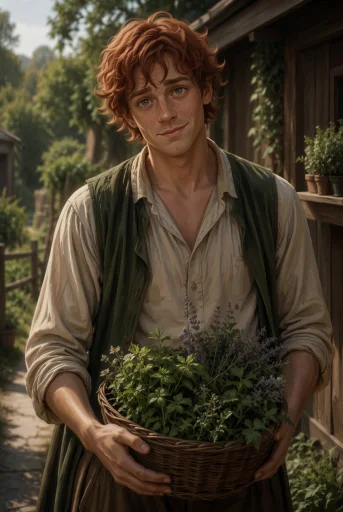
- Seed Champion
- Sweet Plowboy
- Accidental Trouble
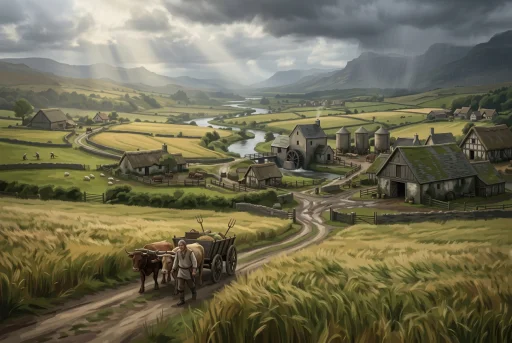
- Golden Harvests
- Rural Tension
- Honest Labor
The Fertile Fields spread across the Heartland in long gold-green sweeps of grain, pasture, river-cut soil, and weathered farm roads. Wind moves through the crops in slow waves, carrying the scent of tilled earth, fresh hay, warm bread, woodsmoke, and rain waiting somewhere beyond the hills. Stone cottages, barns, fences, mills, and work carts sit among the fields like they grew there, shaped by generations who measure life by planting, harvest, and the stubborn dignity of a long day done right.
This land looks gentle from a distance, but it is not idle. Hands rise before dawn, tools bite into soil, livestock stir in fenced yards, and every season demands its due. The fields feed families, villages, markets, and ambitions far beyond their borders, which makes them precious enough to protect and tempting enough to steal. Prosperity has a way of attracting admirers with sticky fingers — rude, but predictable.
The Fertile Fields matter because peace here feels earned, not guaranteed. Every wagon track, irrigation ditch, grain store, and farmhouse threshold carries both comfort and risk. Beneath the harvest warmth lies the quiet tension of land worth coveting, families worth defending, and old rural troubles that can hide beneath golden crops until the wind turns them loose.