


- Chaos in Velvet
- Prophecy in Punchlines
- Laughter Before Ruin
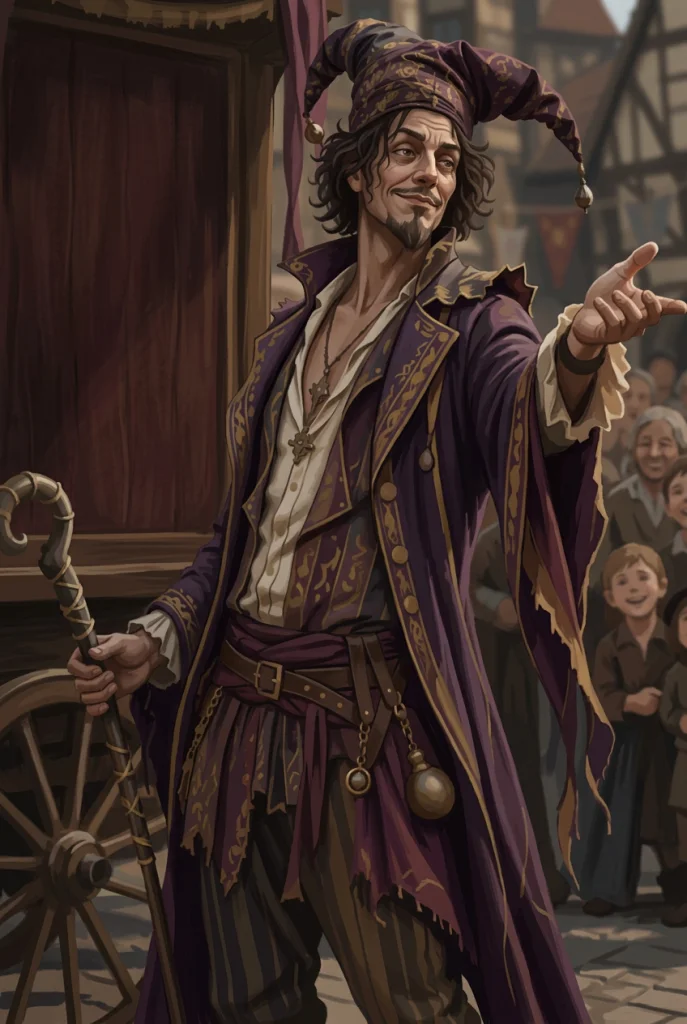
Ruperty "The Ha-Ha Man" Haman
Alignment: Chaotic Good
Beneath the ruined magic and theatrical nonsense is a mind that catches fragments of what should not yet be known. He wraps prophecy in punchlines because straight truth makes people flinch, and frightened people rarely hear the warning before it grows teeth. A riddle, a pratfall, a ridiculous bow — these are the little doors he leaves open for survival to slip through.
He is warm enough to charm children, sharp enough to unsettle nobles, and lonely enough to make every burst of applause feel like shelter from the silence waiting after midnight. Whether fool, prophet, menace, or mercy depends on when the bells ring — and whether anyone is wise enough to laugh before running.
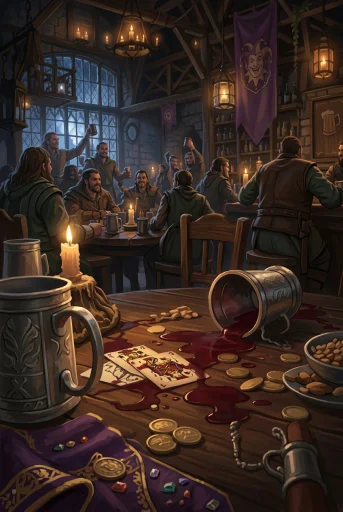
A tiny, tipsy pixie arrives with a grin, a hiccup, and a proposition wrapped in glittering nonsense. What sounds at first like another reckless prank quickly becomes a chaotic little quest full of spilled drinks, bruised dignity, awkward flirtation, and the kind of trouble that only looks harmless because it is nine inches tall.
The conflict begins with laughter, but it does not stay simple. Beneath every dare and dramatic declaration is a sharper fear: being ignored, forgotten, or left behind once the noise fades. Their preposterous plan pulls others into their orbit, testing whether companionship can survive embarrassment, danger, and several deeply questionable choices.
This plotline blends tavern comedy, fey mischief, and chaos with a softer emotional thread underneath. The stakes are not kingdoms or armies, but something smaller and meaner: the chance that a bright little life could vanish from memory if no one bothers to notice.
- Pickled Pixie
- Prank Trouble
- Forgotten Fear
- Harvest Crossroads
- Saltfair Market Days
- Granaries Worth Guarding
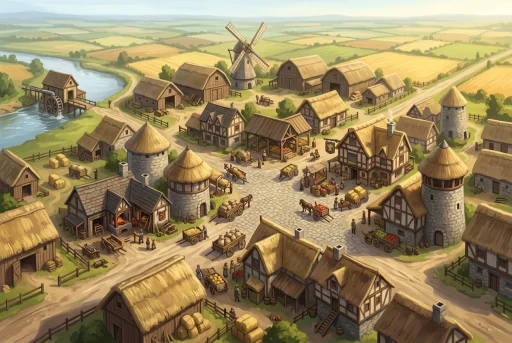
Sheafcross is thatched barns, stone granaries and half-timbered houses built right on top of the place where the farm roads of the Fertile Fields meet. The roads do not go around the town; they become it. Both run straight through as its main streets, lined with carters' yards, a smithy, a cooper's shed, feed stores and taverns, and they meet at the market square, a little west of centre, where open-sided market halls, grain halls and a coaching inn crowd around the cobbles. A single watermill turns on the river bend at the west edge, a windmill stands among the barns to the north, round granaries are scattered all through the town like patient giants, and past the last fence the patchwork fields roll off in every direction.
Everything in Sheafcross is sold by the cartload. Grain, hay, onions, apples, cheese, wool, eggs, piglets and opinions all change hands at the crossing, and the town measures its days by what is coming in on the roads. Millwheel starts the week with the mills grinding before dawn. Fullpurse is wage day, when every hired hand in the valley is paid at the market halls and the taverns are full by dusk. Saltfair is market day, when carts park three deep along both roads and nobody can cross the street without buying something.
The town is proud, loud and practical. Its people judge each other by the weight of a sack and the straightness of a furrow, use the weather as a greeting, and trust a handshake over a contract until the handshake goes wrong. Its grain goes downriver to the markets of Three Rivers, its cheese and cider go north to the inns of Briarbrook, and its carters know every rut in between.
Under the bustle runs the Heartland's newer unease. Carts arrive a sack short with nobody to blame, a granary empties with its lock still shut, and odd lights drift over the far fields that the carters have agreed not to mention before supper.
Human
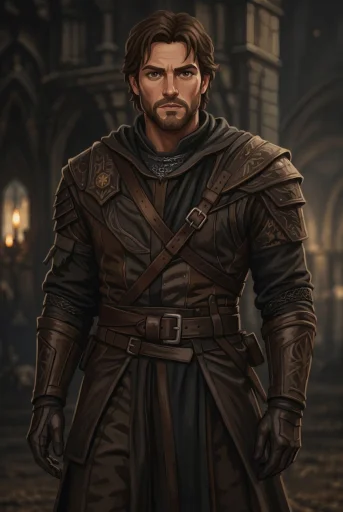
Humans arrive in the world without obvious advantages, which seems rude until they start turning that lack into everybody else’s scheduling problem. They build shelters where storms insist they should not, raise banners over places that keep trying to kill them, and make tools from whatever is close enough to grab. Give them a broken road, a bad season, and one questionable plan, and somehow there is a village there by spring. Annoying? Absolutely. Effective? Tragically, yes.
Their lives burn quickly compared to longer-lived peoples, and that urgency shapes everything they touch. They chase love, power, safety, glory, revenge, comfort, and terrible ideas with the same dangerous momentum. A human court can become a battlefield with better clothing, while a frontier camp can turn into a kingdom if enough stubborn fools agree to keep hammering posts into the mud. They do not always know when to stop, which is charming right up until it becomes a siege.
What makes humans significant is not perfection, purity, or some grand destiny conveniently gift-wrapped by the heavens. It is variety under pressure. They can be farmers, soldiers, rulers, wanderers, cowards, lovers, tyrants, protectors, liars, and heroes before lunch if the day is especially rude. They are ordinary in the way flint is ordinary: dull in the hand until struck, then suddenly full of fire.
- Stubborn Survivors
- Endless Adaptation
- Ordinary Trouble