
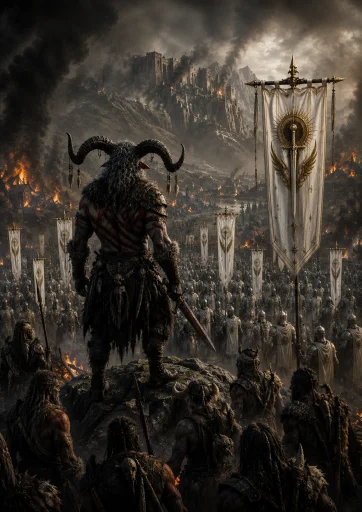



- Gilded Heir
- Inherited Burden
- Quiet Longing
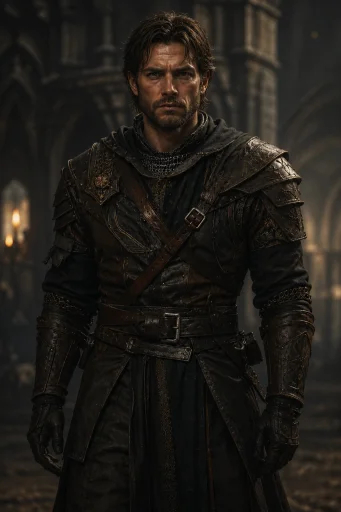
Aldric Ironheart
Alignment: Lawful Good
His life is built from expectation, each gesture weighed before it reaches the room. He knows how to speak without revealing too much, how to smile without inviting questions, and how to carry a legacy that presses harder than armor. The world sees a future commander, dutiful and composed. It does not see the quiet dread beneath the gold.
What he wants is dangerously simple: honesty, gentleness, and the freedom to be known without becoming a weapon in someone else’s hand. In a house where strength is worshiped and weakness is hunted, even tenderness must learn to hide its face.
The war camp is a city made of canvas, steel, mud, prayer, and exhaustion. Banners snap over training yards, supply rows, infirmary tents, command tables, and guarded paths where every soldier knows which questions not to ask too loudly. Discipline keeps the camp alive, but discipline is starting to look too much like silence.
At the center of the strain stands a commander who believes weakness kills faster than enemy blades. He drills recruits until excuses fall away, corrects officers with the same blunt force he uses on rookies, and treats politics like a disease that somehow learned to wear medals. He can play the game when rank demands it, but he hates every perfumed second of it.
The Line That Holds follows a conflict contained entirely within the army’s own war camp, where orders, rumors, and fear move faster than messengers. While darker ceremonies unfold elsewhere beneath righteous banners, this story watches the surrounding machinery: the soldiers ordered to stand guard, the recruits forced to harden too quickly, and the officers trying to decide whether truth is worth the damage it might cause.
The danger is not an enemy charge. It is collapse from within. If the commander holds the line too tightly, he may become another tool of the rot he despises. If he loosens it, the camp may break before dawn.
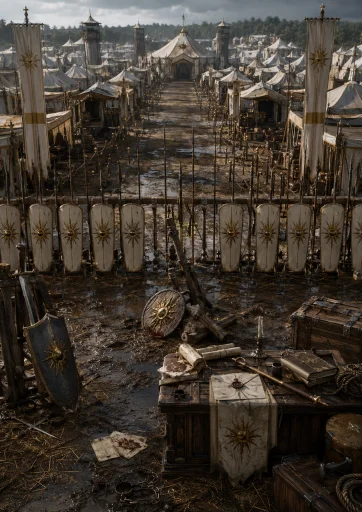
- Camp Pressure
- Hard Discipline
- Rotten Command
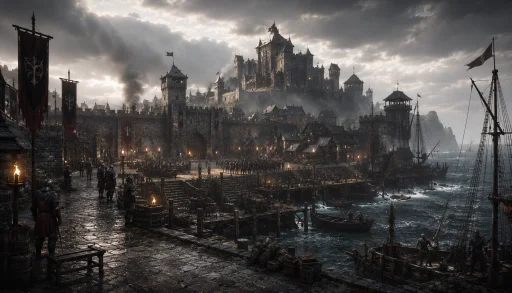
- Military Village
- Sea Bound Duty
- Fortress Culture
Rosewood Village stands where salt air meets marching discipline, a coastal bastion shaped as much by steel as by tide. Its streets carry the clang of smiths, the creak of shipyard timber, the bark of orders, and the steady beat of boots over stone. Market stalls, forges, piers, training yards, and family homes all press close beneath watchful patrols, each part of village life tied to readiness.
The sea brings trade, storms, rumors, and threat, but Rosewood answers with walls, drills, armed patrols, and a shipyard that never feels entirely at rest. Soldiers move beside merchants, sailors, craftsmen, and children raised to know which bells mean work and which mean danger. Even its laughter has structure, tucked between shifts, inspections, and duties that arrive whether anyone invited them or not.
Rosewood matters because it is safe in the way a clenched fist is safe. Its order protects, but it also presses down, shaping every life beneath the expectation of service. Pride, resentment, loyalty, and exhaustion all walk the same streets here, making the village a place of strength, sacrifice, and choices that may never have been choices at all.
The Ironheart Dynasty is among the oldest and most respected martial noble houses in the realm, renowned for unwavering discipline, battlefield honor, and absolute loyalty to crown, kingdom, and sworn oath. Their name has become synonymous with resilience, duty, and military leadership, with generations of Ironheart commanders defending fortresses, borders, and civilian populations against both mortal and supernatural threats.
The house favors pragmatic strength over political manipulation, believing stability is forged through sacrifice, discipline, and decisive action rather than deception or ambition. Though often viewed as rigid or overly traditional by rival houses, Ironheart’s reputation for integrity and reliability has earned them enduring respect even among enemies.
Ironheart strongholds are typically immense stone fortresses built in defensible terrain, emphasizing military readiness, self-sufficiency, and endurance during prolonged conflict. Their banners, armor, architecture, and heraldry heavily feature steel, black iron, silver trim, and crimson accents symbolizing sacrifice and strength through adversity.
Members of The Ironheart Dynasty are raised from an early age to value service above personal desire. Cowardice, oathbreaking, and political treachery are considered among the gravest sins within the house. Even lower-ranking retainers are expected to uphold the Ironheart code of conduct regardless of personal cost.
Though noble in reputation, House Ironheart is not naive. They understand war intimately and are fully capable of ruthless military action when necessary to protect the realm or fulfill sworn obligations. However, such actions are viewed as burdens of duty rather than opportunities for glory.
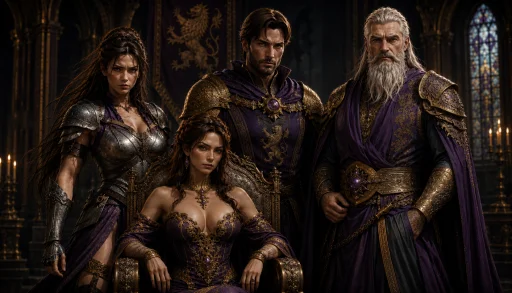
- Martial Traditionalists
- Unbreakable Oaths
- Realm Defenders
- Stubborn Survivors
- Endless Adaptation
- Ordinary Trouble
Human
Humans arrive in the world without obvious advantages, which seems rude until they start turning that lack into everybody else’s scheduling problem. They build shelters where storms insist they should not, raise banners over places that keep trying to kill them, and make tools from whatever is close enough to grab. Give them a broken road, a bad season, and one questionable plan, and somehow there is a village there by spring. Annoying? Absolutely. Effective? Tragically, yes.
Their lives burn quickly compared to longer-lived peoples, and that urgency shapes everything they touch. They chase love, power, safety, glory, revenge, comfort, and terrible ideas with the same dangerous momentum. A human court can become a battlefield with better clothing, while a frontier camp can turn into a kingdom if enough stubborn fools agree to keep hammering posts into the mud. They do not always know when to stop, which is charming right up until it becomes a siege.
What makes humans significant is not perfection, purity, or some grand destiny conveniently gift-wrapped by the heavens. It is variety under pressure. They can be farmers, soldiers, rulers, wanderers, cowards, lovers, tyrants, protectors, liars, and heroes before lunch if the day is especially rude. They are ordinary in the way flint is ordinary: dull in the hand until struck, then suddenly full of fire.