


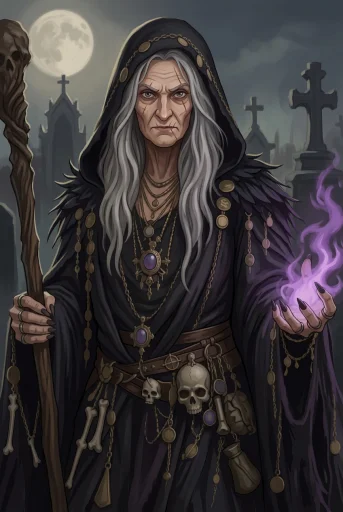

- Debts Dressed as Favors
- Politics by Candlelight
- Everyone Is Overdrawn
The Throne and Tithe
The Throne and Tithe gathers the realm's stories of power: who holds it, who borrows it and who pays the interest. They play out in council halls and counting rooms, at war-camp tables and candlelit balls, wherever a signature, a marriage or a quiet word can move more than an army.
Swords are rarely drawn here. The weapons are ledgers, vows, family names and the patience to wait. A gracious host keeps the house's real accounts, a commander holds a fragile peace together, a ruler must judge their own people, and an heir learns what a name truly costs. Each tale asks the same question in a different room: what are you willing to owe, and to whom?
Swords are rarely drawn here. The weapons are ledgers, vows, family names and the patience to wait. A gracious host keeps the house's real accounts, a commander holds a fragile peace together, a ruler must judge their own people, and an heir learns what a name truly costs. Each tale asks the same question in a different room: what are you willing to owe, and to whom?
- Silken Intrigue
- Hidden Power
- Polite Betrayal
Veils of Iron
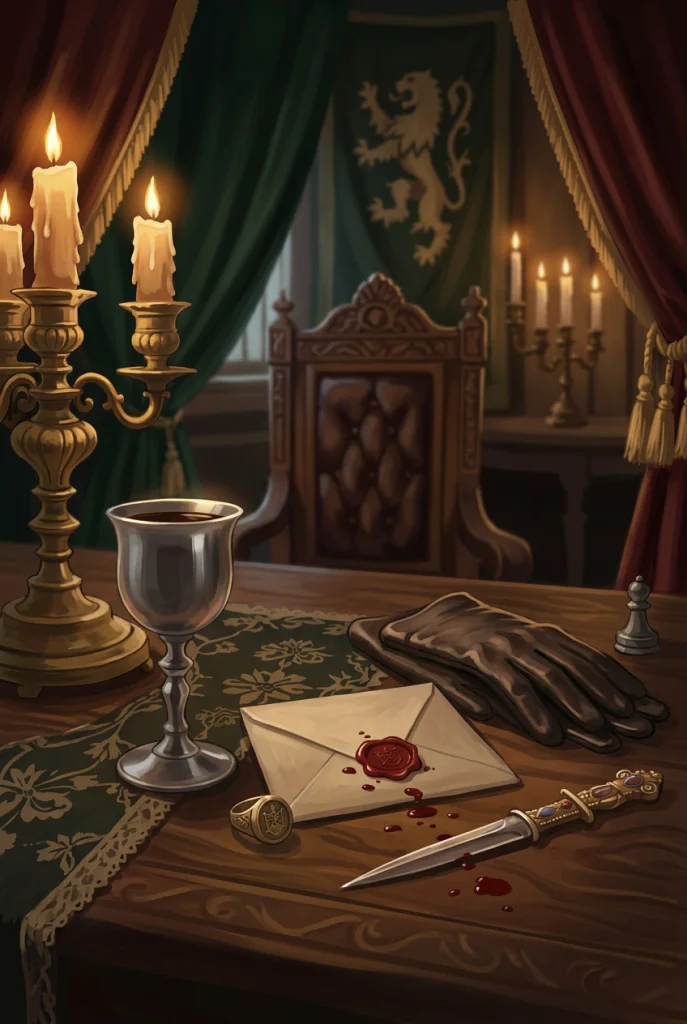
Behind every polished hall and disciplined household, there are rooms where power moves more quietly than steel. The lady of the house has spent years perfecting the role expected of them: gracious host, loyal spouse, silent ornament, careful listener. But beneath the silk, ceremony, and flawless composure, they have built a private web of secrets strong enough to hold a house together, or strangle it, if handled poorly.
When whispers begin circling too close to the family they protect, restraint becomes a weapon and every conversation turns dangerous. A compliment may conceal a warning, a pause may carry a threat, and a misplaced confidence may become the thread that unravels an enemy’s entire design. In this game, open command belongs to others; influence belongs to whoever understands what people are desperate to hide.
The stakes are not merely political. Their children’s futures, their household’s stability, and their own carefully guarded secrets all sit beneath the same tightening veil. To survive, they must maneuver through suspicion, pride, and betrayal without appearing to move at all. It is delicate work, the sort best done with clean gloves and a smile sharp enough to make even powerful men check for blood.
Veils of Iron is a story of hidden leverage, noble restraint, and power claimed from the spaces where others assume obedience lives. The lady of the house does not need a throne to rule a room. All they need is patience, timing, and the right secret placed in the right ear.
The Harvest Court
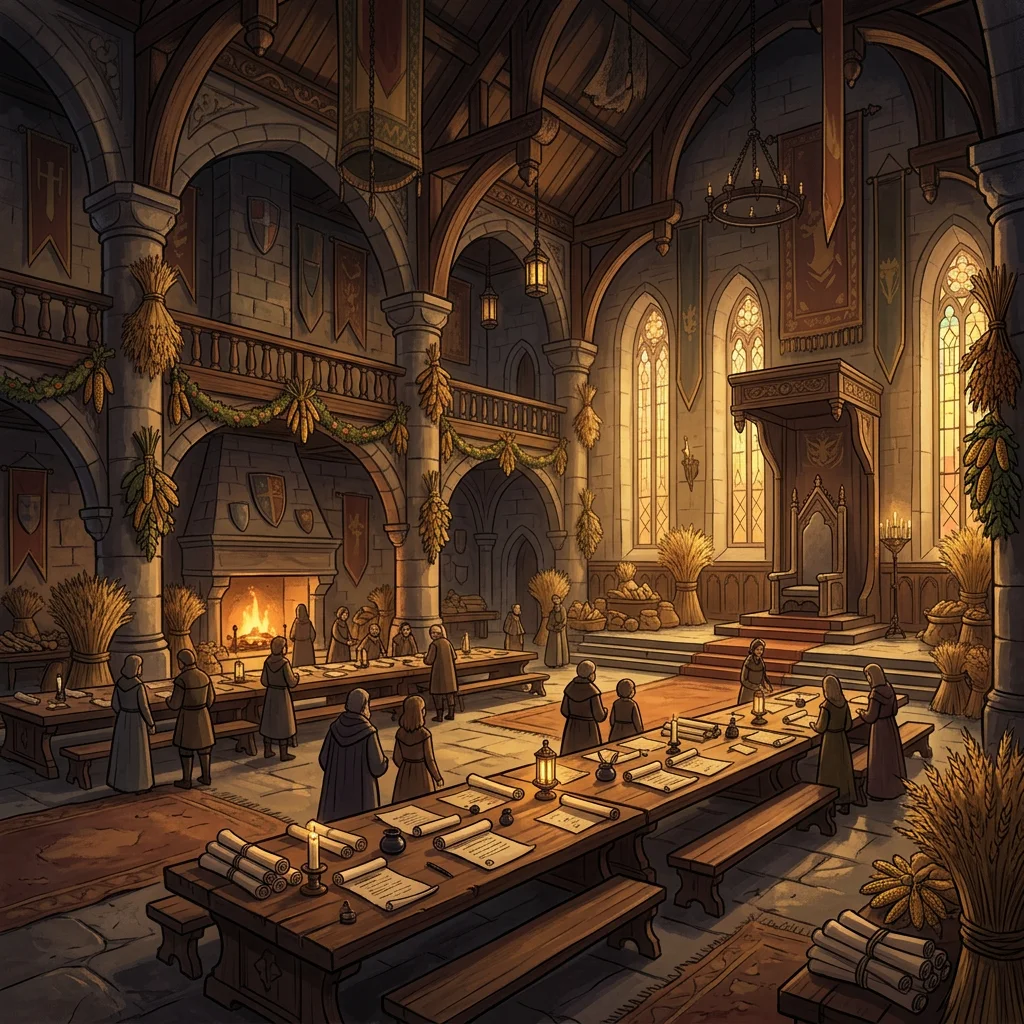
The day begins well. The king laughs at the miller's jokes, settles the widow's boundary with a length of string and a promise, and sends a cart of seed grain to a village that lost its crop to hail. The hall cheers him the way it always has, because he looks like one of them and listens like one of them.
By midday the petitions grow harder. A lord asks why the order's riders answer to a royal writ instead of to the lords of the realm. A town reeve asks, very carefully, what becomes of a man the order has judged, and whom he should ask to get him back. The king's brother, the Inquisitor, stands at the foot of the dais and answers before the king can, smoothly and kindly, and the king lets him.
Through it all, a healer in white stands just behind the throne. Twice the king stops in the middle of a ruling and looks at his hands as if he has set something down and cannot think where. Twice the steward leans in and quietly gives him the next word. The court smiles, the clerks write on, and nobody in the hall says what all of them have noticed. As the lamps are lit, one last petitioner is still waiting at the doors, travel-worn and patient, asking to speak to the king alone.
- Inherited Burden
- Hidden Longing
- Courtly Pressure
The Gilded Heir
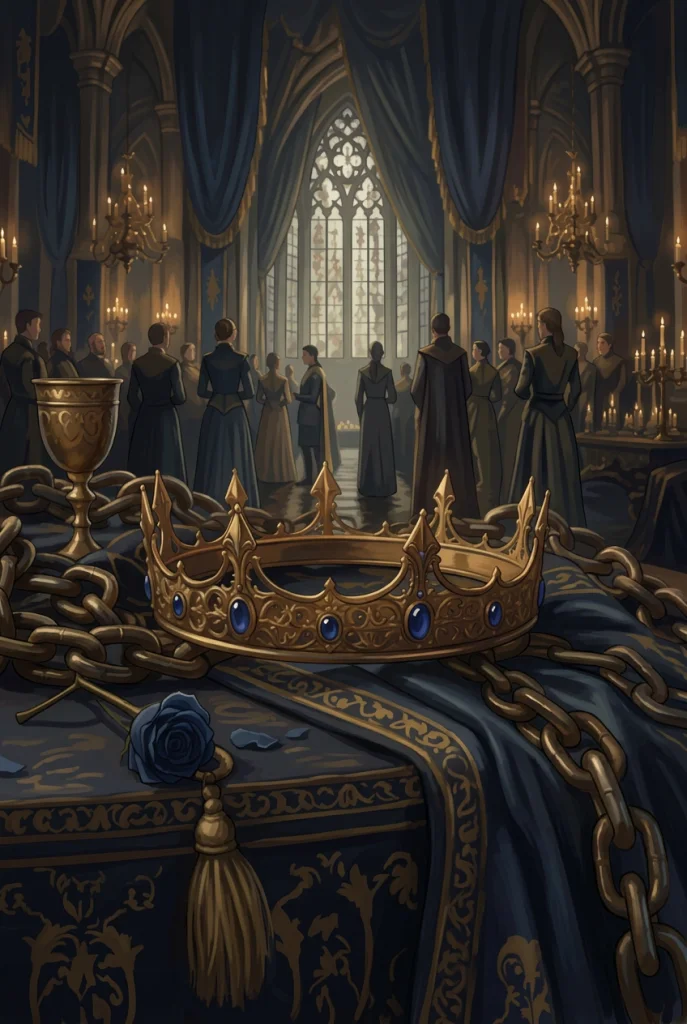
The Gilded Heir follows a noble heir caught beneath the polished weight of legacy, courtly expectation, and the dangerous silence of a house built on strength. To the world, they are everything an heir should be: composed, dutiful, elegant, and unshakably proper. Beneath the immaculate uniform, however, every button feels less like decoration and more like another lock.
A political future presses closer with every banquet, council, and carefully worded compliment. They are expected to charm, obey, represent, and eventually bind themselves to a role that leaves no room for private truth. Every smile must be measured. Every glance must be guarded. Even affection becomes risky when the wrong person might notice where their eyes linger too long.
This is not a story of open rebellion, but of quiet resistance inside rooms where softness is mistaken for weakness and honesty could become a weapon. As duty tightens around them, the heir must decide whether preserving a legacy is worth surrendering the last unclaimed pieces of themselves.